http://mctiernan.com/dnatest.htm 7-24-2026
The MacTighernan DNA Test
McTernan / McTiernan / MacTiernan
The goal is to map all MacTighernans both genetically and geographically. With 141 tests
completed, 3 TBR, the DNA sampling in this test is random currently
from 141 MacTighernans or very close surname variants from around the
world that at the time of testing live in 13 countries on 5 continents
with no correlation except the same surname or close variant and the
same close proximity of origin in Cos Leitrim, Sligo, Roscommon and
Cavan with a couple of outlyers. Like most Irish families, the deep
time history of the MacTighernans is all but lost.
The DNA test is perhaps the only chance to begin to make any
family connections as many of the MacTighernan families like a smaller
scale of the larger Irish Diaspora have scattered to distant lands in
the world and live there today. The spelling of the surname does not
really matter as the historical spelling never seems to match the
current spelling in many of the families so the Gaelic spelling of
MacTighernan is used to cover all the variants of our surname
including McKiernan.

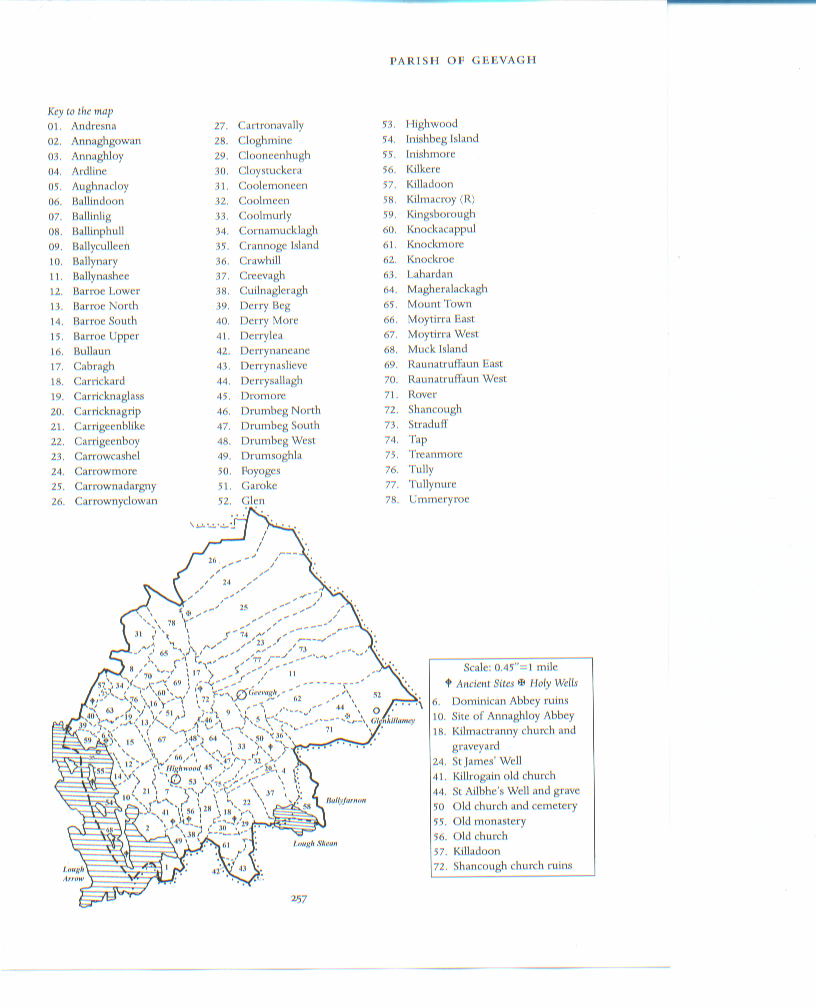
To date, almost all 141 tested MacTighernans that know their origins
come from this small area in Connacht in NW Ireland shown in green on
the map on the left, 450 square miles more or less with a few
exceptions, Gus and Terry whose verbal family history states that
their line is from Scotland and David (CN)'s verbal family history
states that his family is from the Kilarney Lakes, Co Kerry area of
Ireland. Based on the DNA study at this
point in time it appears that the origins of most MacTighernans, 97
out of 141 are in Co Leitrim. The Google earth satellite image that
graphically shows the townland origin of each MacTighernan if known is
at this web site:
http://mctiernan.com/McTmaps.htm
While Leitrim is one county, it is historically
divided into North and South Leitrim with Lough Allen being a
loose dividing line. In South Leitrim from the mid 1500s, the
Irish Clan way of life was under serious threat. An increasingly
powerful English administration was slowly but surely extending
its influence and dominion. In a visit to Mohill in 1540, the
Saxons destroyed the Monaghan
Franciscan Fairy and beheaded the Prior and several of the Monks. By
1590, the English government
forces were actively routing the local clans. All MacTighernans in
the DNA test from Leitrim come from north Leitrim with the
exceptions of Michael-MH, Ed (NJ), [Scott (CO), Cathal, Sean-SF],
Jim III and Charles whose family origins are in townlands in South
Leitrim.
Philip
O'Rorke, The O'Ruairc of Bréifne whose family were the past kings of
Drumahaire in Co Leitrim has taken the DNA test. The O'Rorke DNA web
site is http://www.familytreedna.com/public/roark/. The O'Conor Don,
Cathal Crovderg O'Conor,
whose ancestral home was Clonalis
House, Co Roscommon and whose ancestors were the past high
kings of all of Ireland for 150 years has also taken the DNA test.
So far none of us genetically relate to either one. With the tests
completed so far we MacTighernans fall into 21 different, separate,
distinct and unrelated genetic groups.
Genetic diversity equals age. The more diverse genetic make up of
a population in a specific area, the older it is. In all the world,
Africa has the most diverse genetic makeup. Ethiopia, the Horn of
Africa has the most genetic diversity in all of Africa which is where
the first humans gathered to exit and populate the rest of the world.
Western Europe including Ireland
has the least diverse genetic population of all areas on earth. So in
Africa the population moved and in western Europe they did not,
genetically speaking. The Geographic project sponsored by National
Geographic and IBM goes into this in great detail https://www3.nationalgeographic.com/genographic/index.html
select "Results." Use my email address and enter FWRFL845CH
in
all capital letters, click "Continue". Continue without
Registering on the right-hand side.
There is no way to know for certain what the total number is for
distinct genetically separate MacTighernans on a worldwide basis. My
research specifies about 483 individual MacTighernans worldwide. I am
guessing that many are in the same family. In 1659 only 4275
people lived in all of Co Leitrim of which MacTighernans were 38, 26
in north Leitrim and 12 in south Leitrim. Mary Tiernan offers
this web site for the Down Survey for a better understanding http://downsurvey.tcd.ie/.
The below is taken from the book,
the life and times of Sir Frederick Hamilton 1599--1647.
The Leitrim town of Manorhamilton is named after Sir Frederick, who
was also known for his addicted hobby of hanging a Catholic a day.
In or about 1620 several Leitrim locals were given lands as part of
James I's plantation effort. A Mulmory MacTernan is listed as a
lesser grantee during James I Plantation effort in Leitrim. In 1641,
Mulmory MacTernan, of Lisnanorrus townland, chief of the clan, was a
resident justice of the peace for Co Leitrim. Some years
earlier he was the Co. Leitrim Sheriff. As such, he was an
important man in the county also owning the neighboring townlands,
Drumbrahade, Lisacoghil, Lisnanaw, Tullintowell and possibly
Greaghnaglogh. The 1847 Griffith's validation list possible
descendants: Thomas McTernan in Lisnanorrus and James mcTernan in
Greaghnaglogh. The 1901 and 1911 census list a Thomas
McTernan, 1871--, and his wife Mary, 1873--, in Lisnanorrus
with two children, John Francis, 1897--, and Anne, 1902--.
The undertakers were listed as receiving the divided lands of
The O'Rourke. Mulmory MacTernan is listed as receiving 500 acres of
O'Rourke land which was at the lower end of the scale. The
expectation was for the grantee to keep the local natives in check.
The grants to lesser sub chiefs [like MacTernan] were to help crush
the power of the O'Rourkes once and for all. The king took a
higher percentage of the confiscated land in Leitrim as opposed to
other counties as the Leitrim natives needed more civilization than
the midlands. In February 1642, Sir Frederick Hamilton sent a
force of 80 horse and foot to relieve the protestants at Parke
Castle. On their return to Sir Frederick's castle they were attacked
by 1000 Irish rebels. After a fierce battle, the English won
and killed 60 of the rebels. Unfortunately, Mulmory MacTernan
was one of the 60 killed.
 Now this is the gospel truth, 375 years after Sir
Frederick Hamilton killed Mulmory MacTernan in 1642, when he saw
another McTiernan inside the ruins of his castle, namely myself, his
ghost tried to kill me. In November of 2017, my family and I
were visiting Ireland, specifically that day, Manorhamilton. We
were touring the ruins of Sir Frederick Hamilton's castle and about 5
seconds after I turned the corner in the photo at left, the ghost of
Sir Frederick launched a 200 lb. stone from the high castle keep
falling away from the castle walls. Strange after 375 years the
rock fell just when a McTiernan was passing by. He killed
Mullimury but missed me.
Now this is the gospel truth, 375 years after Sir
Frederick Hamilton killed Mulmory MacTernan in 1642, when he saw
another McTiernan inside the ruins of his castle, namely myself, his
ghost tried to kill me. In November of 2017, my family and I
were visiting Ireland, specifically that day, Manorhamilton. We
were touring the ruins of Sir Frederick Hamilton's castle and about 5
seconds after I turned the corner in the photo at left, the ghost of
Sir Frederick launched a 200 lb. stone from the high castle keep
falling away from the castle walls. Strange after 375 years the
rock fell just when a McTiernan was passing by. He killed
Mullimury but missed me.
North Leitrim's largest town, Manorhamilton was called "O'Rourke's
Little Fields". It's name was from one of the most dreaded local
rulers, Sir Frederick Hamilton who came to Manorhamilton from Scotland
and founded a castle in 1638. He was the grandson of James II,
Earl of Arran. It was said that Sir Frederick was used as an example
if you were trying to make Cromwell look good. He was to use the
gallows in Manorhamilton daily, to hang a Catholic. One of his last
and many acts of destruction was the burning of Carr Castle, a
stronghold of the O'Rourkes at Glencar in 1641.
Lord Hamilton had invited the local
chiefs to dine at his castle with the intention of killing them
while they ate. As the time approached for the servants to do the
deed, the old Irish piper providing the music for the feast played
the song, "Make your visits short and far between". Too busy
eating and drinking to get the hint, the local chiefs were killed
by the servants. Lord Hamilton and his castle fell in 1652 when
attacked by the Royalist Clanricard and Owen Roe O'Neill. As per
Lorcan O'Runai in his book "From Rosclougher to Rooskey": Lord
Hamilton escaped from his castle hiding in a group of women
released by Owen. It is said that he shed tears as he paused on
horseback to take a last look at his burning castle.
Unlinked and unproved but still a high probability that our very early
history falls under one of these three noted MacTighernans below.
- MacTighearnain -a Teallach Dunnchadha sept of Breifne;
Lord of Tullyhunco, Killeshandra, Co Cavan.
- MacTighearnain -a Clan Fearghaile sept of Fir Manach in Co
Fermanagh.
- MacTigernain -a Siol Muiredaigh subset of ÓConor at Boyle,
Co Roscommon; and Rathmactiernan, Killoran, Leyney, Co Sligo
Earlier in the 11th century two MacTighernan families were
noted in Irish history as chiefs, Lord McTernan of Tullyhunco, Co
Cavan and the McTernans of Co Fermanagh. Their lines may well be
extent at this point in time. In recent history, at least since the
famine years, most of the MacTighernans in Ireland are found in Co
Leitrim. The historical family origins of the majority of the DNA
testers are in Co Leitrim. How we might connect to them or to each
other is very difficult to prove as written records in Ireland
usually only start at around the 1850s.
The McTernans of Co Fermanagh may have disappeared and there are
no known descendants of the other three 19th century historically well
known MacTighernan families from Rockfield and Tullyhunco listed
below. The seat of the Tullyhunco MacTighernan family for many
hundreds of years was Cruacan mic Tigearnain where The O'Rourke
was inaugurated Prince of the Bréfny. It is now called Croaghan, lying
six furlongs [3/4 mile] northerly of the village of Killeshandra in
the barony of Tullyhunco in Co Cavan. The earliest entry in the annals
on the MacTiernans is 1258 about a Magrath MacTiernan, chief of
Teallach-Dunchadha who was slain by Donnell, son of Conor O'Rourke.
The MacTighernan castle ruins are at this web site: http://mctiernan.com/castle.htm
In Irish history the Rockfield McTernans and the Heapstown
MacTiernans were part of the landed gentry which translates to being
well off being able to send the kids off to boarding schools.
One Rockfield son went to medical school in Paris and ended up a
surgeon in HMS Naval service seeing action in America's War of 1812 in
the Chesapeake Bay [near Baltimore, MD] in America and also being on
the island of St. Helena helping to guard Napoleon when he passed.
| Unconnected McTernan Ancestors |
Townland of Origin |
County |
Barony |
Civil parish |
Catholic
parish |
Dioceses |
P L U |
Probate
District
|
DNA
Group |
|
McTernans of Rockfield
|
Gortgarrigan
|
Leitrim
|
Drumahaire
|
Cloonlogher
|
Drumlease
|
Kilmore
|
Manorhamilton
|
Ballina
|
?
|
McTernans
|
|
Fermanagh
|
|
|
|
|
|
|
?
|
| McTernans
of
Tullyhunco |
Croaghan
|
Cavan
|
Tullyhunco
|
Killeshandra
|
Kildallan
|
Kilmore
|
Cavan
|
Cavan
|
?
|
Mullimory
MacTernan
|
Lisnanorrus
|
Leitrim
|
Drumahaire |
Inismagrath
|
Inismagrath |
Kilmore |
Manorhamilton |
Ballina |
?
|

According to John
C. McTernan's recent book titled Sligo
Families, vol II, Leet's Directory (1812-1814) listed
three McTernan 'seats' or residences, namely that of Con at Rockfield
[noted above], James of Leonagh and Hugh [ T group baseline ] at
Mount Allen in Co Roscommon whose family was originally from the
Sweetwood Lower townland in Co Leitrim. A diagram of the
family links along with the connection to the O'Conors, http://mctiernan.com/3links.htm
A recumbent tombstone in Killargue's old cemetery behind the chapel
bearing the family coat-of-arms, is inscribed with the names of
Farrel McTernan, 1752--1818 and his wife Mary Dolan, 1752--1798.
Farrel is the given name of the earliest known ancestor of Hugh
McTiernan (Bos) family line who is in the T2 DNA Group.
The Chapel of Creevelea was the traditional burial place of the
McTernans of Rockfield, Mount Allen and Heapstown [and Sheskin]
where large recumbent flagstones mark their final resting places. In
close proximity another memorial links the families of O'Rourke
and McTernan and is inscribed as follows: Here
lyeth the bodye of Hugh O'Roirk and Catherine McTernan who
departed this life May 22, 1721. This is the mysterious
gravestone that has the symbols of playing cards: heart, spade,
diamond and club along with the etching of a cat which in O'Ruaric
history is supposed to have awaken him from a nap in a pasture
preventing him from being captured by enemies. The foot of the
McTernan Achievement at left states: The McTernan coat of arms
hereby illustrated is officially documented in Burke's General
Armory. The original description of the Arms [at left] is as
follows: Two lions pass., GU. When translated the Blazon also
describes the original colors of McTernan Arms as: Ermine; two red
lions walking on a field of caltraps. Caltraps were home-made 4 inch
wooden spikes bound together like jacks in pickup jacks. When
running away from the Calvary you threw these over your shoulder and
when a horse steeped on one the Calvary stopped and you got
away. Above the shield and helmet is the crest which is
described as: A Red Griffin Standing, Green Wings Raised.
This info can be complex so please read the headers and
footers in all the following grids to better understand it.
http://mctiernan.com/read1.htm
The 21 separate, distinct and different MacTighernan DNA
groups start with the letter T
which is just a naming convention as each of the DNA Groups are
in all ways equal, none being more pure than the other.
The genetic and
geographic spread of the MacTighernan testers, 97 of the
141 know their townland, 111 know their county of
origin,
|
MacTighernan
Testers
County of Origin
|
|
Testers that know their county of
origin & don't
|
|
Tester's country at time of test
|
Tester's
continent
|
Testers
|
All
identified
MacTighernans
|
DNA
Group
|
Leitrim
|
Sligo
|
Kerry
|
Roscommon
|
Cavan
|
Mayo
|
Cork
|
Long-
ford
|
Scot-
land
|
Unknown
|
Total
|
|
Leitrim
|
87
|
|
America |
North
America
|
58
|
214
|
T
|
36
|
|
1
|
1
|
1
|
|
2
|
|
1
|
9
|
51
|
|
Sligo
|
9
|
|
Ireland |
Europe
|
33
|
42
|
TA
|
2
|
|
|
|
|
1
|
|
|
|
1
|
4
|
|
Roscommon
|
3
|
|
England |
Europe |
24
|
63
|
TB
|
1
|
|
|
|
|
|
|
|
|
|
1
|
|
Cavan
|
4
|
|
Canada |
North
America |
8
|
11
|
TC
|
|
|
|
|
|
|
|
|
|
1
|
1
|
|
Kerry |
1
|
|
Australia |
Oceania |
5
|
36
|
TD
|
1
|
|
|
|
|
|
|
|
|
|
1
|
|
Scotland
|
2
|
|
Indonesia |
Asia |
2
|
2
|
TE
|
|
|
|
|
|
|
|
|
|
1
|
1
|
|
Unknown
|
26
|
|
Zimbabwe |
Africa
|
1
|
1
|
TF
|
1
|
|
|
|
|
|
|
|
|
|
1
|
|
|
|
|
Iraq |
Asia
|
1
|
1
|
TG
|
1
|
|
|
|
|
|
|
|
|
|
1
|
|
|
|
|
Northern
Ireland |
Europe
|
6
|
18 |
T3
|
12
|
5
|
|
|
2
|
|
|
|
|
2
|
21
|
|
|
|
|
Scotland |
Europe |
6
|
80 |
T3A
|
6
|
2
|
|
|
|
|
|
|
|
1
|
9
|
|
|
|
|
New Zealand |
Oceania |
1
|
5
|
T3B
|
|
|
|
|
|
|
|
|
1
|
|
1
|
|
|
|
|
South Africa |
Africa |
1
|
1 |
T3C
|
2
|
|
|
1
|
1
|
|
|
|
|
|
4
|
|
|
|
|
Spain |
Europe |
1
|
1 |
T3D
|
4
|
|
|
|
|
|
|
|
|
|
4
|
|
|
|
|
Switzerland |
Europe |
|
1 |
T3E
|
1
|
|
|
|
|
|
|
|
|
|
1
|
|
|
|
|
Japan |
Asia |
|
5 |
| T4 |
|
|
|
|
|
|
|
|
|
1
|
1
|
|
|
|
|
Wales |
Europe |
|
4 |
T5
|
|
|
|
|
|
|
|
|
|
1
|
1
|
|
|
|
|
Norway |
Europe |
|
1
|
T6
|
|
|
|
|
|
|
|
|
|
1
|
1
|
|
|
|
|
Thailand
|
Asia
|
|
1
|
T7
|
|
|
|
|
|
|
|
|
|
1
|
1
|
|
|
|
|
Vietnam
|
Asia
|
|
1
|
| T2
|
23
|
2
|
|
1
|
|
|
|
|
|
7 |
33 |
|
|
|
|
Belgium
|
Europe
|
|
1
|
T2A
|
2
|
|
|
|
|
|
|
|
|
|
2
|
|
|
|
|
|
|
|
|
Current
Total
|
93
|
9
|
1
|
3
|
4
|
1
|
2
|
0
|
2
|
26
|
141
|
|
Total
|
141 |
|
20
|
5
|
141
|
488
|
| TBR |
|
|
|
|
|
|
|
|
|
3
|
3
|
|
|
|
|
|
|
|
|
in
process
|
|
|
|
|
|
|
|
|
|
|
|
|
|
|
|
|
|
|
|
The goal is to map
the genetic and geographic profile of all MacTighernans, our origins
and any connections.
Listed below are the possible centers
of origin for each MacTighernan in the 21 different DNA groups
if known
|
21
distinct
MacTighernan
DNA Group baselines
|
Looking
solely at baselines, possible townlands
of origin for each of the 21 DNA Groups
|
Total
#
in each
group
|
The Baselines,
Perfect 25 / 25
matches in
their group
|
1
|
T
|
Leonagh townland or
Tullynacross townland or Moneenatieve townland or Deerpark
townland, Beagh / Killavoggy townland or Sweetwood Lower townland,
Co Leitrim or
Greaghnafarna townland in Killanummery parish or Killinagh Parish,
Cos Cavan, Cork, Manorhamilton & townland of Flughanagh
|
51
|
29
|
2
|
T
A
|
Derrinvoher or
Derrinweer townland, Co Leitrim & Co Mayo
|
4
|
|
3
|
T
B
|
Feenagh townland, Co
Leitrim
|
1
|
|
| 4 |
T
C
|
Unknown
|
1
|
|
5
|
T
D
|
Gortermone,
Killarga, Drumahaire, Co Leitrim
|
1
|
|
6
|
T
E
|
Unknown |
1
|
|
7
|
T
F
|
Unknown
|
1
|
|
8
|
T
G
|
Unknown
|
1
|
|
9
|
T
H
|
Unknown |
1
|
|
10
|
T
I
|
Unknown |
1
|
|
11
|
T
J
|
Unknown |
1
|
|
12
|
T
K
|
Unknown |
1
|
|
13
|
T
L
|
Gleneige |
1
|
|
14
|
T
2
|
Townlands of
Corglancy, Greaghnafarna
in Killanummery parish, Bargowla, or Drumahaire (T) or
Oughteragh parish, Mullaghmore, or Ardvoley, Cloonclare, Co
Leitrim or Co Sligo or Scardan, or Drumlease Co Leitrim
|
33
|
20
|
15
|
T
2 A
|
Killaunmmery,
Co
Leitrim
|
2
|
2
|
16
|
T
3
|
Geevagh Parish or townland of Tap both
in Co Sligo or Kilcoosy or Clenaghoo or Drumkeeran in Co Leitrim |
21
|
11
|
17
|
T
3 A
|
Corratavy townland, Gortnacorkoge
townland or Gortermone townland, Killarga parish, Larkfield, Co
Leitrim or Lurganboy, Co Leitrim
|
9
|
8
|
18
|
T
3 B
|
Unknown or Scotland ?
|
1
|
|
19
|
T
3 C
|
Tulcon townland &
Mohill, Co Leitrim, Gubveeney, Co Cavan or Strokestown, Co
Roscommon
|
4
|
|
20
|
T
3 D
|
Gleneige or
Moneyduff, Co Leitrim
|
4
|
2
|
21
|
T
3 E
|
Killargue
Parish, Co Leitrim
|
1
|
|
Total
MacTighernan
tests completed
|
141
|
72
|
| MacTighernan
test
in
process at the lab:
|
|
| DNA Test = To Be Returned: SeanP
(MK41108), JohnB (MK63282) & Alan Mitchell
(MK74101)
|
3
|
The
O'Rorke
test and the O'Conor Don Cathal Crovderg O'Conor test completed
|
2
|
The ancestors of the two McTernan families from
Leonagh in Co Leitrim, Rory's from Sweetwood Lower in Co Leitrim,
Heapstown, Co Sligo & Mountallen, Co Roscommon and mine from
Sheskin, Co Leitrim all of whom are in the T Group are
buried in the Abbey
of Creevelea, Co Leitrim. Rory's earliest known
ancestral home is in Sweetwood Lower, Co Leitrim and then in
Mountallen Townland in Co Roscommon which has the date 1671 etched
in the fire place mantle which implies the year of construction of
their family home.
From Mount Allen, the family moved to
Heapstown,
Co Sligo due to
the cholera breakout
 John C.
McTernan [T3a * photo at left], the well known Co Sligo arthur and
retired Chief Librarian of Co Sligo in his book Sligo
Families II writes that the Mount Allen / Heapstown
McTernan family originally came from Sweetwood Lower, Co Leitrim
and relate to the Leonagh, Sheskin and Rockfield McTernan
families, see http://mctiernan.com/3links.htm.
Three of these four families are buried at the Abbey of Creevelea
with the Rockfield McTernans whose male line has become extent
buried in their family vault at Brockley Cemetery, Parish of
Lewisham, Kent, England.
John C.
McTernan [T3a * photo at left], the well known Co Sligo arthur and
retired Chief Librarian of Co Sligo in his book Sligo
Families II writes that the Mount Allen / Heapstown
McTernan family originally came from Sweetwood Lower, Co Leitrim
and relate to the Leonagh, Sheskin and Rockfield McTernan
families, see http://mctiernan.com/3links.htm.
Three of these four families are buried at the Abbey of Creevelea
with the Rockfield McTernans whose male line has become extent
buried in their family vault at Brockley Cemetery, Parish of
Lewisham, Kent, England.
This web site has the beginning of a very complex diagram of how
the 2 McTernan families [Rockfield & Heapstown] relaate to each
other and to the O'Connors of Sligo who are suppose to be part of the
clan that were once the kings of all Ireland. The Heapstown
McTernans are in the T Group baseline. http://mctiernan.com/3links.htm
Relationship of the DNA Groups to each other:
The T and T3 Group baselines only have 16 out of
25 DYS markers that match. More than 1/3 of the markers do not match
resulting in a 9 loci pattern mutation
event difference. The T2 Group baseline
has an 8 loci difference to the baselines of both the T
Group and the T3 Group. Philip O'Rorke, The
O'Ruairc of Bréifne has a 9 loci mutation
event difference with the baselines of the T and
the T2 Groups but only a 7 loci mutation
event
difference with the T3 Group baseline. The O'Conor
Don has a 21 / 25 match to the T3a baseline. If you are in one DNA
group you do not genetically relate to any MacTighernan in any other
DNA Group
Our name may have been part of the inward
migration of colonists and displaced people in the 17th & 18th
centuries. The native Irish names of North Leitrim previous to
the 17th century were O'Rourke, MacClancy, MacKinnaue, O'Meehan,
McMurrow, and MacGoldrick. The O'Rourkes were the ruling
family of the former kingdon of Breifne, MacClancy was the ancient
tribal clan from Dartry in the north of the region and the
MacKinnaues in the Lough Allen area; the
O'Meehams migrated from South Munster before the 11th century.
The MacGoldricks were a clan of some consequence in and around
that part of the region that adjoins Co Fermanagh.
When the personal names in North Leitrim are
examined we see there has been a great migration of people into the
area of North Leitrim. Some of the more prominent names in the
area today are; Rooney, McGowan, Kelly, McMorrow, Clancy,
Connolly, McTiernan,
McGloin, Feely and Dolan. The most significant migration seems
to have occured from Ulster. Numerious northern families were
displaced by the plantation of Ulster and after the Famous
Diamond Fight in Armagh in 1793 many settling in
Leitrim. [above
2 paragraphs from; Glenfarne - A History]
Those in the baselines for each
of the 21 separate MacTighernan DNA groups are a perfect 25
/ 25 genetic match to each other in their group
|
DNA
Group
|
Total
# in
Group
|
#
in
Baseline
Group
|
Those
MacTighernans
with a perfect match in their specific DNA group forming
their group baseline
are below, excludes The
O'Ruairc of Bréifne. & The O'Connor Don
11 of the 21 DNA
groups have only one individual so far
|
T
|
51
|
29
|
Michael
(CN)
(3436), Rory (1029), Thomas (CA) (17363), John (ST) (49265), Tony
(106135), Josh (419002), John-P
(134141), John-Rev
(149591), Hugh-K C. McKiernan (158701), Gerard
(170331) , Terry (303655),
MartinJ (121178), Bill (347072)
& LeoJ (428502), Ray (449898)
, MattT (735115), Hugh (748577),
Paul-Aus (MK41107), Paul-Eng
(MK61910), Seamus (MI51259), Mike-SA
(MK64559), KevinE (MK69402), Nick
(MK79414), Martin (3713), Mark (673), Adrain
(1025994) & Allen (MK93252) |
T
A
|
4
|
4
|
Scott
(AU) (639), Richard (135598), Adrian
(106134)
& James (MK30341) |
T
B
|
1
|
1
|
John
(USA) (635)
|
T C
|
1
|
1
|
Sgt
Chris (31886)
|
T D
|
1
|
1
|
John Frank (117676) |
T E
|
1
|
1
|
Myles (187076) |
T F
|
1
|
1
|
Colin
(192960) |
T G
|
1
|
1
|
Mick-A
(MK73022) |
T 2
|
33
|
20
|
Geoffrey
(3435),
Bernard Jr. (2145), Max (71428), Eugene
(128783),
Jim-SP (155834), KevinM
(170332), Mike-PA (175937), Mike-Eng
(172135), Jerry (251863), Brandon-M
(330351),
Barry (201474), SeanJ
(282944), Michael-S (310360), Matt
(446316), JimT (498238), JohnN
(770274), Brian (MK41109), Brandan
(MK74102) & & DanM
(MK88342) |
T
2 A
|
2
|
2
|
Patsy
(121178) & Nigel (261247)
|
T 3
|
21
|
11
|
Leo
(21151), Eoghan (636), Jim (NJ) (1010), Scott (CO) (5451), Jim
(MA) (9497), John W (31885), Cathal (117675), Sean-SF
(135597),
Edwin (201472), PeterS (449899) & David-CA
(MK30340)
|
T 3 A
|
9
|
8
|
David
(NJ) (2392), John C. (637), Cathal-NI
(243949), JohnV (293153), Paul-C
(419001), Raymond (MK32497) &
MartinNI (MK42834)
|
T 3 B
|
1
|
1
|
Gus
(8724) |
T 3 C
|
4
|
2
|
Ed
(NJ) (8723), & Michael-MH
(748578) |
T 3 D
|
4
|
2
|
Sean
(128774) & Paul-NI (180027) |
T 3 E
|
1
|
1
|
Peter
(138619) RIP
|
T 4
|
1
|
1
|
Warren
(251864)
|
T 5
|
1
|
1
|
Joe-NY
(201475) |
T 6
|
1
|
1
|
DaveS
(699535) |
T 7
|
1
|
1
|
Donald
(MK34895) |
T
8
|
1
|
1
|
Gerry (MK91569)
|
sub
total
|
141 |
91
|
completed test
|
|
in
process
at lab
|
|
|
|
TBR
=
to be returned
|
3
|
|
SeanP
(MK41108), JohnB (MK63282) & Alan
Mitchell (MK74101)
|
Total
|
144
|
|
91 or a bit less than 2/3s
of the total MacTighernans tested are in their group's baseline,
13 of the 21 groups only have 1 individual MacTighernan
|
The Great Unsolved MacTighernan Mysteries &
Accomplishments
1. Locate Reverend Stephen's "copybook"
He was interested in historical and Gaelic
matters for which he was made a member of the Royal Irish Academy
in 1884. In addition, Rev. Stephen McTernan, 1811--1906, was a
member of the Societe Generale in Paris, France for which he
received an annual sum of money. Rev. Charles Comey, curate of
Cloonclare, Manorhamilton uncovered Reverend Stephen's personal
papers in 1907. They found the papers in St. Claire's Chapel in
Manorhamilton. Cloonclare was in the ancient parish of Cloonloger,
now included in the Catholic parish of Drumlease, Co.
Leitrim. More on his personal papers which are called the "Copybook"
Finding this may be a key to unlocking the wider
McTernan family history as Rev. Stephen kept this diary from
childhood. Rev Stephen is my 1st cousin, 3 generations
removed in the T Group.
2. Understand the O'Rourke and McTernan connection in the
Chapel of Creevelea as it was the
traditional burial place of the McTernans of Rockfield, Mount
Allen and Heapstown [and Sheskin] where large recumbent flagstones
mark their last resting places. In close proximity another
memorial links the families of O'Rourke and McTernan and is
inscribed as follows: Here lyeth the bodye of Hugh O'Roirk
and Catherine McTernan who departed this life May 22, 1721.
This is the mysterious gravestone that has the symbols of playing
cards, heart, spade, diamond and club along with the etching of a
cat. Tie one of the future DNA testers to
The O'Ruairc of Bréifne whose family were the past kings of
Drumahaire in Co Leitrim
3. Tie one of the DNA testers to James
McTernans, of the Rockfield
McTernans a British naval surgeon who was in the
squadron which protected St. Helena during the residence there of
Napoleon,
and was present on the island at the death of that distinguished,
but unfortunate monarch in 1821. James was also the surgeon on a
British warship in the Chesapeake Bay in the War of 1812. In
historical documents, the Rockfield McTernans and the Heapstown
McTernans [Rory's line in the T Group baseline]
are called kinsmen and are related.
4. Understand the meaning of the
4,000-year-old
Cairn on Rory's Heapstown family estate.
What might be the connection to Rory's McTernan
family who are in the T Group baseline.
5. The McTernan
School: in Waterbury, CT. In
2005, St. Margaret's-McTernan school changed its name to Chase
Collegiate School. The new name honors the Chase family, which
helped to found both St. Margaret's and the McTernan School. Charles
McTernan
from Foxbourgh, MA founded the school. A male line may descend
from Charles' uncle, Patrick, 1863--, who was born in
Boston. Charles' son Donald married and lived in France
having two daughters. This family originally immigrated to
the Boston area from Co Leitrim. Long shot for DNA match.
6. Jane Aloyaia McTernan, 1888--, born in Calcutta station,
Bengal, India. To which DNA family does she belong.
7. Thomas McTiernan, 1883--1893, died at 10 years old at the
army station of Mount Abu which is a popular hill station in the Aravalli Range in Sirohi districtRajasthan state in western
India
near the border with Gujarat. There is no mention of his
parents in records.
8. Bernardette McTiernan, 1890--1893, most likely the sister of
Thomas above. Died at the army station of Mount Abu which is
a popular hill station in the Aravalli Range in Sirohi district of Rajasthan state in western
India
near the border with Gujarat. There is no
mention of her parents in records.
9. Whereabouts of the McTernan Stone, an
excessively heavy round stone thrown by Thomas McTernan known as
Long Tom from Ardvoley, the grandfather of John-Rev in the T
Group baseline. The stone thereafter was known as the McTernan
Stone. This Stone lies now in the area of Killavoggy.
10. Tirmactiernan, Co. Leitrim
on the banks of the Shannon/Erne canal system in South
Leitrim. About 7.1 KM from Carrick on Shannon. Why was it
named Tirmactiernan and what if any connection to any in the DNA
test?
11. What might be our connection to Rathmactiernane, a townland
in Killoran parish, Co Sligo listed in the Hearth roll of 1665
with Cahill McTanist?
12. A horse by the name of MacTiernan was racing in Dublin for the
2010 to 2012 season. He is running well, previously owned by
Christine Kiernan. Why did she name the
horse MacTiernan?
13. Cathal Mac Tigernan was King of West Connacht... died 1059...
which means he predates the O'Rourkes. Ã?ed in Gai Bernaig,
King of Connacht from 1056 to 1067, had invaded and conquered Maigh Seóla in 1051, blinding its king.
Cathal mac Tigernán is the next ruler of the kingdom recorded
upon his death in 1049.
14. Origin of the 3 ring forts in the townland of Listernan, Co
Cavan and why the name which in Gaelic means Ternan's fort?
15. We are supposed to descend from the O'Rourks past kings
of Drumahaire & the O'Conor, past kings of Ireland. So far
none of the MacTighernans genetically match either The O'Ruairc or
The O'Conor Don Chieftains, but the T Group baseline is a perfect
match to Michael O'Rourke.
16. The unfinished list of all MacTiernans who were killed or
served in their country's armed services in the many wars for
Freedom starting with the Leitrim Plantation Wars and ending with
WW II, http://mctiernan.com/mwardead.htm
17. Edward W. L. McTiernan from
Worcester, MA had a top 10 finish in the 1909 Boston Marathon (#9)
See 1909 & 1911 results at https://www.athlinks.com/event/20238/results/Event/606309/Course/919125/Entry/279059842
In 1908, E.L. McTiernan representing Worcester, MA ran in the
Brockton Fair Marathon, starting in Boston, on Exeter Street,
ending in Brockton, MA at the fairgrounds. If you look at the
attached clipping, there is an Ed L. McTiernan of Worcester listed
under the 1 Mile and 3 Mile runs. This is Edward William Lane
McTiernan of Worcester, 5-29-1880--1955. Edward was the son
of Thomas McTiernan and Catherine Lane, both of Ireland, both
immigrating to the US and died in Worcester, Massachusetts. Edward
worked for the streets department in Worcester. This is Edward
William Lane McTIernan of Worcester, 5-29-1880--1955. Edward
and his 6 children are in the T3 DNA Group baseline because of his
relationship to Leo McTiernan and Jim-MA.
18. Potential but undocumented link of the Heapstown and
Rockfield McTernans to the Sligo O'Conors, past kings of Ireland http://mctiernan.com/3links.htm
19. The MacTier
Championship Cup, info supplied by Mike McTiernan of Canada.
Most likely the cup is named after a MacTiernan but additional
research needs to be done to trace the origin of the name of the
cup. The MacTier Cup established in 1998 is awarded to the
championship team for winning the top senior men's rugby league in
Canada. Since 2009 the cup has been awarded to the winners
of the Canidian Rugby Championship (CRC). Since the
inception of the CRC, the Ontario Blues have won the cup 6 times,
the BC Bears have won 2 times, while the Prairie Wolf Pack and the
Atlantic Rock both winning the cup 1 time.
Solved or achieved so far
20. The McTiernan Seat since 1991 is an engraved
bench in front of The 300 year old
Powerscourt Arms Hotel in Co Wicklow
http://mctiernan.com/McTseat.htm
The hotel was owned by Charlie McTernan, 1955-, until 2008 who
is in the T2 DNA Group
21. The pamphlet written in 1845 by James MacTernan,
<1815--1855, of the Mount Allen [Co Roscommon] McTernans that
settled at Heapstown, in Co.
Sligo entitled: "An Address to
my Fellow Countrymen", in which James
claimed descent from Tiernan O'Rourke, Prince of Breffni. Found
by John C. McTernan. This James McTernan also invented a
new breed of horse called the Buckshot Chestnut. This is
Rory MacTiernan's family in the T Group baseline.
22. The McTernan Street in
Cambridge, MA, USA formerly Lake St. right outside of County
Boston, named after WW II veteran, William Francis,
-1944 Te DNA Group
23. McTernan Road,
Tinderry, NSW, Australia 2626: is named after the pioneering
McTernan family of the area, descending from Hugh
and Mary McTernan of Michelago of which Scott (AU) & Richard
descend in the Ta DNA Group
24. Origin of McTernan Place,
Worrigee, NSW, Australia 2540: is probably
named after Barney
McTernan [below], Hugh's
son who lived down there and had a stagecoach business of which
Scott (AU) & Richard descend in the Ta DNA Group
25. This is Myles McTernan's family:
Barney
McTernan, being one of the stagecoach founders, is
now a major character in the book, "Coachmen
of
the Nowra District" in Australia. Scott (AU),
Margaret & Richard in the Ta DNA Group relate to
Barney..
26. Origin of McTiernan
Close, Wilsonton, QLD, Australia 4350:
probably named after Sir Edward
McTiernan who relates to Leo McTiernan
in the T3 Group baseline
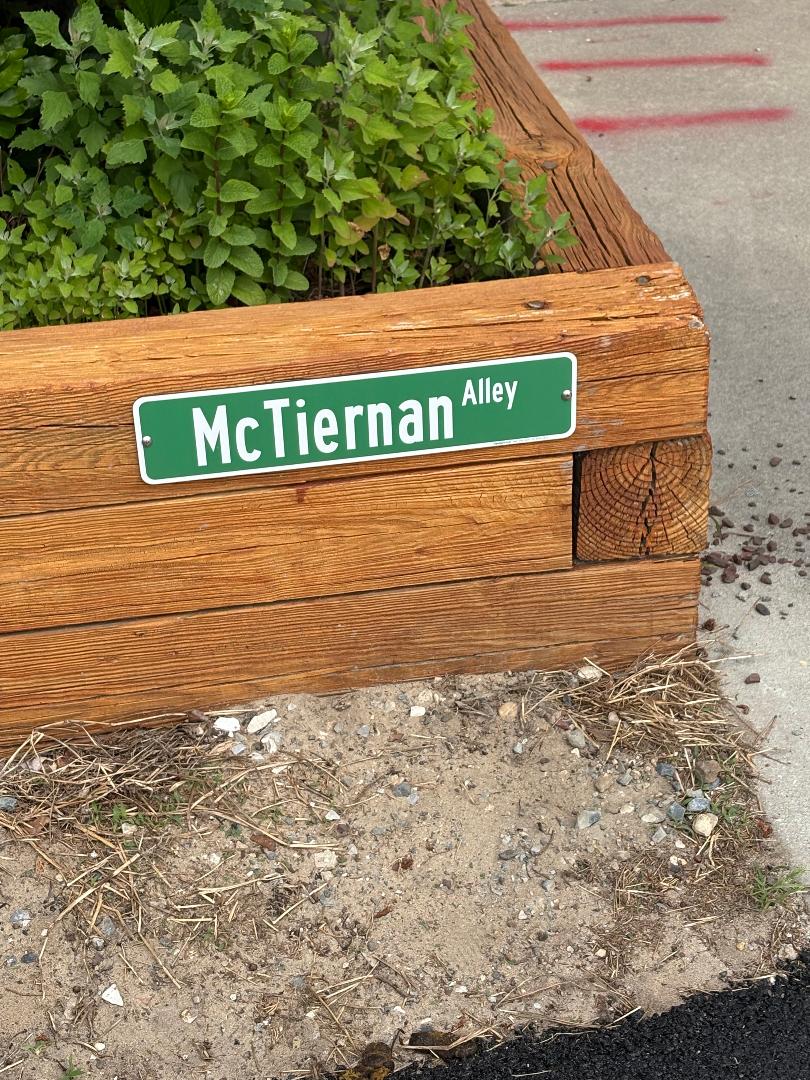
27. McTiernan Alley, Ocean
City, MD, USA. Named by Michael McTiernan in the T Group for his
work getting the alley to be safe, useful and dry.
28. Jerry
Mack
Rd on Rt 50 in Ocean City, MD is
named after Jerry McTernan, the grandfather of Jerry McTernan
in the baseline of the T Group.
29. McTiernan
Way, a road in
downtown Minto named on 9-2-2013 by the Village of
Minto, New Brunswick, Canada after the long history
of the family in fire prevention. This is
Michael (CN)'s family in the T DNA Group.
30.
McTiernan
Alley, Ocean
City, MD, USA. Named by Michael McTiernan in the T Group for his
work getting the alley to be safe, useful and dry.
31. Gwladys
McTernan Park,
named after the mother of Scott-(AU),
David, Grant and Richard in the Ta DNA Group,
a park in Naracoorte, South Australia,
Australia, RIP
32.
Origin
of McTiernan
Close, Wilsonton, QLD, Australia
4350: probably named after Sir
Edward McTiernan who relates to
Leo McTiernan in the T3
33. Bartholemew
E.
McTiernan, 12-11-1877--12-6-1917, born and died in
Halifax, Nova Scotia, Canada. Bartholemew, his
mother Margaret Gilroy and his wife Frances Caroline
Gough were all killed in the famous Halifax
explosion of 12-6-1917 which was
and still is the largest man-made explosion after the
atom bomb. Bartholemew is the great grand uncle of
Greg McTiernan in the T2 DNA Group.
34. Lac
McTiernan, a lake in Quebec,
Canada, a 7 hour drive north of Ottawa and 5 hours north
of Montreal. Lac McTiernan was named after William
McTiernan born in Bryson,
Canada. He worked for the Canadian International
Paper Company in the early 1930s. To find out more
about the man and his father, David McTiernan, both
worked in the back country of Gatineau River, read the
following book, particularly chapters 14 and 15,
Crawford, Venetia, et Gunda Lambton. The Wildest
Rivers -- the Oldest Hills; Tales of the Gatineau and
Pontic, Maitland, Ontario. Canadian International
Paper Company may have been bought by E. B. Eddy
Company. The family had a home in the Mason Lumber
camp operated by the E. B. Eddy Company.
A second historical opinion on "McTiernan lake" in the
Gatineau hills which may not necessarily be named after
a man that lived in Bryson by the name of William
McTiernan, as Venetia Crawford explains in her
book. William was the 2nd cousin, 2 generations removed
of Thomas John McTiernan. Tom, was born and raised in
Bryson, Quebec, but this "McTiernan lac" was named
by him as a joke! Tom
worked
in cartography for Energy, Mines and Resources for 35
years. In the late 70s he and his buddy Dan Lacelle came
across quite a few "un-named" lakes in the
Gatineau's. They thought it would be funny to name
some lakes after themselves. I would have probably
believed Venetia Crawford's story if I would not have
found this pamphlet
on the internet. Now - what are the chances that this
hunting and fishing lodge is situated on the McTiernan
and Lacelle lakes? Tom and his buddy Dan (and probably
another 5 or 6 guys) used to go fishing together all the
time in those days. However, it is a surprise that
the names stayed and that these lakes are now known as
the McTiernan and Lacelle lakes. The Lac
some time ago. This is Maggie's & Thomas'
family in the T Group.
35. McTernan
Colour of the Year
This award is conveyed in honour of Irene McTernan,
former Edinburgh University Sports Union
Administrator (1980-2011), and awarded to the most
outstanding individual for exceptional and sustained
service to the organization, delivery and/or
administration of a University Sports Club or EU
Sports Union. Colours are approved by the
Blues and Colours Committee This award is confined
to the University of Edinburgh students and was
introduced in 2011 to mark the retirement of Mrs
McTernan after 31 years of dedicated service to EU
Sports Union. Her husband, Allen is in the T
DNA Group baseline.
36.
Maria
McTernan Leadership Award is given annually by the
Charles River Center
in County Boston, MA to the most deserving person
who has assisted in their support of programs and
services for over 950 children and adults with
developmental disabilities. Maria was the
Chief Development Officer for the Center.
37.
Anita
McTiernan,
--10-31-2020, RIP from
Drumahaire. Anita, who had
volunteered for over 21 years at the
Mutomo Hospital in Kenya, Africa helping
the hungry and poor kids
has passed on after a short illness in
Sligo town hospital. Originally,
Anita was from Mullaghdoo and is buried in
Carrowcrin Cemetery. Anita was in the
T DNA Group. A very kind woman now with a
high place in heaven.
38. Liz
McTernan, Paralympian
and Iron Man world record holder Liz
McTernan is looking for sponsorship
support to enable her to continue to
achieve success at the highest level.
Earlier this year Liz became the hand
cycle world champion at the Ironman World
Championships in Kona, Hawaii. She became
only the second female wheelchair athlete
to ever finish the Ironman World
Championships, and she now holds the
course record for fastest time. She
moved into
long
course Triathlon in
2018.
Liz is in the T6 DNA
Group. Read more at:https://www.louthleader.co.uk/sport/more-sport/ironman-athlete-liz-appeals-for-a-sponsor-1-8679462.
39.
Madeleine
or Maddie McTernan of NSW, Australia won a
silver medal and two 4th place finishes in her
first time competing at the Paralympic games in
the 2020 Paralympics. What a great feat. Maddie
is the daughter of Paul-Aus and therefore in the
baseline of the T Group. https://m.coffscoastadvocate.com.au/news/maddies-paralympics-dream/28510133/On
September
15, 2021, the Leitrim Observer Newspaper published a
piece
by PJ Liddy on Maddie's family origin in Leitrim and
her Paralympic's achievements.
40. Sarah
McTernan, is the daughter of Sined
McTernan and the niece of Paul-C McTernan in the T3a DNA
Group. Sarah McTernan represented all of Ireland at the
2019
Eurovision
Song Contest in Tel Aviv in May
2019. She came third in series four of The Voice of
Ireland in April 2015.
41.
Dr.
Susan McTiernan, the dean of the Mario J. Gabelli School of
Business at Roger Williams University was awarded the atricia M.
Flynn Distinguished Woman in Business Education Award for
having had a significant impact on women by making a
difference in business education. Dr. Susan McTiernan, the
recipient of the 2017 award, has been a pioneer and an
instrumental influence on women in business and business
education, and her work in this area has had an impact on many
42.
The
Barr football team based in Co Cork instated a Championship Cup
called the Kevin
McTernan Cup for the Senior A Football competition named
after the brilliant goalkeeper who was one of the great goalies
in history. It commemorates the great St Finbarr’s player,
selector, and club stalwart, who passed away in October, 2017,
and is fondly remembered. The Barr's great Kevin McTernan will
be honered when Mallow faces E'ire O'g.
https://www.echolive.ie/corksport/arid-40317260.html
43. Gene McTiernan of the Scranton Pennsylvania McTiernans
has written a book, "Black Veins Green Blood" on his immigrant
Irish ancestors and how difficult it was for them working in the
infamous Scranton coal mines. In the early 1900s, the
Scranton criminal courts hung about 20 immigrant Irish coal miners
for some made up reason. The solid belief at the time was
they were hung because they all belonged to the infamous Molly
McGuires. Gene is in the baseline of the T DNA Group.
44. Thady McTernan was chairman of the
writing group that produced the Local
[Leitrim area] history of the GAA and on
the Editorial team. Thady himself wrote a
substantial part of the history. In
the
past,
Thady won a Leitrim Senior Club football championship with
Glencar Manorhamilton Club in 1977 playing at No 6 - centre half
back. He was awarded Leitrim Senior Club player of the year
in 1989 and also won a Leinster Junior Rugby Towns Cup medal in
1975 playing with Portarlington at full back.
Thady is in the T3D DNA Group.
45. Margaret Cogan, nee McTiernan, --10-2022, RIP [T3
DNA Group baseline] was the model for the left statue of the
iconic bronz statue in Dublin done by her niece, Jackie McKenna, called,
Hags
with
Bags, http//mctiernan.com/day.htm
46. Mary Ellen Burgess, nee McTiernan is
Eoghan McTiernan's 2nd cousin, 1 generation removed in the T3
Group baseline. Mary Ellen wrote a great book, called Memories from the Heart
that depicts daily life in rural Ireland at the beginning of the
20th century.
47. Paschal McTiernan, from Lurganboy, North Leitriim in the
T3D DNA Group, was on the 1959
Leitrim tean that won the championship in NYC.
48. Michael McTiernan, on
the
1969
Leitrim championship Gaelic football team
was from Scardan then Mullaghmore, North Leitrim
and
is in the T2 DNA Group,
49. Sean McTernan (T3D) of McTernan Carpets in Sligo Town
was a 1976
xhampion in cross country.
If anyone has any information on any of the unsolved mysteries
listed above, please let me know by email:
michael@mctiernan.com
The McTiernans haven't held
tenaciously to their family name over centuries sometimes under
duress if it did not mean something of real value to them. A
legitimacy to their culture and land that stretched back into
the distant past to an ancestral line. The Scribe O' Clery in
his genealogies refers to two families of Mc Tiernans of North
Leitrim, the Clann Tiarnain Bunnaidhe that is the McTiernans of
the Bonnet (Drumahaire) and the Clann Tiarnain na Caraha or the
McTiernans of Corry (between Drumkerran and Lough Allen) could
this explain at least two of the main groups? There is also a
possibility that some of those in groups of their own represent
the last survivors of the true McTiernan lineage and that the 3
main groups are very successful interlopers? courtesy of Austin
McTiernan who is in the baseline of the T3 DNA Group.
The
"Great
Frost" of 1740-41, Bliain an Áir, or Year of Slaughter, was a
period of unusually cold weather that lasted from around
December 1739 to September 1741, it was an event that
affected the whole of Europe, though it seemed to have its worst
effects in Ireland. Deep frosts only occurred during the
winter months, but there was little real respite afterwards as the
spring and summer weather was unusually cold and dry leading to
the death of livestock and the failure of crops, and therefore an
inability to prepare for the second unusally cold winter.
Records are scant and the population size only an estimate,
guesses as to the loss of life through starvation at this period
are 38% of the population.
DNA Scoring
Y25: Distance 1: 24 / 25 Probability of a close
relationship is very high. You share the same surname (or a
variant) with another male [and close proximity of origin] you
mismatch by only one 'point' on only one marker. For most
closely related and same surnamed individuals, the mismatch
markers are usually either DYS 439 or DYS 385 A, 385 B,389-1
and 389-2 from our first panel of 12 markers, and on the
following from the second panel of 13 markers: DYS #'s 458 459
a 459b 449, 464 a-d, which have shown themselves to move most
rapidly.
Y25: Distance 2: 23 /
25 Probably related. You share the same surname (or a variant)
with another male [and close proximity of origin] and you
mismatch by two 'points' among the 25 markers tested. The
probability of a close relationship is good, however your
results show mutations, hence more time between you and other
MacTighernans.
Y25: Distance 3: 22 /
25 Probably not related. You share the same surname (or a
variant) but are off by 3 'points' or 3 locations on the 25
markers tested. The following 2 charts show matches that
are close but yet still outside of the threshold to match.
Y37: test: A 33
marker match or better out of 37 markers says you are in the
same DNA group .
Tests completed in the
MacTighernan DNA test as of June 2026
In process means the
kit is at the testing lab, TBR means kit is to be returned by
tester
|
In process
at lab
|
TBR
|
Trans-
ferred
|
Total
|
MacTighernans
|
141 |
|
|
3
|
|
144
|
The O'Ruairc
of Bréifne: Philip O'Rorke
|
|
1
|
|
|
|
|
| The O'Conor Don: Cathal Crovderg
O'Conor |
|
1
|
|
|
|
|
Totals
|
141 |
|
|
3
|
|
144
|
| How
we match, 25 is perfect match--the
T, Ta, Tb, Td, Te, Tf & Tg Groups |
| How 61 of MacTighernans in 8 of the 21
DNA Groups match each other based on mutation
event differences |
Group -->
|
51 in the T Group
|
4 in TA
|
TB
|
TC
|
TD
|
TE |
TF
|
TG
|
|
|
DNA
Group
|
Individual
|
Mark, Martin, Nick, MattT,
Ray,
Michael (CN), Neil, Hugh IV
Thomas (CA), John (ST), Paul-Eng,
+
Rory, Tony, John-P, Gerard,
John-Rev,
Hugh-K, Terry, Bill, Jack, LeoJ,
MartinJ, Paul-Aus, Seamus, Mike-SA,
KevinE, Adrain & Allan
|
Michael
|
Jim
(CA)
|
Jim-
SGL
Tom,
John-con,
Martin-
Red
Patrick & Declan
|
Mike
-UK
|
Pat
Joe
|
David
(CN)
& +
Bob
(CN)
|
Gear
-oid |
Mich
-ael
(NJ) |
Mich
-aelS
|
R
a
y
I
+
|
Doug
-las
(CN)
+
|
Mick
|
Sean
-sol
& Noel
|
Larry
|
Sam
|
Gene
|
Scott
(AU),
Rich
-ard,
Adrian
& James
|
John
(USA)
|
Sgt.
Chris |
John
Frank
|
Myles
|
Colin
|
Mick
-A
|
Philip
O'-
Rorke
|
Cathal Crov-
derg O'Conor |
|
Mark, Martin, Nick, MattT, Ray,
Michael (CN), Paul-Aus, Hugh IV,
Thomas (CA), John (ST),
+ Rory,
Tony,
John-P,
Paul-Eng, Gerard
John-Rev, Hugh-K, Bill, Terry,
Josh, LeoJ, Martin-J, Neil, Seamus,
Mike-SA, KevinE, Adrain & Allen
|
25
|
24
|
24
|
24
|
24
|
24
|
24
|
24
|
23
|
22
|
24
|
23
|
23
|
23
|
23
|
23
|
22
|
22
|
21
|
21
|
18
|
18
|
22
|
20
|
16
|
14
|
T
|
Michael
|
24
|
NA
|
23
|
23
|
23
|
23
|
23
|
24
|
22
|
21
|
23
|
22
|
22
|
22
|
22
|
23
|
21
|
21
|
20
|
20
|
19
|
19
|
21
|
19
|
15
|
10
|
T+1
|
| Jim
(CA) |
24
|
23
|
NA |
23
|
23
|
23
|
23
|
24
|
22
|
21
|
23
|
22
|
22
|
22
|
22
|
23
|
21
|
21
|
20
|
22
|
19
|
19
|
21
|
21
|
17
|
14
|
T+1
|
Jim
-
SGL Tom, John-con,
Martin-Red, Patrick & Declan
|
24
|
23
|
23
|
NA
|
23
|
23
|
23
|
24
|
22
|
21
|
23
|
22
|
22
|
24
|
22
|
23
|
21
|
21
|
20
|
20
|
17
|
17
|
21
|
19
|
15
|
8
|
T+1
|
Mike-UK
|
24
|
23
|
23
|
23
|
NA
|
23
|
23
|
24
|
22
|
21
|
23
|
22
|
22
|
22
|
22
|
23
|
21
|
21
|
20
|
20
|
19
|
19
|
23
|
18
|
15
|
11
|
T+1
|
Pat
Joe
|
24
|
23
|
23
|
23
|
23
|
NA
|
23
|
24
|
22
|
21
|
23
|
23
|
22
|
22
|
23
|
23
|
21
|
21
|
20
|
19
|
17
|
17
|
21
|
20
|
15
|
13
|
T+1
|
David
(CN)
+
& Bob (CN) +
|
24
|
23
|
23
|
23
|
23
|
23
|
NA |
24
|
24
|
23
|
23
|
24
|
22
|
24
|
22
|
23
|
21
|
21
|
20
|
22
|
19
|
17
|
21
|
21
|
17
|
13
|
T+1
|
Gearoid
|
24
|
24
|
23
|
23
|
23
|
23
|
23
|
NA
|
24
|
23
|
23
|
24
|
22
|
24
|
22
|
23
|
21
|
21
|
20
|
22
|
19
|
17
|
21
|
21
|
17
|
13
|
T+1
|
| Michael (NJ) |
23
|
22
|
22
|
22
|
22
|
22
|
24
|
23
|
NA
|
24
|
22
|
23
|
21
|
23
|
21
|
22
|
20
|
20
|
19
|
21
|
18
|
16
|
20
|
20
|
16
|
13
|
T+2
|
MichaelS
|
22
|
21
|
21
|
21
|
21
|
21
|
23
|
22
|
24
|
NA
|
21
|
21
|
20
|
22
|
19
|
21
|
19
|
21
|
18
|
19
|
17
|
17
|
19
|
19
|
15
|
12
|
T+3
|
RayI
+
|
24
|
23
|
23
|
23
|
23
|
23
|
23
|
24
|
22
|
21
|
NA
|
22
|
23
|
22
|
22
|
24
|
22
|
21
|
20
|
19
|
17
|
17
|
21
|
20
|
16
|
17
|
T+1
|
Douglas
(CN)
+
|
23
|
22
|
22
|
22
|
22
|
23
|
24
|
23
|
23
|
21
|
22
|
NA
|
21
|
23
|
23
|
22
|
20
|
21
|
20
|
23
|
18
|
17
|
20
|
21
|
17
|
13
|
T+2
|
Mick
|
23
|
22
|
22
|
22
|
22
|
22
|
22
|
23
|
21
|
20
|
23
|
21
|
NA
|
21
|
21
|
23
|
20
|
20
|
19
|
19
|
16
|
16
|
20
|
19
|
14
|
12
|
T+2
|
Sean-sol & Noel
|
23
|
22
|
22
|
24
|
22
|
22
|
24
|
23
|
23
|
22
|
22
|
23
|
21
|
NA
|
21
|
22
|
20
|
20
|
19
|
21
|
18
|
16
|
20
|
20
|
16
|
12
|
T+2
|
Larry
|
23
|
22
|
22
|
22
|
22
|
23
|
22
|
23
|
21
|
19
|
22
|
23
|
21
|
21
|
NA |
22
|
20
|
21
|
20
|
21
|
16
|
17
|
20
|
19
|
17
|
13
|
T+2
|
Sam
|
23
|
23
|
23
|
23
|
23
|
23
|
23
|
23
|
22
|
21
|
24
|
22
|
23
|
22
|
22
|
NA
|
22
|
21
|
20
|
23
|
17
|
17
|
21
|
18
|
17
|
17
|
T+2
|
Gene
|
22
|
21
|
21
|
21
|
21
|
21
|
21
|
22
|
20
|
19
|
22
|
20
|
20
|
20
|
20
|
22
|
NA |
19
|
18
|
20
|
15
|
15
|
19
|
19
|
13
|
12
|
T+3
|
Scott (AU), Richard
,
Adrian & James
|
22
|
21
|
21
|
21
|
21
|
21
|
21
|
22
|
20
|
21
|
21
|
21
|
20
|
20
|
21
|
21
|
19
|
NA
|
20
|
20
|
15
|
17
|
19
|
19
|
15
|
11
|
TA
|
John (USA)
|
21
|
20
|
20
|
20
|
20
|
20
|
20
|
22
|
19
|
18
|
20
|
20
|
19
|
19
|
20
|
20
|
18
|
20
|
NA
|
19
|
16
|
16
|
22
|
22
|
14
|
11
|
TB
|
| Sgt.
Chris |
21
|
20
|
22
|
20
|
20
|
19
|
22
|
21
|
21
|
19
|
19
|
23
|
19
|
21
|
21
|
19
|
10
|
19
|
18
|
NA
|
16
|
16
|
22
|
21
|
14
|
11
|
TC
|
John
Frank
|
18
|
19
|
19
|
17
|
19
|
17
|
19
|
18
|
18
|
17
|
17
|
18
|
16
|
18
|
16
|
17
|
15
|
15
|
16
|
18
|
NA
|
21
|
17
|
21
|
15
|
11
|
TD
|
Myles
|
18
|
19
|
19
|
17
|
19
|
17
|
17
|
18
|
16
|
17
|
17
|
17
|
16
|
16
|
17
|
17
|
15
|
17
|
16
|
17
|
21
|
NA
|
17
|
17
|
15
|
11
|
TE
|
Colin
|
22
|
21
|
21
|
21
|
23
|
21
|
21
|
22
|
20
|
19
|
21
|
20
|
20
|
20
|
20
|
21
|
19
|
19
|
22
|
18
|
17
|
17
|
NA
|
20
|
14
|
9
|
TF
|
Mick-A
|
20
|
19
|
21
|
19
|
18
|
20
|
21
|
20
|
20
|
19
|
20
|
21
|
19
|
20
|
19
|
18
|
19
|
19
|
22
|
21
|
21
|
17
|
20
|
NA
|
19
|
15
|
TG
|
| Philip
O'Rorke |
16
|
15
|
17
|
15
|
15
|
15
|
17
|
16
|
16
|
15
|
16
|
17
|
14
|
16
|
17
|
16
|
13 |
15
|
14
|
18
|
15
|
15
|
14
|
19
|
NA
|
14
|
|
Cathal Crovderg
O'Conor |
14
|
10
|
14
|
8
|
11
|
13
|
13
|
10
|
13
|
12
|
17
|
17
|
12
|
12
|
13
|
17
|
12
|
11
|
11
|
13
|
11
|
11
|
9
|
15
|
14
|
NA
|
|
DNA Group
|
T
|
T+1
|
T+1
|
T+1
|
T+1
|
T+1
|
T+1 |
T+1
|
T+2
|
T+3
|
T+1
|
T+2
|
T+2
|
T+2
|
T+2
|
T+2
|
T+3 |
TA
|
TB
|
TC
|
TD
|
TE
|
TF
|
TG
|
|
|
|
Above numbers for perfect match
of 25 / 25 are in red background - for their
specific DNA groups, the
red + and green
+ sign
above means the grouped
individuals
are relate. Gene who is in
the T Group is an exception as his 3 mutations
occurred in only one locus and is considered a
radical mutation but is still listed in the T
Group. Mark, Martin & Nick may relate as
the 3 families are from the townland of Leonagh. Peter
McTiernan of Canada is related to Michael (CN). Turner
Bluechel through his maternal line is related to Rory and
his sister Alannah.
How we match, 25 is perfect
match--the T3E, T3D, T3C, T3bB T3A & T3
Groups
|
How
39 of MacTighernans in 6 of the 21 DNA
Groups match each other based on mutation
event
differences
Sean &
Paul-NI are the baseline of the T3D Group
|
Group -->
|
|
|
T3
E
|
4
in T3 D
|
4 in
T3 C Group
|
T3 B
|
8 in T3 A
|
21 in the T3 Group
|
DNA
Group
|
Individual
|
Philip
O'Rorke
The
O'Ruairc
|
Cathal Crovderg O'Conor
The O'Conor Don
|
Peter
RIP
|
JohnL+
|
Thady
+
|
Sean
+
&
Paul-NI
|
Ed
(NJ)
&
Michael
-MH
|
JoeT
|
Kevin
-CN |
Gus
|
David-NJ,
John C.,
Cathal-NI,
MickQ,
JohnV,
Paul-C,
Raymond
& MartinNI
|
John
EN
|
Charles,
Gary+
&
Michael-PA+
|
Bill
Tierney
|
Lary
-CT
|
Nicholas
|
Robert
-UK
|
Paul
-UK
|
Jim
III
|
Joe
|
Leo, John
W.,
Eoghan, Jim (MA),
Jim (NJ), Scott
(CO),,
Cathal, Sean-SF,
Edwin, PeterS &
David-CA
|
|
| Philip O'Rorke |
25 |
14
|
17
|
15
|
16
|
16
|
15
|
12
|
15
|
18
|
16 |
15
|
17 |
17
|
17
|
19
|
17
|
17
|
17
|
19 |
18 |
|
| Cathal
Crovderg
O'Conor |
14
|
25
|
13
|
17
|
18
|
17
|
16
|
14
|
16
|
20
|
21
|
20
|
21
|
20
|
20
|
22
|
20
|
20
|
20
|
20
|
20
|
|
Peter
RIP
|
17
|
13
|
NA
|
17
|
15
|
15
|
14
|
10
|
16
|
16
|
15
|
14
|
16
|
15
|
15
|
17
|
18
|
16
|
16
|
16
|
17
|
T3E
|
JohnL
+
|
15
|
17
|
17
|
25
|
24
|
22
|
18
|
16
|
17
|
18
|
18
|
17
|
21
|
17
|
17
|
21
|
18
|
18
|
18
|
18
|
19
|
T3D+3
|
Thady
+
|
16
|
18
|
15
|
24
|
25
|
23
|
19
|
17
|
18
|
19
|
19
|
18
|
22
|
18
|
18
|
22
|
19
|
19
|
19
|
19
|
20
|
T3D+2
|
Sean
+ &
Paul-NI
|
16
|
17
|
15
|
22
|
23
|
NA
|
21
|
19
|
20
|
19
|
19
|
18
|
20
|
18
|
18
|
21
|
18
|
19
|
19
|
19
|
20
|
T3D
|
Ed
(NJ)
& Michael-MH
|
15
|
16
|
14
|
18
|
19
|
21
|
NA
|
23
|
24
|
18
|
17
|
16
|
18
|
18
|
18
|
19
|
19
|
19
|
21
|
19
|
20
|
T3C
|
JoeT
|
12
|
14
|
10
|
16
|
17
|
19
|
23
|
NA
|
22
|
15
|
15
|
14
|
16
|
16
|
16
|
17
|
17
|
17
|
19
|
17
|
18
|
T3C
|
Kevin-CN
|
15
|
16
|
16
|
17
|
18
|
20
|
24
|
22
|
NA
|
19
|
16
|
15
|
17
|
17
|
17
|
18
|
18
|
18
|
20
|
18
|
19
|
T3C |
Gus
|
18
|
20
|
16
|
18
|
19
|
19
|
18
|
15
|
19
|
NA |
19
|
18
|
20
|
20
|
20
|
21
|
21
|
21
|
20
|
20
|
21 |
T3B
|
|
David
(NJ),
John C., MickQ,
Cathal-NI, JohnV, Paul-C,
Raymond& MartinNI
|
16
|
21
|
15
|
18
|
19
|
19
|
17
|
15
|
16
|
19
|
NA
|
24
|
22
|
20
|
20
|
23
|
21
|
21
|
21
|
21
|
22
|
T3A
|
JohnEN
|
15
|
20
|
14
|
17
|
18
|
18
|
16
|
14
|
15
|
18
|
24
|
NA
|
21
|
19
|
19
|
22
|
20
|
20
|
20
|
20
|
21
|
Charles,
Gary
& Michael-PA
|
17
|
21
|
16
|
21
|
22
|
20
|
18
|
16
|
17
|
20
|
22
|
21
|
NA
|
21
|
21
|
24
|
23
|
22
|
22
|
22
|
23
|
T3+2
|
Bill
Tierney
|
17
|
20
|
15
|
17
|
18
|
18
|
18
|
16
|
17
|
20
|
20
|
19
|
20
|
NA
|
21
|
22
|
23
|
23
|
22
|
22
|
23
|
T3+2
|
Lary-CT
|
17
|
20
|
15
|
17
|
18
|
18
|
18
|
16
|
17
|
20
|
20
|
19
|
21
|
21
|
NA
|
22
|
23
|
23
|
22
|
22
|
23
|
T3+2
|
Nicholas
|
19
|
22
|
17
|
21
|
22
|
19
|
17
|
18
|
21
|
20
|
23
|
22
|
24
|
22
|
22
|
NA
|
22
|
23
|
23
|
|
22
|
T3+1
|
Robert-UK
|
17
|
20
|
18
|
18
|
19
|
18
|
19
|
18
|
19
|
17
|
18
|
21
|
21
|
20
|
20
|
22
|
NA
|
23
|
23
|
23
|
24
|
T3+1
|
Paul-UK
|
17
|
20
|
16
|
18
|
19
|
19
|
19
|
17
|
18
|
21
|
21
|
20
|
22
|
24
|
24
|
23
|
23
|
NA
|
23
|
23
|
24
|
T3+1
|
Jim
III
|
17
|
20
|
16
|
18
|
19
|
19
|
21
|
19
|
20
|
20
|
21
|
20
|
22
|
22
|
22
|
23
|
23
|
23
|
NA
|
23
|
24
|
T3+1
|
Joe
|
19
|
20
|
16
|
18
|
19
|
19
|
19
|
17
|
18
|
20
|
21
|
20
|
22
|
22
|
22
|
23
|
23
|
23
|
23
|
NA
|
24
|
T3+1
|
Leo, John W.,
Eoghan, Jim (MA),
Jim
(NJ),
Scott (CO),
Cathal, Sean-SF,
Edwin, PeterS & David-CA
|
18
|
20
|
17
|
19
|
20
|
20
|
20
|
18
|
19
|
21
|
22
|
21
|
23
|
23
|
23
|
22
|
24
|
24
|
24
|
24
|
NA
|
T3
|
DNA
Group
|
|
|
T3E
|
T3D-3
|
T3D-2 |
T3D |
T3C
|
T3B |
T3A
|
T3+2
|
T3+2
|
T3+2
|
T3+1
|
T3+1
|
T3+1
|
T3
|
|
JohnL
above is only a 22 / 25 match to the baseline
of the T3d group but is a cousin to Thady and
Sean, hence JohnL is positioned in the T3d
Group. JohnEN and Cathal-NI above are
related. Above numbers for
perfect match of 25 / 25 are in red background -
for the specific DNA groups, the
red + sign
means the grouped
individuals
are related
How
we match, 25 is perfect match--the T2
& T2A Groups
|
| How 35 of
MacTighernans in 2 of the 21 DNA Groups match
each other based on mutation
event differences |
Group -->
|
33 in the T2 Group
|
2 in T2A
|
|
|
DNA
Group
|
Individual
|
Geoff, Bernard Jr,
Eugene, Max,
Jim-SP, DanM, KevinM,
Jerry,
Brandon-M,
Mike-Eng,
Brendan,
Barry, Mike-PA+,
SeanJ+,
Matt+,
Michael-S, Tim , JimT,
JohnN & Brian
|
Greg
|
Adam |
SeanM
|
Philip+
&
Alan
& Victor
|
Bernie
Joe
|
Kevin
-mus
+
|
Paul
|
Michael
(Eng)
|
Jim
(P)
|
Dan
W
|
Roy
Rice
|
*Patsy
|
*Nigel
|
Philip
O'Rorke
The
O'Ruairc
|
Cathal Crovderg O'Conor
The O'Conor Don
|
|
Geoffrey,
Eugene,
Bernard Jr,
Max, Jim-SP, DanM, KevinM, Jerry, Brandon-M,
Barry, Mike-Eng,
Brendan, Mike-PA+,,
SeanJ+,
Matt+
Michael-S, Tim, JimT, JohnN & Brian
|
25
|
24
|
24
|
24
|
24
|
24
|
23
|
23
|
23
|
23
|
22
|
22
|
16
|
17
|
16
|
13
|
T2
|
Greg
|
24
|
NA
|
23
|
23
|
23
|
23
|
22
|
22
|
22
|
22
|
21
|
22
|
17
|
18
|
17
|
15
|
T2+1
|
| Adam |
24
|
23
|
NA
|
23
|
23
|
23
|
22
|
22
|
22
|
22
|
21
|
21
|
19
|
20
|
15
|
13
|
T2+1
|
SeanM
|
24
|
23
|
24
|
NA
|
23
|
23
|
22
|
22
|
22
|
22
|
21
|
21
|
19
|
20
|
15
|
13
|
T2-1
|
Philip
+ &
Alan
& Victor
|
24
|
23
|
23
|
23
|
NA
|
23
|
24
|
22
|
22
|
22
|
21
|
21
|
18
|
19
|
15
|
12
|
T2+1
|
Bernie
Joe
|
24
|
23
|
23
|
23
|
23
|
NA
|
22
|
22
|
22
|
22
|
21
|
21
|
16
|
17
|
15
|
13
|
T2+1
|
Kevin-mus
+
|
23
|
22
|
22
|
22
|
24
|
22
|
NA
|
21
|
21
|
23
|
22
|
22
|
19
|
18
|
16
|
13
|
T2+2
|
Paul
|
23
|
22
|
22
|
22
|
22
|
22
|
21
|
NA
|
21
|
21
|
20
|
20
|
16
|
17
|
14
|
14
|
T2+2
|
Michael
(Eng)
|
23
|
22
|
22
|
22
|
22
|
24
|
21
|
21
|
NA
|
21
|
22
|
22
|
15
|
16
|
15
|
12
|
T2+2
|
Jim
(P)
|
23
|
22
|
22
|
22
|
22
|
22
|
23
|
21
|
21
|
NA |
24
|
24
|
18
|
17
|
16
|
13
|
T2+2
|
Dan-W
|
22
|
21
|
21
|
21
|
21
|
21
|
22
|
20
|
22
|
24
|
NA
|
23
|
17
|
16
|
16
|
13
|
T2+3
|
Roy
Rice
|
22
|
21
|
21
|
21
|
21
|
21
|
22
|
20
|
22
|
24
|
23
|
NA
|
17
|
16
|
16
|
13
|
T2+3
|
Patsy*
|
16
|
17
|
19
|
19
|
18
|
16
|
19
|
16
|
15
|
18
|
17
|
17
|
NA
|
24
|
18
|
12
|
T2A
|
Nigel*
|
17
|
18
|
20
|
20
|
19
|
17
|
18
|
17
|
16
|
17
|
16
|
16
|
24
|
NA
|
17
|
11
|
T2A+1
|
| Philip
O'Rorke |
16 |
17
|
15
|
15
|
15
|
15
|
16
|
14
|
15
|
16
|
16
|
16
|
18
|
17
|
25 |
14
|
|
| Cathal
Crovderg
O'Conor |
13
|
15
|
13
|
13
|
12
|
13
|
13
|
14
|
12
|
13
|
13
|
13
|
12
|
11
|
14
|
25
|
|
DNA Group
|
T2
|
T2+1
|
T2+2 |
T2+3 |
T2+3
|
T2A
|
T2A+1
|
|
|
|
Above
numbers
for perfect match of 25 / 25 are in red
background - for the specific DNA groups, the
red + sign
means the grouped
individuals
are related.
The legend and
explaination on how to read the next several charts is
here. http://mctiernan.com/read1.jpg
The
symbol
"<" is an event that occurred before that year
and a ">" is an event that occurred after that
year, e.g. <1800 means born before 1800.
9
of the 289 in the T Group baseline
of the 51 total MacTighernan Ancestor lines in the
T Group
|
25 / 25 DNA
Match
T Group baseline |
Tullynacross
|
Leonagh |
Moneenatieve |
Glasgow
Scotland |
TBD |
TBD |
Co Leitrim |
Co Cork |
John = Jane McLaughlin
1821- 1833-1895
|
|
|
|
|
|
|
|
Sarah
|
Patrick = Ann McGee
c 1857-
|
Martin = Catherine Kelly
c 1856-
-1895
|
|
|
|
Peter |
Thomas*
McTernan
1832- |
|
|
|
John
1879-
|
Patrick
1889-
|
Felix
= Annie McMorrow
1886-1972 1884-
1972
|
John *
|
Francis
1889-
|
Felix |
John
-1939
|
Mary Jane
Bartleman
|
James
<1870 |
Garrett
|
Charles
|
James J.
1860- |
John*
Patton
1853-
|
|
|
|
|
Patrick
|
Martin = Alice Taylor
1917-2010 1921-1995
|
Patrick
|
John
1922-
1972
|
Phelim |
Martin
4-17-1910-
|
|
|
|
|
Walter
1912-1978 |
John
|
Michael
*
|
Charley
|
James
Joseph
1901- |
Leonard
Paul
Patton
1886-
|
Michael
|
Hugh I
|
|
|
Marion
Hill
|
Tony
106135 |
MartinJ
121178
|
Mary
Bohan
|
De-
clan
|
Liam
|
|
|
|
Allan
735114 &
MK93252
|
|
|
|
|
Michael
Peter
|
Brian |
John-P
134141
|
Terry
303655
|
Patrick,
Charles,
Stevem,
Brian, Patricia
|
|
Hugh-K
158701 |
Lawrence
Paul
Patton
1924- |
Thomas |
Hugh
II |
|
|
|
Judith
|
|
|
|
|
|
|
|
Paul
|
|
|
|
|
Nick
MK
79414 |
Ger
-ard |
|
|
Beth
McCall
|
|
|
|
Paul
Patrick
Patton |
Dennis *
1939- |
Hugh
III
1924- |
|
|
|
|
|
|
|
|
|
|
|
|
|
|
|
|
|
|
|
|
Scarlett
Eagle
|
|
|
|
Josh
Patton
419002 |
Neil
748576 |
Glen |
Hugh
IV
748577 |
|
|
|
|
|
|
|
|
|
|
|
|
|
|
|
|
|
|
|
|
|
|
|
|
|
|
|
|
Erin
England
& Scitland
|
England |
Erin |
New
Zealand |
Erin |
USA |
USA
|
Canada
|
USA |
DNA kit numbers in above chart
are in Italic, other numbers are YOB. Perfect 25 /
25 matches are in red
and are the baseline for the T DNA group
Allan may
be from Flughanagh, Co Leitrim. Nick, Rory & Martin
above are a perfect 36 marker match in DNA. All townlands
above are in Co Leitrim unless otherwise noted.
Last row is tester's location at the time of the test
Ancestors in the light colored row in the above grid were born
c. 1800. * = immigrant
The
symbol
"<" is an event that occurred before that
year and a ">" is an event that occurred after
that year, e.g. <1800 means born before 1800
10 of the 29 in the T Group baseline
of the 51 total MacTighernan Ancestor lines in
the T Group + 1 ReyI
|
25 / 25
DNA Match
T Group baseline |
Killinagh
Parish,
Co
Cavan
|
Co Cork
|
Sweetwood
Lower,
Co
Leitrim,
Mountallen
& Lyonstown,
Co Roscommon & Heapstown
Co Sligo
|
Co Roscommon
> Ardvoley in
Beagh
/
Killavoggy |
Killavoggy
/ Scotland
|
Co Leitrim
|
Greagh-
nafarna
Killanu-
mmery
parish >
Friarstown
|
Co Leitrim
|
Annaghmaconway
|
|
|
|
|
|
|
|
|
|
|
|
Hugh
1708-1784
|
|
|
|
|
|
|
|
|
Hugh
1760-1832
|
|
|
|
|
|
|
Cornelius
c 1800-
|
|
James
1805-1856
|
Thomas
1792- |
|
|
|
|
|
Thomas
Michael * 1838-
|
Hugh *
1845-
|
Edward*
1844- 1912
|
Cpt Hugh
1837-1911
|
Thomas
1846-
|
|
Charles
Andrew
1830-
|
|
|
|
Joseph
James
Sr
|
James
Cornelius
|
Will.iam James
1881- 1967
|
Henry James
1876-1962
|
Thomas
Long Tom
1887-
|
|
James
Edward
Tiernan
|
John
1830- |
John
|
James
= Rose
Tiernan
1849-
1855-
1929
|
Joseph
James Jr.
1914-
|
Clyde
Lilian
Hooper
|
Bernard |
Louis Edward
1914-
|
George
|
Hugh *
Murrough
1911
|
Francis
Joseph
1917-
|
Patrick
|
William
Halstead
Tiernan |
Thomas
1887- |
John |
Peter
1879-
|
James
1883-1952
|
Francis
1893-
|
Thomas
(CA)
17363
|
Judie
|
John
Douglas
Hooper
|
Anne
1964-
|
Bonnie
1957-
|
Neil
Patrick
1959-
|
Hea-
ther
1974-
|
Michael
(CN)
3436
|
AnneMarie
Gaskin++
|
Mark
|
Ron
|
Pat-
rick
|
Rory
1946-
1029
|
Alannah
|
John-Rev
149591
|
Patrick
Edgar
1914- |
Bill
347072
|
Martin |
John
(ST)
49265
|
|
Thomas
=
Moira
McHugh
|
Frank
|
Michael
|
|
Dana
Hooper
|
Sophie
|
Cam-
eron
|
Nicholas
1985-
|
Luke
1987-
|
|
|
|
|
|
|
Ben
|
ReyI
24 / 25
507548
|
Antoinett
Schapper |
Jesse
|
Gerard
1950-
170331
|
|
Ray
449898 |
Lisa
|
|
Seamus
Tiernan
MI51259
|
Dermot
|
|
|
|
|
|
|
|
Willow
2020-
|
|
|
|
|
|
|
|
|
Atlas
|
Tom/
Julian/
Shane
|
|
|
Ian
|
|
|
|
|
|
|
|
|
|
|
|
|
|
|
|
|
|
|
|
|
|
|
|
|
|
|
|
|
|
|
| USA |
Canada
|
Aus
|
Indonesia
|
Australia |
USA
|
USA
|
USA
|
Eng |
Scot-
land |
USA
|
Erin
|
Myles
&
Francis
were brothers to Charles Andrew above. Kevin is
a brother to Mark above. Rory's son Rey is not
in the baseline. DNA kit numbers in above chart are in
Italic, other numbers are YOB. Perfect 25 / 25
matches are in red
and are the baseline for the T DNA group
All townlands above are in Co Leitrim unless
otherwise noted. Last row is tester's location at the time of
the test. Ancestors in the light colored row in the
above grid were born c. 1800. * = immigrant. ++Mike
(CN)'s family landed in Sussex/ Norton area in
Canadian province of NB
The
symbol
"<" is an event that occurred before that
year and a ">" is an event that occurred after
that year, e.g. <1800 means born before 1800.
| 6
of the 29 in the T Group baseline
of the 51 total MacTighernan Ancestor lines in the
T Group |
25 / 25 DNA
Match
T Group baseline |
Co
Leitrim
|
Leonagh
|
TBD
|
TBD
|
|
|
|
|
|
|
|
James
c 1800-
|
James
c. 1790- |
|
|
|
|
|
Michael *
1828-1863
|
Patrick
1827-
1883
|
Charles
1842-
& John
1820-
|
Patrick
1821- |
James
1830-
|
|
|
|
|
Henry
Patrick
1862-
|
Charles
Francis
18555-1916
|
|
|
Charles *
1859-
|
James
Laurence
1861-
|
Charles
|
Charles
McTernan*
1832-
|
|
William
Francis
1895-
|
Leo
Joseph
1991-1966
|
|
|
James
1889- |
Lillian
Coyne
|
Hugh
Laurence
1900-
|
James
<1870
|
Mary
Ellen
Traynor,
nee McTernan
1876-
|
|
|
William
Francis
1921-
|
Francis
1915-
|
Leo Joseph
1913--1973
|
Fran
Xavier
1915-
1987
|
|
|
James
1921- |
Eliz.
Lovett
-2014
|
James
Martin
= Agnes O'Rourke
3713
|
Walter
1912-1978
|
Arthur
Martin
Traynor
1907-
|
John Francis
= Barbara
|
Mic-
hael
|
William
Francis
(OK)
|
Gerald,
James
& Mary
|
Joanie
Grover
|
LeoJ
428502
|
Francis
Xavier
1945-
1999
|
James
|
|
|
Mark
673 |
Diane
Jones
|
Gerry
|
Dom-
enic
|
Maria
Byrne
|
Christopher
|
Michael
Peter
1952-
|
Brian
-2022
|
Mary
Ellen
Traynor
1939-
|
Girard |
John |
Terry
& Pat
|
Josie |
Matt
|
Will-
iam
1926-
1998
|
Charles
|
Jim
&
Mike
|
|
Juli-
anne
Shields
|
|
|
Mel-
issa
|
|
|
Pat-
rick |
Mark
Pat
|
|
|
|
Nina
/ Elise |
Kevin
|
Nick
MK-
79414
|
Ger-
ard
|
|
|
|
Joe
|
|
Ther-
esa
Staron |
Joann
Staron
|
MattT
735115
|
David
Tho.
|
Robert
Charles /
John
Fran. /
Sean
Mich.
|
|
Paul
-Eng
MK61-
910
|
Tanner
|
|
Tom
Shields
|
|
|
|
|
|
|
|
|
|
|
|
Lewis
2017-
/
Lily
2020-
|
|
|
|
|
|
|
|
|
|
Mich.
|
|
|
|
|
|
|
|
|
|
|
|
|
|
|
|
|
|
|
|
|
|
|
|
|
|
|
|
|
|
|
|
|
|
USA
|
USA
|
Erin
|
Norway
|
England
|
USA
|
USA
|
Eng
|
DNA kit numbers in
above chart are in Italic, other numbers are YOB.
Like Mark, Martin & Nick, Mary Traynor's family is
also from the townland of Leonagh in Leitrim. All townlands above are in Co Leitrim
unless noted. Last row is tester's location at the
time of the test.
Ancestors in the light colored row in the above
grid were born c. 1800. ** = 3 mutations in one locus * =
immigrant,
the
red
+ is a perfect DNA match to each other in above grid. The
blue + above is for Mike-UK who is a 23 /
25 match to Colin in the Tf Group. **
Lac
McTiernan in Quebec named after William. Life in the Canadian
forest 100 years ago
The
symbol
"<" is an event that occurred before that
year and a ">" is an event that occurred after
that year, e.g. <1800 means born before 1800.
One
family
of the spread out McTernans of the 29 in the T Group baseline part of
the 51 total MacTighernan Ancestor lines in the T Group
|
25 /
25 DNA Match
T Group
baseline |
Deerpark,
Rosclogher |
James = Rebecca O'Maley
1861-1938
1880-1906
|
James
=
Katie Boylan
1906-
|
Joseph
1904-
|
Mary
Kilkenny
1899-
|
John Joseph
= Bridget Josephine Moore
1902-1954
1914-1948
|
Mary
Anne
|
hleen
RIP
&
Frances
RIP
|
Anne&
Oliver
|
|
|
James
|
James
[Seamu]s
Edward
= Margaret Meakind
1934-
|
Kathleen
=
Eddie
Theresa McCabe
1936-
|
Thomas
1938-1991
|
Sean
Patrick
1940-
|
Peter
1943-
1965
|
Joseph
1945-
1945
|
Mary
Bridget
= Willie Lee
1947-
|
|
|
|
|
|
|
Paul-Aus
MK41107
|
Julie
|
Un
known
|
Maureen
Faulkner
|
Un
known
|
Un
known
|
Peter
|
Nickola
|
John
|
Kathy
Fedys
|
Tracy
Kennedy
|
|
|
Sandra
|
Aldrean
|
|
|
|
|
|
|
Madeleine
2001-
|
Emma
2003-
|
Ryan
2013-
|
James
Kriedemann
1994-
|
Monique
Elizabeth
Kriedemann
1996-
|
Eiren
Caitlyn
McKeegan
2003-
|
|
Aaron
|
|
|
|
|
|
Alan
|
Tara
-2018
|
Liam
1990-
|
Shannon
1990-
|
|
|
Un
kno
-wn
|
Un
kno
-wn
|
Un
kno
-wn
|
Un
kno
-wn
|
|
|
|
|
|
|
|
|
|
|
|
|
|
|
|
|
|
|
|
|
|
|
|
|
|
|
|
|
|
Eng
|
Erin
|
Aus
|
Eng
|
USA
|
Erin |
Erin
|
Aus
|
Eng
|
Eng
|
Aus
|
Eng
|
Erin
|
Eng
|
All townlands above are in Co Leitrim unless
noted. Last row is tester's location at the time
of the test. A
John Joseph 1932-1933 and an unknown child RIP born
& died in 1933 to John Joseph and Bridget above:
Ancestors
in the light colored row in the above grid were born c.
1800. Maddie or Madeleine above got a silver medal
at the 2020 Paralympics. ** = 3 mutations in one locus * =
immigrant
The
symbol
"<" is an event that occurred before that year
and a ">" is an event that occurred after that
year, e.g. <1800 means born before 1800
| One
extended
family of the 29 in the T Group baseline
which is part of the 51 total MacTighernan
Ancestor lines in the T Group |
25 /
25 DNA Match
T Group
baseline
|
Co
Sligo
>
Boley
Hill
> Manorhamilton,
Co Leitrim
|
|
|
Thomas
=
Ellen Connoly
1852-1920
1869-1955
|
Ellen
1890--
|
Winfried
Kathleen
1891-
|
Thomas
=
Mary
1893- Feehely
|
Michaael
1894-
1894
|
Kate
1895-
/ Patrick
1903- |
Rose
Anne
1897-
1976
|
Alice
Sweeney
1898-
1940
|
Joseph*
=
Kate Meehan
1913-1984
1908-1978
|
|
|
Ellen
1919-
/ Thomas
1920- |
Winfried
Kathleen
1820- |
Patrick
Joseph
1920- /
John
James
1920-
|
Anne
Theresa
1920-
|
Bridget
Patricia
Philomena
1920-
|
Rosa
Anne
1920-
/ Lawrence
1920- |
|
|
|
Catherine
McKessck
1933-2011
|
Charles
=
Mary
Patrick
1942-1962
|
Peter
=
Susan
-1997
|
Thomas
Joseph
|
Alma
Mary
Josephine = Arthur Light
1943-
|
Francis
Benjamie
1937-1941
|
KevinE
RIP
MK69402
|
|
|
|
|
|
|
|
|
|
|
|
|
Maria
|
Peter
|
|
Anthony
=
Joanne
Joseph
Light
1963-
|
Mark
Light
1968-
|
Jeanne
Dallimore
1970-
|
|
Wade
/Kerry |
Nicky
|
Kat
RIP
|
|
|
|
|
|
|
|
|
|
|
|
|
|
|
|
Katie |
|
Alexandra
|
|
|
Jack
|
|
|
|
|
|
|
|
|
|
|
|
|
|
|
|
|
|
|
|
|
|
|
|
Erin
|
England.
|
All townlands above are in Co Leitrim
unless otherwise noted. Boley
Hill
histroy. Last row would be tester's location at
the time of the test. Ancestors in the light colored row in
the above grid were born c. 1800. * = immigrant. Adrain,
Mike-SA below and KevinE all are a perfect 37 marker match.
The
symbol
"<" is an event that occurred before that year
and a ">" is an event that occurred after that
year, e.g. <1800 means born before 1800
| Two
Families
with a 37 marker match to each other in the 29 of the T
Group baseline which
is part of the 51 total MacTighernan Ancestor lines in
the T Group |
25
/ 25 DNA Match
T Group
baseline |
Co Roscommon
|
Manorhamilton
|
|
|
|
|
|
|
Tom
c1927-
2020 |
John
-2011 |
Michael
=
Hughina Maclean** |
Edmund
|
|
|
Briam
Joseph |
Charles* |
Patricia* |
Terry* |
Steven*
-2018 |
Patrick
Edward
|
|
|
Mike-SA *
MK64559 |
Paul |
Glen |
|
daughters |
Patrick
|
Adrain
1025994
|
|
|
Enda
2014- |
|
|
|
|
|
|
|
|
|
|
|
|
|
|
|
Scotland
|
Eng
|
South
Africa |
New
Zealand
|
Eng
|
New
Zealand
|
|
Eng
|
All townlands above
are in Co Leitrim unless noted. Last row is
tester's location at the time of the test. Mike-SA and Adrian are a perfect 37 marker match with KevinE in
the above grid. Ancestors
in the light colored row in the above grid were born c.
1800. * = immigrant
Adrain,
Mike-SA and KevinE are all a perfect 37 marker match
The
symbol
"<" is an event that occurred before that year and
a ">" is an event that occurred after that year,
e.g. <1800 means born before 1800
11 of the 51 Ancestor lines of
the T Group (non
baseline), with a
23 or 24 match to the baseline
|
|
24 / 25
DNA
Match
|
24 / 25
DNA
Match
|
24 / 25
DNA
Match
+
|
24 / 25
DNA
Match
+ |
24 / 25
DNA
Match\\
+
|
24 / 25
DNA
Match
+
|
24 / 25
DNA
Match
+
|
24 / 25
DNA
Match
+ |
24 / 25
DNA
Match
|
23 / 25
DNA
Match |
Sheskin
|
Derryvalanagher
Glebe
House Photo
|
Drumahaire
((T)
|
Corcusconny |
Friars
-town |
Curry |
TBD
|
Manor-
hamilton
/ Kesh-
carrigan |
Killarney Lakes, Co Kerry
|
|
Hugh I
1708-1781
|
|
|
|
|
|
|
|
|
Hugh II
>1728->1781
|
|
|
|
|
|
|
|
|
Hugh III
<1763->1835
|
|
|
|
|
|
|
|
|
Hugh IV
c. 1791->1851
|
Hugh = Nancy McGovern
1808-1848
1812-1877
|
|
|
|
|
|
|
Patrick * = Margaret Hogg
1796 1807-
|
Hugh V
1836-1909
|
Edward* = Anna McElroy
1838-1900
|
James
1831-
1883
*
|
Thomas J*
1833-
1911
|
Pat-
rick
1832-
|
Patrick
|
James?
|
|
Owen
1804- |
|
|
William James = Henrietta
Stevenss
1834-1888
|
John N. = Margaret Stitt
1826- 1838-
|
Hugh
VI *
1866-
|
John
1873-
|
Michael
*
1864-
|
Patrick
1869-
|
James Joseph
1867- 1940
|
|
Mary
Durkin
1866-
1948
|
|
James |
John
|
Martin
|
John*
1831- |
Patrick
Michael |
Patrick
|
David James
1862-
|
Thomas
1858-
|
Margaret
McDowell
|
William
James
-1917
|
Thomas
1858-
|
Robert B.
1872-1946
|
John
Francis
1901-
|
Ellen
Flynn
*
|
Hugh
Shes-
kin
VIII
|
Maisey
Watson
|
|
William
Edward
1891-1967
|
George
1899-
|
|
Thomas
Francis
Durkin
1890-
1961
|
|
Patrick
Daniel |
James
|
Michael
Joseph
|
John
1859- |
Michael
John |
Robert
|
William**
James
1917- |
James
Earl
1909-
|
Ethal
Smith
|
|
Dawson
David
1895-
|
Douglas John = Ethel Wall
1899-1943
|
|
Michael
1943-
674
|
Maur-
een
Bower
|
|
Frank
Watson
|
|
James Joseph
1923-2022
|
George
|
|
Tom
Durkin
|
|
Joan
Good |
Jim-
SGL
149592
+
|
John
-Con
164166
+
|
Sea-
mus
|
Martin
-Red
313991
+
|
George
1897- |
Patrick
MK41110
+
|
Declan
/
Robert
MK69401
+
|
Maggie
Romkey
|
David
(CN)
49264 |
Bob
(CN)
85141 |
Ernest
|
|
|
Delbert
1925-
2005
|
Ronald
|
Osborne
Rayburn
1929-1987
|
Jeremy
Patrick
1978-
2017
|
Craig
Bower
|
|
Craig
Watson
|
|
Dan
1950-
|
Jim
(CA)
1953-
646
|
Michael
1952-
|
|
|
|
|
Denise
& Enda
|
Claire
|
|
|
Tom
1936-
640
+
|
|
|
Derek
Romkey
1982-
|
|
Steve
|
Helen
|
|
|
Thomas
John
1952-
|
Bruce,
Lori,
Kathy
& Kevin
|
Douglas
Osborne
(CN)
-2020
5450
|
Gale
Du-
arte |
|
|
|
|
|
|
Patrick
|
|
|
|
|
|
|
|
|
|
Kevin
|
|
|
|
|
|
Terrie
Lumbo
|
|
|
Chris
Douglas |
|
Kelly
|
|
|
|
|
|
|
|
|
|
|
|
|
|
|
|
|
|
|
|
|
|
|
|
|
|
|
Cole
Partick
Francis
|
|
|
|
USA
|
Eng
|
Erin
|
Aus
|
Erin
|
USA
|
Erin
|
Eng |
Erin |
Erin |
Eng
|
USA
|
USA
|
Erin
|
Canada
|
DNA
kit numbers in above chart are in Italic, other
numbers are YOB All townlands above are in Co
Leitrim unless noted. Last row is tester's
location at the time of the test. Ancestors in the light colored row in the
above grid were born c. 1800. * = immigrant, the
red
+ is a perfect DNA match to each other in above
grid with the mutation in the same loci. The blue +
above is for Mike-UK who is a 23 / 25 match to Colin in
the Tf Group. **
Lac
McTiernan in Quebec named after William. Life in the
Canadian
forest 100 years ago
The symbol
"<" is an event that occurred before that year
and a ">" is an event that occurred after that
year, e.g. <1800 means born before 1800
| 7
of the 51 Ancestor lines of the T Group (non
baseline), with a 23 or 24 match to the
baseline (except MichaelS ** 22 / 25) |
24 / 25
DNA
Match |
24 / 25
DNA
Match |
23
/
25
DNA
Match |
23
/
25
DNA
Match |
23
/
25
DNA
Match |
23
/
25
DNA
Match
|
22
/
25
DNA
Match **
|
| Beagh |
Morerah |
Caddagh
Glebe
|
Doonkelly
Fivemilebourne
The Manor
|
Drumahaire
Town |
Greaghnaglogh
|
Greenock
Scotland |
|
|
|
|
|
|
|
|
|
Terrence
Geoffrey |
|
|
|
|
|
|
Terrence
Geoffrey |
|
|
|
|
|
Martin
|
Terrence
Geoffrey |
|
James
=
Ellen McKeon
1837-1914
|
|
|
| James |
John
|
Terrence
Geoffrey
|
|
John*
=
Georgina Boldger
1852-1898
|
John
|
|
| Patrick |
Cormac = Catherine
1844- 1924 Lee
|
Terrence
Geoffrey
|
John
=
Anne Kerrigan
|
Walter
=
Jane
Francis
Mcuire
1892-1979
|
William
*
1896-1968
|
John
1910- |
Mike
-UK +
155833 |
Patrick
1895- |
Mary
Loughlan
1874-
|
Michael
Joseph |
Terrence
|
Geoffrey
|
Joe +
1917- |
John
|
Walter
1923-2005 |
Edmund
J
1930-1992
|
William
Myles
1925-
2017
|
John
1927-
|
James
1929-
|
Michael
1939- |
| Matt |
Pat Joe
1948-
282943 |
Bridget
Little
1890-
|
Mary
Bernice |
Mick
164138
|
Terry
|
Anita
RIP
|
Brian |
Sean-sol
128785
|
Noel
24395
|
Walt
|
Larry
26554 |
Brennan
1950-
|
Debbie
McDermott |
Lawrence
1965-
|
Michael
(NJ)
1957-
85140
|
MichaelS
**
770275
|
|
Noel,
Hugh,
Rory &
Padriac |
Joe
Little
|
Steve
Vollick
|
|
|
|
Robert,
Jill &
Jane |
James
|
Caitriona
|
Ciaran
|
|
Brennan
1990- |
Ryan
1992-
|
Matt
McDermott |
Elijal
1999- |
Dillon
1994- |
Sean
|
Jamie |
|
|
|
|
|
|
|
|
|
|
|
|
|
|
|
|
William
Mark
2017-
|
|
|
|
|
|
|
Eng
|
Erin
|
Eng
|
Canada
|
Erin
|
Kenya
Africa
|
Erin
|
USA |
USA
|
Scot-
land
|
DNA
kit numbers in above chart are in red Italic, other
numbers are YOB. All townlands above are in Co Leitrim
unless noted. Last row is tester's location at
the time of the test. Ancestors in the light colored row
in the above grid were born c. 1800. ** = 3 mutations in
one locus * = immigrant
+ = Owner
of McTernan Pub in Naas with billboard slogan, McTernan's Pub Hack On In the above grid, Joe's
family of Naas, Co Kildare is related to Noel
& Sean-sol..
The symbol "<" is an event that occurred before
that year and a ">" is an event that occurred after
that year, e.g. <1800 means born before 1800
| 1 of the 51 Ancestor
lines in the T Group (non
baseline)
with a 23 marker match to the baseline |
23
/ 25 DNA Match
T Group
(non baseline) |
|
Drumkeeran
|
|
|
John
=
Mary Healy
|
Michael
= Jane Miline
1902-1940
|
George
Campbell
1-10-1938-
|
Jackie
|
Ron
Campbell
1965-
|
Ronnie
|
Jayne
1974-
|
Dave
|
Michael-Du
RIP
|
|
Gordon
David |
Sam
MK64560
|
Joe
|
Leann
|
|
Cree
|
Imogen
|
Nathaniel
|
|
Katrina Fisher
|
Leigh
|
Wenona
Suydam |
|
|
|
|
|
|
|
|
|
|
|
Scotland
|
All
townlands
above are in Co Leitrim unless otherwise noted.
2nd last row would be tester's location at the
time of the test
Ancestors in the light colored row in the above
grid were born c. 1800. * = immigrant.
The
symbol
"<" is an event that occurred before that year and
a ">" is an event that occurred after that year,
e.g. <1800 means born before 1800.
1 of the 51 Ancestor lines in the
T Group (non
baseline), with a 22 marker match to
the baseline **
|
22
/ 25 DNA
Match **
|
Greaghnafarna
/
Drumahaire
Town
or Tawnylea
|
|
John Sr = Mary
1817-
|
Margaret
1845-
|
John
Jr.* = Maryanne Donegan >
Bridget Lynott
1847-
1897
|
|
John
=
Elizabeth Needham
1882-1932
|
Bridget
Ford
1877-1895
|
Winifried
Carroll
1885-1956
|
Alice
Loretta
Walsh
1886-
|
Eugene
Joseph
1873-1940 |
|
Eugene
James = Margaret Baker
1914-1987
|
Mary
Elizabeth
Gleason
|
Helen
Genevieve
Whitney
1905-
|
Joe
Martin
Walsh
1905-
|
Unknown
Ford
|
Martin
1909-1987
|
Alice
Maxey
1 of 8
|
Helen
Genevieve
Whitney
1905-1988
|
|
Gene
**
1960-
9498
|
Joe
1964-
|
Paul
Gleaso
1946-
|
Marion
Whitney
Martin
1939- |
Pat
Ferguson
1932-
|
|
Mary
Carol
Staff
1939-
|
Enid
Wargo
|
Marion
Elizabeth
Martin
1939-
|
|
Kerry
Byrd
1990-
|
Ejay
1986-
|
Sean
|
Jana
|
Michele
Anne
McTiernan-Gleason
1964-
|
Terrence
Carden
1963-
|
Barbara
Eagan
|
|
|
|
|
Thomas
& David
|
Heather
Unknown
|
Terrence
Stephen
Carden
1963-
|
|
Evelyn
2021-
|
Chloe
2023-
|
|
|
Leilani
|
Samuel
Vincent
Gleason
1983-
|
Anne
Marie
Carden
1995-
|
Michael
Eagen
1984-
|
|
|
|
|
|
Drew
Unknown
|
Anne
Marie
Carden
1996-
|
| US
|
Gene
wrote
the words to the McTiernan song. DNA kit numbers in above chart are in
Italic, other numbers are YOB.
All townlands above are in Co Leitrim unless otherwise noted. Last
row is tester's location at the time of the test.
Ancestors in the light colored row in the above grid were
born c. 1800. * = immigrant
** = 3 mutations in one locus
The
symbol
"<" is an event that occurred before that year and a
">" is an event that occurred after that year, e.g.
<1800 means born before 1800.
| Ancestor
lines
of
the TA Group |
While still
in their own distinct genetic
DNA Group, Scott (AU), Richard & Adrian are a
22 / 25 match with the T Group baseline.
|
4
in the T A Group
|
|
25
/ 25
DNA T A baseline
|
| TBD |
Co
Mayo
|
Derrinvoher
/ Derrinweer
|
|
|
|
|
|
John
=
Julie McGovern
1775-1841
|
|
|
Hugh
* 1808-1880 = Mary Glennon
1860 letters 1
&
2
|
James
McTereny |
|
Thomas W. = Mary
Ann Kelly
1845-1886
|
Barney
= Minnie Theresa
1861-1934
|
James
Bernard
Wallace
1849-
|
Patrick John =
Catherine Harold
1850 -
1903
1852-1924
|
William
Glennan
1853-1937
|
Thomas W.
1845-
1886
|
Michael
1873- |
|
John Thomas
1874-1959
|
William Povey
1870-1934
|
Roy
1888-
1915
|
Leslie
(Dick)
Stuart
1886-1963
|
James
Bernard
Wallace
1887-
|
Harold Edward =
Susan Cummins
1883-1936
1886-1962
|
John
Hubert
1875-1940
|
Norman
Edward
1901-
1977
|
Francis
James
1893-
1969
|
William
Glennan
1886-
1944
|
William
Povey
1880-
1934
|
Michael
Francis |
James
|
John Keith
1907 - 1982
|
Selwyn
Thomas
1906-
|
William
James
Leo
1920-
|
Lynn
Sylvester
1901-1983
|
Greg
|
Henry
Thoimas
1929-
2020
|
Leon
William
1918-
1982
|
Edward
Leopold
1878-
1911
|
Bernard
1913-
1987
|
|
John
George
1911-
1959
|
Allan
Douglas
1904-
1961
|
Herald
Gregory
1927-
|
Mary
Joan
Bunfield
1918-
1994
|
Chris
William
|
Oscar
Glennan
1911-
1955
|
Lynn
Sylvester
1901-
1983
|
Adrian
106134
|
John
|
Peter
|
Moya
Deidre
1941-
|
Leo
1934-
|
William,
Phillip,
Greg
& Ian
|
Neville
William
1933-
|
Kevin
1937-
|
Cathy
|
Neil
Thomas
|
Michael
|
|
Patricia
&
Valerie
|
Grant
Anthony
1957-
|
John
Dennis
1956-
|
David Bruce
(AU)
1954-
|
Richard
Patrick
1960-
135598
|
|
Trevor
James
1955- |
Cathy
Batsh |
3
kids
|
|
Margaret
Donoghoe
1940-
|
Neville
William
1933-
|
|
James
MK
30341 |
Michael
& John
|
Michael
|
Jenni
|
Scott
(AU)
1973-
639
|
|
Kim
Anthony
Gordon
|
Tim
1967-
|
|
Brian
T.
|
|
|
|
Bradley &
Matthew
|
Lachlan,
Wes &
Cameron |
Kristie
Tenille &
Hamish Liam &
Terille
|
Campbell
& Madeline
|
|
Michael |
|
|
|
Glennan
Donoghoe
|
Kim
Gordon
1956-
|
|
|
|
|
|
|
|
Lauren &
Sharon
|
|
|
James
|
|
|
|
|
|
|
|
|
|
|
|
|
|
Lauren
1988-
|
Eng
|
England
|
Australia
|
DNA kit
numbers are in Italic. Perfect
25 / 25 matches are in red
and are the baseline for their specific DNA group.
All
townlands
above in Co Leitrim unless otherwise noted.
Last row is tester's
location at test time. Those in the light
colored row above were born c. 1800. * = immigrant
the blue + above is for Colin
a 23 / 25 match with Mike-UK in the T Group.
Leslie
(Dick) Stewart photo http://mctiernan.com/dick.jpg
The symbol "<" is an
event that occurred before that year and a ">"is an event that
occurred after that year, e.g. <1800 means born before 1800
Ancestor
lines
of the 6 in the last 6 of the 21 DNA Groups; TB, TC,
TD, TE, TF & the TG Groups
|
While
still
in their own distinct genetic DNA Group, Colin is
a 22 / 25 match, John (USA) and John Frank & Myles
are a 18 / 25 match with the T Group baseline. Mick-A is
a 20 / 25 match to the T Group baseline
|
T
B Group
|
T
C Group
|
T
D Group
|
T
E Group
|
T
F Group
|
T
G Group
|
|
25 / 25
DNA
Tb baseline
|
25/
25
DNA
Tc baseline |
25
/
25
DNA
Td baseline
|
25
/
25
DNA
Te
baseline |
25
/
25
DNA
Tf
baseline |
25
/
25
DNA
Tg baseline
|
|
|
TBD
|
Gortermone
Barony of
Drumahaire |
TBD
|
Co
Leitrim?
|
Co Leitrim
|
|
(McTiernan
to
McTurnan
& McTernon) |
|
|
|
|
|
|
|
|
|
|
|
|
|
|
|
|
John
<1825-
|
|
Francis |
|
|
|
Hugh
1845-
|
James
Julius |
Charles
c. 1855- |
|
John
*
1824-
|
|
Hugh*
1865- |
|
Ivo
McTernon |
Samuel
Ashley |
Frank
-1917
|
|
|
Hugh
A.
1857-1938
|
|
Hugh
1896-
|
|
Langford
1926- |
William
Willard |
John
George
|
John*
|
David
|
Edward
1894-1952
|
Keith
|
Hugh
1924-
|
|
Ronald
O.
1948- |
William
Rand |
Dan |
John
Frank
1935-
117676
|
Jacque
-line
|
Myles
James |
William
Francis
-1944 |
Erit
1929- |
Ed |
Peter
|
Gwendolinje
Clare
Meredith
|
|
John
(USA)
635
|
Annette
Ward |
Rod
McTernon |
Sgt
Chris
Lee
31886 |
|
Kim |
Selina
Tanner
|
Myles
James
187076 |
|
Colin+
192960
|
|
Mick-A
MK73022
|
Paul
Meredith
|
|
|
|
Ryan
William |
|
|
|
Jason
|
|
|
|
|
|
USA
|
USA |
Iraq |
USA |
USA
|
Eng
|
USA
|
USA |
USA
|
USA
|
Aus
|
DNA
kit numbers in above chart are in Italic, other
numbers are YOB. Perfect 25 / 25 matches are in
red and are the baseline
for their specific DNA group
All
townlands
above are in Co Leitrim unless
otherwise noted. Last row is tester's
location at the time of the test Ancestors
in the light colored row in the above grid
were born c. 1800. * = immigrant.
the blue + above is for
Colin who is a 23 / 25 match with Mike-UK in
the T Group
The symbol "<" is an event that occurred
before that year and a ">" is an event that occurred
after that year, e.g. <1800 means born before 1800
12
of the 20 in the T 2 Group baseline
of the 33 total Ancestor lines in
the T 2 Group
|
25 / 25 DNA Match
T 2 Group baseline
|
Co
Sligo |
TBD |
Druma-
haire
(T) |
Scotland /
Druma-
haire
(T) |
Drumahaire
(T) |
TBD |
Drumlease
|
Co
Sligo
|
TBD
|
TBD /
Canada
|
Co Leitrim
|
Greaghnafarna
Killanummery
parish
|
|
|
|
|
|
|
|
|
|
|
|
|
|
|
|
|
|
|
|
|
|
|
|
|
|
|
|
|
|
|
|
|
|
|
|
|
Pat-
rick
1836- |
|
|
|
|
|
|
|
|
|
Cornelius
1838- |
|
John
c 1866- |
Bernard
Jerome I *
c 1855-
|
|
|
|
|
|
Michael
|
|
Michael
McTearnen
|
John *
1873- |
Owen |
John
1893- |
Bernard
Jerome II
1885-
|
Bernard |
|
Terrence |
William |
|
Hugh
Lee
|
James
1898
|
Hugh
|
Patrick
1910-1967 |
Patrick
|
Geoff
1927-
3435 |
Bernard
Jerome III
1914-
2145 |
Bernard
Eugene |
John
Vincent *
1944-2017 |
Michael
1921-
|
David
John |
John
|
Robert
Lee
|
John
Wilson
1928- |
Eugene |
Robert
Leo
1929-1998
|
Roger Paul
1934-2017 |
Eugene
128783
|
Mary
**
|
Sue
Calvert |
Bernard
Jerome IV
1988-
|
KevinM
170332 |
JohnN W.
770274 |
Michael |
Eugene |
Max
1973-
71428 |
Brendan
MK74102
|
DanM
MK88342
|
Jim-SP
155834 |
Eugene |
Tim
William
327535
|
Michael
Allen
-2012
|
Brian
MK41109 |
Roger,
Barry &
Patricia |
Anne
Conlon |
|
|
Bernard
Jerome V
(Mack)
2021-
|
|
|
Barry
201474 |
Dean |
|
|
|
Joseph
|
|
|
|
|
|
Eoin |
|
| Eng |
USA |
Eng |
USA
|
Erin |
Eng |
Erin
|
USA
|
USA |
USA
|
USA
|
Erin
|
DNA kit numbers in above
chart are in Italic, other numbers are YOB. Perfect 25 / 25 matches
are in red and
are the baseline for the T2 DNA group All townlands above are in Co Leitrim unless
otherwise noted. Last row is tester's location at the time of
the test. Ancestors in the light colored row in the above grid
were born c. 1800. * = immigrant. ** see
164166. Scardan townland above is no longer listed
in Killarga parish.
The symbol "<" is an
event that occurred before that year and a ">" is an
event that occurred after that year, e.g. <1800 means
born before 1800
| 1
of the larger families of the 20 in
the T 2 Group baseline
of the 33 total
Ancestor lines in the T 2 Group |
25 / 25 DNA Match
T 2 Group baseline |
Co Leitrim
|
|
Teddy / Thady
c
1800-
|
James* = Mary Walsh
1826-
|
James = Sarah Jennings
1863-
|
John
1899-
WWI
|
William = Charlotte
1888-
Phillips
|
Tom
|
Harold
Joseph
1904-
|
|
Frederick |
James
1920-1996
|
Denis
***
1935-
|
Ken
1927-
|
-
Peter
1936-
|
Dave
|
|
David |
Mike-Eng
172135 |
John
1957-
2015
|
Edith
Ann
Maynard
|
Fiona
Walker
1971- |
Peter **
|
John
1958-
|
Michael
1957-
|
Clare
Sykes
1968-
|
Paul
|
Geraldine
|
|
|
David-
soc |
|
|
|
|
Duncan
|
Matthew
Thomas
|
|
|
|
Phil
Layton
|
|
|
|
|
|
|
|
|
Maeva Rose
2020-
|
|
|
|
|
|
|
|
|
|
|
|
|
|
|
|
|
|
|
Middlesbrough
England
|
DNA kit numbers in the
above chart are in Italic, other numbers are YOB. Perfect 25 / 25 matches
are in red and
are the baseline for the T2 DNA group Last row is tester's location at the time of the
test. Ancestors in the light colored row in the above grid
were born c. 1800. * = immigrant.
Peter **on
his
maternal side is
a 2nd cousin, 2 GR of Florence
Gertrude
Easton, 1882-1955, one of England more famous opera singers
known as the Nightengale
of
the Southbank..
On Dennis gravestone
***
is
the
family's full achievement.
The
symbol
"<" is an event that occurred before that year and
a ">" is an event that occurred after that year,
e.g. <1800 means born before 1800
6
of the 20 in the T 2 Group baseline
of the 33 total Ancestor lines in the T 2 Group
|
25 / 25 DNA Match
T 2 Group baseline
|
Bargowla
|
Mullaghmore
North Leitrim
home
|
Scardan
>
Mullaghmore
North Leitrim
|
Ballintuber
Co Roscommon
|
|
|
|
|
James
1780-
|
James
c. 1790-<1857
|
|
|
John = Mary
Rudden
c 1810-
|
John * = Mary McMorrow
1813-1877
1823-1887
|
|
|
James * = Bridget Donnelly
c. 1841-1912
|
John = Teresa Daly
1846-1897
|
John *
1852-1882 |
Catha-
rine *
1851-
1890
|
Anne
1854-
|
|
|
John Francis [ Henry ] = Jennie Killian
1-28-1873-
|
James
1865-
1940
|
Bernard
1867-
1935
-----
Patrick
|
John Joseph 1875-- |
George
Stephan
1881-1928 |
|
|
Bartholomew
1863-1933 |
James *
|
Henry
1904-
|
John Francis = Margatet Treusch
1895-
|
James
Edward
1914-
|
George
1909-1953
|
William S. I
1911-
|
|
|
|
Jerry (Mack)
John
1906-1992
|
|
|
Frank
-1993 |
John Francis
1892-
|
Don
1934-
|
Janice
&
Carole
|
Michael
Paul
|
John Francis
blackjack
1920- |
Ronnie
Goldberg |
Dennis
|
Judy
|
William S. II
|
|
|
|
John Gerald
1935- |
|
|
Michael
-S
310360
++
|
Alice
Bren
-nan |
James J.
1922-1999 |
Matt
|
|
Mike-
PA
175937 |
Craig
John |
Patrick
Dennis |
Eu-
gene |
Robert
Joseph
1952-2023 |
Maur-
een
|
John
& Kevin
|
|
Brian-
MD |
|
William S. III
|
|
|
|
Jerry
251863 |
John
Gerald
|
James
|
|
|
Orla |
Bob
Bren
-nan
|
Susan
& Donna
|
JimT
498238
|
|
|
Mike
|
SeanJ
Adam
282944 |
|
|
Matt
1990-
446316
|
Brian
Joseph
1994- |
|
|
|
Cassidy
|
|
|
|
|
|
|
|
Britt
-any |
Bran-
don-M
330351 |
|
|
|
|
|
|
|
|
|
|
|
|
|
|
|
|
|
|
|
|
|
|
|
|
|
|
|
|
|
|
|
|
|
USA
|
Erin
|
USA |
Erin
|
Erin
|
USA
|
USA
|
DNA
kit numbers in above chart are in Italic, other numbers are
YOB.
Perfect 25 / 25 matches are in
red
and are the baseline for the
T2 DNA group All
townlands above are in Co Leitrim unless otherwise noted. Last row
is tester's location at the time of the test. Ancestors in the
light colored row in the above grid were born c. 1800. * =
immigrant.
Jerry Mack Rd, Ocean City, MD is named after Jerry McTernan,
the grandfather of Jerry
McTernan 251863 above.
Scardan
townland above is no longer listed in Killarga parish. Click on George
Stephan
above and see 1902 video, he is boy on right. ++
Michael was on the
1969
Leitrim
championship Gaelic football team..
The symbol "<" is an event
that occurred before that year and a ">" is an event that
occurred after that year, e.g. <1800 means born before
1800. DNA kit numbers in below chart
are in Italic,
other numbers are YOB. All townlands below are in Co Leitrim
unless otherwise noted.
| 2nd
of the most spread out family with 2
of the 33 Ancestor lines of the T
2 Group (non
baseline) |
24 / 25
DNA Match
below
|
23 / 25 DNA Match
with the baseline of the T 2 DNA Group
|
| Killeen,
Kilmore
or Drumkeel
in Killargue parish then Lisgavneen |
| Farrell, 1710-10-8-1781 |
? McTernan, c 1745- & ?
McTernan, c 1780-
|
Michael, c 1810-
|
Hugh F,. 1846- = Mary
Flynn, 1849-
|
Charles = Alice Dolan
1889-1963
|
Hugh* = Theresa Dolan
1886-
1946
|
James Hugh
c 1882-1957 |
Bridget McTernan = Charles Duggan*
c 1887-
|
Patrick*
1872- |
John * =
Agnes
Matti
-moe
1876- |
Martin
1921-1981
|
Patrick
-1997
|
Charles
-2003 |
Teresa
Symosck
-2001
|
Hugh J.
(Bos) =
Phyllis Reilly
1918-2003 |
James
1922- 1997 |
John
Duggan
1899-
|
Thomas Henry = Mary Edna McDermott
1905-
|
Bridget
Duggan
1900-
|
Mary
1897-
& John
1898- |
Mary
Agnus
Dono-
van
1910-
|
Philip
1971-
146792 |
Martin
1966-
|
Charlie
1955-
+
|
Kevin-mus
RIP
134142 |
Cathal |
Christy |
Peter
|
Jan
|
Holly McClain
1950-
|
Dr Anne
1953-
|
|
Thomas
McGill
Duggan
1930- |
Cletus Marilyn Cavagnaro nee Loomis
1927-
|
|
|
|
Laura
& Ellie |
Carina
2004- |
|
Jarlath |
Kevin
-IL |
|
|
|
Amanda
Mc-
Clain
1978- |
Melissa
Mc-
Clain
1980- |
Cass-
andrea
Tompa
1982- |
Rachel
Tompa
1978- |
|
|
Mary Steadman
|
|
|
|
|
|
|
Molly
|
|
|
|
|
|
|
|
|
|
|
Will Luke
Stedman
1976-
|
Shane
Stedman
1981- |
Chris Michael
Stedman
1975-
|
|
|
|
|
|
|
|
|
|
|
|
|
|
|
|
|
|
2
children
|
Georgia
Maleia
2015- |
Sophie
2008- |
Nila
2006- |
Tylor
|
|
|
|
|
|
|
|
|
|
|
|
|
|
|
|
|
|
|
|
|
|
|
|
|
|
Eng
|
Erin
|
USA
|
USA |
Erin
|
Last
row is tester's location at the time of the test.
Ancestors in the light colored row in the above grid
were born c. 1800. * = immigrant + The McTernan Seat
since 1991 is an engraved bench on from of The
Powerscourt
Arms Hotel in Co Wicklow. http://mctiernan.com/McTseat.htm
The
hotel was owned by Charlie McTernan, 1955- [above
chart]
until 2008
The
symbol
"<" is an event that occurred before that year and a
">" is an event that occurred after that year, e.g.
<1800 means born before 1800
|
Another of one of the most spread out
families in the T 2 Group (non
baseline) |
| 24 / 25 DNA Match Origin TBD |
|
John Joseph* = Eliza Chitts
1837-1884
1844-1925
|
John
Herbert
=
Lydia Reed
1871-1914
1874-
|
Alfred
= Daisy Alice Reed
1902-1943
|
Ethel Windsor = John Hebert = Florence
Irene Allsop
1897-1961
1896-1974
1890-1929
|
Berti
c 1925-
|
Alfred Herbert = Betty Brooker
1925-1986
1923-1996
|
Michael
1933-2007
=
Doreen Dee
|
Derek
=
Janet
Catchpole
1933-2004
|
Eileen
=
James
Boyd
1930-1961
|
Victor = Maureen
1937- Kendell
MK63281
|
Sheila
Irene*
= Barney
1939-
Kaye
|
Florence Irene* = Ernest Bruce*
1922-2007
1921-1991
|
son
|
Alan
MK
32496
|
Christine
Wyatt
1951-
|
David
=
Deborah Ann Pyers
1956- 1955-
|
|
Aileen
1962-
|
Ian
1966-
|
Stephen
1951-
|
Kim
1963-
&
Michele
1965-
&
Paula
1965-
&
Maxine
|
Sharlene
Susan
= Steven
1967-
Goodhew
|
Roger
William
Bruce *
1943-
2010
|
Christine Bruce = James Kelly *
1947-
1945-
|
|
|
Sharon
1969-
|
Darren
1972-
|
Louise
O'Donohue
1975-
|
Lesley
Ann
Merson
1978-
|
Scott
1980-
|
Blaine
1986-
|
|
|
|
|
|
Tyler
1998- |
Aiden
2004- |
|
Caro-
lyn
Rose
1970-
|
Jill
Anne
1972-
|
Bruce
Allen
1977-
|
|
|
|
|
Sam
1998-
|
Taya
2001- |
Rhys
1996-
|
Lewis
1999-
|
Ellis
2006-
|
Lily
2010-
|
Casey
2015-
|
Dylan
2006-
|
Sean
2008- |
Maisie
2010-
|
|
|
|
|
|
|
|
|
|
|
Hel-
ena
2004- |
Lin-
coln
2007- |
Keira
Jean
2019-
|
|
|
|
|
|
|
De-
lilah Skye
2020-
|
|
|
|
|
|
|
|
|
|
|
|
|
|
|
|
|
|
|
|
|
|
|
|
|
|
|
|
|
|
|
|
|
|
|
|
|
|
|
|
|
|
|
|
|
|
|
|
England
|
Aus
|
USA
|
The symbol "<" is an event that
occurred before that year and a ">" is an event that
occurred after that year, e.g. <1800 means born before
1800 DNA
kit numbers in above chart are in Italic, other numbers
are YOB. All
townlands above are in Co Leitrim unless otherwise noted. Last
row is tester's location at the time of the test. Ancestors in
the light colored row in the above grid were born c.
1800. * = immigrant. Christine Kelly, nee
Bruce above was born on St.
Helena, Napoleon's last stand.
The
symbol
"<" is an event that occurred before that year and a
">" is an event that occurred after that year, e.g.
<1800 means born before 1800
| 1
of the larger 33 Ancestor lines of
the T 2 Group (non
baseline) |
24
/ 25 DNA match to the T 2 baseline
|
Greaghnafarna,
Killanummery Parish
/ Mullagh
|
|
|
Bartholomew = Mary Kelly
c
1800-
|
Bartholomew
|
Patrick
=
Anne Gallagher
1840--
|
John
6-24-1872--
+ 9 kids
|
Mike
|
John
|
Jimmy
Jamsey
|
Maria
Daly
1883-
|
Patrick
1870-
|
Maureen
1915-2008
|
John /
Michael
|
Terry
|
Kevin /
Michael
|
Bridget
Conlon
|
Patrick
Joseph
Daly
|
Catherine
Staley
1912-
|
John
Patrick
1906-
|
Bridget
Mary
1909-
|
Mary Ann
Cunningham
1901-
|
|
|
|
|
Kevin
Conlon
|
Mick
Daly
|
Patt Ann
Patterson |
John
Patrick
1940-
|
Margaret
Fowley
|
James
1927-
|
Francis
1927-
|
Kathleen
Walsh
1930-
|
Rosmary
Manzie
1933-
|
|
|
|
|
|
|
Amanda
Michelle
Krisco |
Simon
c 1970-
|
Adam
1968-
19343
|
Rebecca
Claire
c. 1971-
|
Clodagh
Monk |
|
|
|
|
|
|
|
|
|
|
|
|
Liam
Alexander
1996-
|
Daniel
Christopher
1999-
|
|
|
|
|
|
|
|
|
|
|
|
|
|
|
|
|
|
|
|
|
|
|
Erin
|
Eng
|
USA |
England
|
Eng
|
Erin
|
USA
|
DNA kit numbers in above chart are in
Italic, other numbers are YOB. All townlands above are in Co Leitrim unless
otherwise noted. Last row is tester's location at the time of
the test. Ancestors in the light colored row in the above grid
were born c. 1800. * = immigrant.
The
symbol
"<" is an event that occurred before that year and a
">" is an event that occurred after that year, e.g.
<1800 means born before 1800
| 10 of
the 33 Ancestor lines of the T 2 Group
(non
baseline), with a 23 or 24 match
to the baseline (except Roy Rice &
Dan-W with 22/25) |
2 in the T 2A Group
|
24 / 25
DNA Match |
24 / 25
DNA Match |
24 / 25
DNA Match |
23 / 25
DNA Match |
22 / 25
DNA Match |
23 / 25
DNA Match |
23 / 25
DNA Match |
23 / 25
DNA Match |
25 / 25
DNA Match |
24 / 25
DNA
Match |
Co Leitrim
|
TBD
|
Blast
Hill
Rathbaun
/
Ardvarney,,
Cloonclare
|
Ballinamore
Town |
Drum-
shanbo
Parish |
Corglancy |
Co Leitrim |
Co Leitrim |
Killaunmmery
|
|
|
|
|
|
|
|
|
|
|
|
|
|
|
|
|
|
|
|
|
|
|
? = Elizabeth
1817- |
Owen = Mary McGoldrick
c
1795-
c1803-1874
|
|
|
|
|
|
|
Martin = Honor Smith
|
James
1846-
1885 |
Bryan
1829-1910 |
James*
1858-
|
James A |
|
Patrick *
1834-1892
|
James* |
|
John * = Margaret
Kelly |
James
Percy
1878- |
Terrence
1884-1971
|
John*
1880-
|
James A |
James
|
Thad-
deus
1882-
1944
|
Cor-
nelius
1866- |
Barthol
-emew
-1917 |
Henry
Francis |
Brian
|
Marg
-aret
Cody |
Francis P *
1891-1919
|
James
1914-
1989 |
Ber-
nard
Eugene
1930-
2006
|
Mary
Bridget
McNulty
1924-2001
|
Edward
1937-
2007
|
Michael
1920- |
John
James
1919-
|
Francis
James
1918-
|
James A |
Patrick
|
James
|
John |
John
1911-
1966
|
Daniel
Francis
1903- |
John, Wini-
ried
& Carolina |
Henry
Francis |
Eddie
|
Charles
John
Cody
1923- |
Marge
Rice |
Frank James
Rice
1918-
|
Andy
1950- |
Sarah
Murphy |
Bridget
Mary
Julful
1924-
|
Michael
(Eng)
5449 |
|
|
Paul
Edwin
73917
|
Jim (P) +
63418 |
Patsy*
121177
|
John /
Declan /
Peter
|
Seamus
|
Nor-
bert |
|
Daniel
Francis
1940- |
|
SeanM
261248 |
Bernie
Joe
896 |
Mike
Cody |
|
Mark
Rice |
Glen
Rice |
Roy
Rice
446315 |
Dan-W
+
187077 |
Mich-
elle
Gerard |
David
Julful =
Brenda
Reilly
|
|
|
|
Matt
|
|
|
|
|
Nigel*
261247 |
|
Greg
149593 |
|
|
|
|
|
|
Evan
Allen
Rice |
|
|
|
Kieran
2004
|
Lara
Maeve
5015-
|
|
|
|
|
|
|
|
|
|
| Canada |
USA |
Erin
|
USA
|
England |
England
|
Erin
|
USA |
USA |
Erin
|
Eng
|
Erin
|
DNA kit numbers in above
chart are in Italic, other numbers are YOB. All townlands above are in Co Leitrim unless
otherwise noted. Last row is tester's location at the time of
the test. Ancestors in the light colored row in the above grid
were born c. 1800. * = immigrant. The red
+ in the above grid is a 24 / 25 DNA match to
each other. *Nigel
in the T2a group is Patsy's cousin.. Bartholemew above died in the famous
Halifax
explosion.
The
McTernan
family history from
Tullycorka written by Brother Gerald
McTernan shows that he is related to Jim (NJ). Leo,
Eoghan, Jim (MA), Jim (NJ), John W., Cathal and
Scott (CO) match 25 / 25. John L.,
Cindi, Jim, Maryellen and Kathy are related to Scott
(CO). The symbol "<" is an event that occurred
before that year and a ">" is an event
that occurred after that year, e.g.
<1800 means born before 1800. Brother
Gerald's WW II experiences at http://mctiernan.com/BrotherGeraldInWWII.doc
| 7
of the 11 in
the T 3 baseline
of the 21 total Ancestor
lines of the T 3 Group
|
25 / 25 DNA Match
T 3 baseline
|
Kilcoosy
?
|
TBD
|
Co
Sligo
|
Tullycorka,
Tarmon,
Tulsk,
Co Roscommon
|
Tap
/ Ummeryroe
/
Carramore
Co Leitrim / Co Sligo
|
|
|
|
|
|
|
|
|
|
widow Tiernan
|
Thad-
deus
|
|
|
Phelim
<1800-
|
James Tierney
1813-
|
Terrence David = Anne Bruen
c 1800-
|
Phelim = Cathrine Fallon
1789-1871 1871- 1866
|
James
J.
|
William*
1846-
|
Terr-
ance?
|
Patrick Elm
<1836-
|
Myles
Elim
1824-
|
Owen
Tierney*
1864-
|
James
Joseph*
1837-
|
* Thomas =
1829- Catherine
Lane
|
Michael
1838-1922 |
Thomas
1837-c 1924
|
James
S. *
|
William
John
1882-
|
Michael
|
James Patrick
1856-
|
Patrick
1859-
|
Patrick
Myles
1870-
|
James
Tierney
|
Patrick*
1861-
|
Michael
Joseph*
1875-
|
Tom
1867-
|
** Edward
William
Lane
1880-1955
|
John Joseph
1879-1929 |
Patrick = Mary Kane
1871-1940
1885-1956
|
Francis
X.
|
Edwin
Thomas
1906-
|
Joseph |
James*
1897-
|
Kath-
leen
Layden
1894-
|
Michael
(Brother
Gerald)
1899-1990
|
Felix*
1904-
|
Michael *
1905-
|
Robert
McTiernan
|
James
|
Sir
Edward
|
Joseph
1920-
|
Tom
1911-
|
Winifred A
Orrico
1928-2006
|
Sean
1919-
1999 |
Felix
|
Michael
1917-
1993
|
Mar-
garet
Cogan
***
|
Eileen
Mc-
Kenna
1925-
|
Mary
Ellen
Burgess
1913-
|
James
|
Thomas
1912-1970
|
John
W
31885
|
Edwin
John
RIP
201472
|
Paul |
John
Michael
1934-2006
|
Bren-
den
1928-
|
|
Jim
(NJ)
1010
|
John
Kevin
1944-
|
Mary
O'Toole
|
Bob & Francis &
Maur
-een
Hatch
|
Jim
(MA)
9497
|
Jim-
music |
|
Leo
21151
RIP
|
Phyllis
|
Mary
-ann
Burdett
1953--2017
|
Eoghan
1958-
636 |
Felix
|
Austin |
Mar-
garet
Day
-2022 |
Jackie
1958-
hags
|
Maur-
een
|
Gerald
|
Colm
-2017
|
Pad-
raig
|
Adam
|
|
David-
CA
MK30340
|
Brian
David
1971-
|
Mark
Thomas
1956-
|
Bren-
dan
1966-
|
|
James
|
Trent
John
1976-
|
|
|
Kay
-lie
|
Sam
/
Jim
|
|
|
|
Jeff
|
Jayme
|
John /
Aine
|
|
Felim |
Paul |
|
|
Jason
516213
|
Paul
/ Colm
|
Jason
|
Daniel
|
|
|
Brid
-get
|
|
|
|
James
|
Lach
-ian
2007-
|
|
|
|
|
|
|
|
|
Abbey
|
Megan
|
|
|
|
Rosie
2003- |
|
|
|
|
|
|
|
|
|
|
|
|
|
|
|
|
|
|
|
|
|
|
|
|
|
|
|
|
|
|
|
|
|
| USA |
USA
|
USA
|
USA
|
Erin
|
Erin
|
USA
|
Aus
|
USA
|
Aus |
USA
|
Eng |
Erin
|
Erin
|
DNA
kit
numbers at the bottom are in Italic,
other numbers are YOB. Perfect 25 / 25
matches are in red and are in the
baseline for the T3 DNA Group. All
townlands above are in Co Leitrim unless
otherwise noted. Last row is tester's
location at the time of the test.
Ancestors in the light colored row were
born c. 1800-. * = immigrant. The symbol
"<" is an event that occurred before
that year and a ">" is an event that
occurred after that year, e.g. <1800
means born before 1800
** Edward W. L. McTiernan from
Worcester, MA had a top 10 finish in the
1909 Boston Marathon (#9) See 1909 &
1911 results at http://www.coolrunning.com/boston/results1.htm
In
1908, E.L. McTiernan representing
Worcester, MA ran in the Brockton Fair
Marathon, starting in Boston, on Exeter
Street, ending in Brockton, MA at the
fairgrounds. If you look at the attached
clipping there is an Ed L. McTiernan of
Worcester listed under the 1 Mile and 3
Mile runs. This is Edward William Lane
McTIernan of Worcester,
5-29-1880--. Edward was the son of
Thomas McTIernan and Catherine Lane,
both of Ireland, both immigrated to the
US and died in Massachusetts. Edward
worked for the streets department in
Worcester. If you look at the
attached clipping there is an Ed L.
McTiernan of Worcester listed under the
1 Mile and 3 Mile runs. *** =
Margaret Cogan the left statue was the
model for Jackie McKenna's famous Dublin
Hags with Bags statues.
Marry Ellen Burgess, nee McTiernan wtote
a book titled, Memories
from
the Heart.
The
symbol
"<" is an event that occurred before that
year and a ">" is an event that occurred after
that year, e.g. <1800 means born before 1800.
| 4 of the 11 in the
T 3 baseline
of the 21 total Ancestor lines
of the T 3 Group |
25 / 25 DNA Match
T 3
baseline
|
Cleenaghoo
then
Aghatawny
Upper then
Ballinamore
Town
Oughteragh Parish |
Cleenaghoo
then
Ballinamore
Town
Oughteragh Parish
|
Ardmeenan
then
Ballinamore
Town
Oughteragh
Parish
|
Drumkerran |
|
|
|
Patrick = Mary
c 1815-1885
|
Lawrence = Bridget Earley
c 1810-
|
John = Bridget Rick
c.
1792-
|
James = Ellen Stringer
c. 1842-
|
Patrick = Mary Dwyer
c. 1839-
|
Law-
rence
*
1842-
|
John* = Mary Elcock
1846-1911 |
Peter * = Ann McNiff
1814-1886
|
James
= Mary Anne Flynn
1876-
|
Francis
1874-
|
John = Mary
1869-1931
|
|
Joseph
Elcock
1883-1917 |
Dr.
James
Michael
1885-
|
Peter = Bridget Owens
1855-1932
|
Gerry
1916-
|
Tony
1919-
|
Cathal
1921-
|
Helena |
James
Patrick*
1911-
|
Pat
1901-
|
John
1907-
|
Michael
the
Bull
1906-
|
|
Joseph Edward
1911-2005
|
John H
|
James
Michael
|
Michael
1878-1934 |
John
1893- |
Gerry
|
Ray
|
Ann
|
David
1970-
|
Cathal
1958-
117675 |
Austin
Quinn
|
Kevin
Patrick
1945-
|
Gary
|
James,
Padraig,
Seamus
|
Tom
|
Des-
mond |
Joe
-2019
|
John
1950-
|
|
Mary
Ellen
Fargey |
John R |
Ann
|
|
Scott (CO)
5451
|
Helen
1917-1972 |
John |
Peter
1923- |
Gerard
Barry
|
|
|
|
|
|
Sean-SF
135597
|
|
|
|
Des-
mond |
Christina
/ Martina |
|
|
Kathy |
Cindi |
|
|
Bill |
Archie
Young
1945- |
Stephen |
PeterS
1963-
449899
|
Mari Carmen
|
|
|
|
|
|
|
|
|
|
|
|
|
|
|
|
John N |
|
|
|
|
|
|
Fiona
Veira
|
+Ramon
Veira
|
|
|
|
|
|
|
|
|
|
|
|
|
|
|
|
|
|
|
|
|
|
|
|
|
| Erin
|
USA |
Erin
|
Aus
|
USA
|
Scotland
|
Eng
|
Spain
|
Michael, c 1840, was another son of Lawrence, c
1810- in the above grid in Scott (CO)'s line and
had a son,
Lawrence, 1869-1904
who died in Brooklyn, NY.
John, 1869-, in Sean-SF line had a total of 12 kids,
only 4 showing above.
Megan and Shannon are Sean-SF's sisters. Sean-SF has
invented and is selling a great hotsauce
called Spiritmuds.
+
Ramon's
mother is a McTiernan. Cathal's grandfather,
James 1876-, had four additional siblings, Patrick,
Bridget, Ellen & Mary Gaffney, nee
McTiernan
The
symbol
"<" is an event that occurred before that year and a
">" is an event that occurred after that year, e.g.
<1800 means born before 1800
| 10 of
the Ancestor lines of the T 3 Group (non
baseline), with a 23 or 24 match to the
baseline |
24 / 25
DNA Match |
24 / 25
DNA Match
|
24 / 25
DNA Match |
24 / 25
DNA Match
|
24 / 25
DNA Match |
23 / 25
DNA Match |
23 / 25
DNA Match |
23 / 25
DNA Match |
23 / 25
DNA Match |
Killargue parish
then
Greaghnaglogh |
Lavaur
/
Murhaun
Drumshanbo ?
|
Drum-
shanbo
Parish |
Ballyederdaowen
Riverstown,
Co Sligo |
Co Leitrim
|
Co
Leitrim
|
Drumreilly parish /
Knocks
/
Glebe |
|
Aghawillan
/
Knox
|
Ballinagh
Co Cavan
|
TBD
|
|
|
|
|
|
|
|
|
|
Seamey
c 1780- |
|
|
|
|
|
Michael
c 1779- |
|
|
James
1806- |
William I = Margaret
Fanning
1801-1879
|
|
|
|
|
Hugh
c 1809- |
Michael
= Mary McLoughlin
1826-1902
|
|
|
Patrick
1846- |
William II = Maria
Ann Eagan
1846-1893
|
|
Patrick * =
Annie
1859-1915
|
Michael |
|
Hugh
c 1845- |
John
= Maria King
1856-1914
|
|
|
John*
1897- |
Frank
Martin
1887-
|
Thomas Patrick =
Gertrude Murphy
1890-1957
|
James
Augustine I
1894-1974
|
|
James
1892-
1918
|
John = Catherine
1894-1946
|
John
James |
|
Edward *
1879-1966 |
John
James
1911-
1980
/
Mich
-ael
1849-
1922
|
Mary
Ellen
Deane
|
|
Patrick
|
Pat-
rick
|
Joe
1028 |
Marg-
aret |
Fran-
cis
1925-
1938
|
Tom
Paul
1923-
|
John
William Sr.
1919-1997
|
|
James
Augustine II
1925-2005
|
Martyn |
|
John
Richard
1924-1954
|
John *
Dennis =
Sylvia
|
Peter |
Charles Edward
1917-2012
638
**
|
James
Walter
1921-
|
John
1955-
|
Patsey
Deane
-2021
RIP
|
Michae Francis *
1900+
|
Robert
|
John-
bld
|
Kevin |
Jim Murphy |
|
Mary
Ellen
|
John
William
Jr.
|
Gary
Thomas
|
Jeff /
Julie
|
Jan
Jehring
|
Mich
-ael
|
Jim III
584
|
Francis
1909- |
|
Robert
-UK
428503
|
Glenis
Rich
-ards
|
Malcolm |
Law-
rence
1914- |
Charles Edward
1944-
|
Patrick
|
Jon
1982-
|
|
John
Francis
|
Michael
-PA
770273
**
|
Bill
Tierney
MK
73023
|
|
Jack
Joseph
2011-
|
|
|
|
Sarah
|
Meryl
|
|
Jon=
athan
|
|
Meghan
1986-
|
Paul-
UK
171484 |
|
|
|
Nicholas
MK
61911 |
Lary-
CT
175938
|
Chris
1973-
|
Michael
1971-
|
Stephen
1979-
|
Dar
-cey
|
Do-
lan
|
|
|
Gary
164167
** |
Jeff /
Kevin
|
Dana &
Eileen |
Jenn
-ifer
Hugh
|
Mel-
issa |
|
|
|
|
|
|
|
|
|
|
|
|
|
|
|
|
|
|
Abigail
2010-
|
Oliver
2014-
|
Matt
2012-
|
|
|
|
|
|
|
|
Rhea
Hugh
|
|
|
|
|
|
|
|
|
|
|
|
|
|
|
|
|
|
|
|
|
|
|
|
|
|
|
|
|
|
|
|
|
Erin
|
USA |
USA
|
Eng
|
Eng
|
USA
|
Eng
|
USA |
USA
|
Erin
|
USA
|
USA |
Canada
|
DNA kit numbers
at the bottom are in Italic, other numbers are YOB. All
townlands
above are in Co Leitrim unless otherwise noted. Last row is
tester's location at the time of the test. Ancestors in the
light colored row in the above grid were born c. 1800. Michael's
house in Knox.
My late father John, 1911-1980,
planted many trees on the entrance/laneway in his youth, they
are still there and give a lovely memory to his life. The
Townland of Knox is located in the R/C parish of Aughawillan,
it borders the Townland of Aughawillan and Glebe. It is
located roughly 3 miles from the village of Bawnboy in Co.
Cavan, just over the county bridge. This road leads on towards
Garadice and on to Ballinamore. A **
in the above grid are a perfect DNA match to each other. * =
immigrant
The
symbol
"<" is an event that occurred before that year
and a ">" is an event that occurred after that
year, e.g. <1800 means born before 1800
9
Ancestors
in
the T3A Group
|
While
still
in
their own distinct genetic DNA Group, the T3A's
are a 22 / 25 match, match with the T3
baseline
|
25 / 25
DNA Match
T 3A baseline |
24 / 25
DNA Match
T 3A Group |
TBD
|
Gortnacorkoge
/ Drumkeerin
|
Corratavy |
Co Sligo? |
Larkfield
|
Lurganboy
|
Co
Sligo
|
Gortermone,
Killarga parish |
Drumahaie
(T) |
|
|
|
|
|
|
|
|
|
|
|
|
|
|
|
|
|
|
|
|
|
|
|
|
|
|
|
|
|
|
|
|
|
|
|
|
James
*
1834- |
|
Martin = Alice Gallagher
c 1814-
|
|
|
|
|
Francis? |
|
James = Sarah Stillwell +
1859- |
Charles James
1871-
|
Charles
1846-1933
|
John
<1843-
|
John
Vincent |
|
|
|
Francis
c. 1866- |
|
James
Joseph
1890-1929 |
John Joe
1900-1966 |
Martin
1891-1968 |
Charles
Kevin
1901-1983
|
|
John
Vincent |
John Joseph |
Peter
|
|
Charles
James
1908-
|
Patrick
&
John
|
Patrick |
David
(NJ)
1920-
2017
2392 |
Francis
1916-
|
James
1914-
|
Joe
1912-
|
John = Margaret
1941-2005
|
John
C.
1931-
2023
637 |
Maura
McSherry
1950-
|
Kevin
-tax
1957-
|
|
John
V
293153 |
Charles
Joseph
1913- |
Mary
Hod-
gins |
Patrick
|
|
Cathal
1936- |
Paddy |
|
John |
David T
|
Mich-
ael
1944-
|
Mariene
Robin-
son
1948-
|
John
|
Jim,
Bob,
Richard
& Arlene
|
Sharon |
Sinead |
Paul-C
419001
|
|
|
Mark
1985-
|
|
|
Raymond
Joseph
MK32497 |
|
Martin
-NI
MK42834
|
MickQ
MK79415
|
Cathal
-NI
243949 |
|
|
JohnEN
310361 |
Chris
|
|
Kerri
|
|
|
Evan |
Sarah
1994-
|
John
James |
Caitlin |
|
|
|
|
|
|
|
Patrick
|
|
Ryan |
|
|
|
|
|
|
|
|
|
Mia
2016-
|
|
|
|
|
|
|
|
|
|
|
|
|
|
|
|
USA
|
Erin
|
Erin
|
Erin
|
Eng |
USA |
Canada
|
Erin
|
Northern
Ireland |
Aus
|
Northern
Ireland |
DNA
kit numbers at the bottom are in Italic, other
numbers are YOB. Perfect 25 / 25 matches are in red and are the
baseline for their specific DNA Group.
All townlands above are in Co Leitrim
unless otherwise noted. Last row is tester's
location at the time of the test.
Ancestors in the light colored row in the above
grid were born c. 1800. * = immigrant. JohnEN
and Cathal-NI are related.
+
The symbol "<" is an
event that occurred before that year and a ">" is
an event that occurred after that year, e.g. <1800
means born before 1800
| 6
Ancestor lines in the T3 C & T3 B & T3 E
Groups |
4 in the T3 C Group
|
T3 B |
T3
E
|
Michael-MH & Ed (NJ) are 25 /
25 match, hence the baseline
Kevin, 24 / 25, JoeT is 23 / 25 DNA Match
to the baseline
T 3C Group |
25 / 25
DNA Match
T 3B baseline |
25 / 25
DNA Match
T 3E baseline |
Tulcon
/ Mohill
|
Strokestown
Co Roscommon
|
Gubveeney
/ Blacklion
Co Cavan
|
Scotland
|
Killargue
Parish |
|
|
|
|
|
|
|
|
|
|
|
|
|
|
Stephan
<1800
|
Bernard
Tiernan
<1846- |
|
Michael
1845-
|
Farrell
c. 1853-
|
Teremce
1826-1884 |
Ann
1534-
|
Charles
1836- |
Francis*
= Sarah Murphy
1876-1962
|
Patrick
|
Thomas Edward
1880-
|
Charles
Thomas
|
James
1856-
1914 |
Stephen
Terrence
1859-1921
|
Catherine
Clinton*
1849-
1920
|
|
|
Charles
|
John
J.
1910-
|
Maurice
1922- |
|
Patrick
|
Edward
|
Michael
1916-
|
Farrell
Patrick
|
Martin
1885- |
Stephen
Terrence
1901-1953 |
Anne
Green +
1874-
1946 |
|
|
Dr.
Charles
|
Michael
-MH
748578
|
Pat
Boccuti
|
Susan
|
Ed
(NJ)
8723 |
Bill
|
Nancy
(DC)
|
JoeT
307245
|
Kevin
-CN
171485
|
Ken
|
Helene
|
Berna
-dette
|
Farrell
Ramsey
1937-
|
Frank
1909- |
Peter
=
Joyce
1932-2022
RIP
138619 |
Anna
Rita
Degan
1896-
1974 |
|
|
|
|
|
|
Ian
|
Caitlin
|
|
|
|
|
|
Deirdre
Mullen
|
Gus
8724
|
Frank
1932- |
Mark
1957-
|
Lis
Brewer
|
7
kids |
|
|
|
|
|
|
|
|
|
|
|
|
|
|
Alex
|
|
|
|
|
|
|
|
|
|
|
|
|
|
|
|
|
|
|
|
|
|
|
|
|
|
| USA |
Erin
|
Canada
|
Erin
|
Zimbabwe
Afric |
Wakefield
Eng
|
West
Africa
|
Eng
|
USA |
Erim
|
DNA
kit numbers at the bottom are in Italic, other numbers
are YOB. Perfect 25 / 25 matches are in red
and are the baseline for their specific DNA Group.
All
townlands above are in Co Leitrim unless otherwise
noted. Last row is tester's location at the time
of the test.
Ancestors in the light colored row in the above
grid were born c. 1800. * = immigrant.
+ = decends Queen Elizabeth II
The symbol "<" is an event that occurred
before that year and a ">" is an event that
occurred after that year, e.g. <1800 means born
before 1800
| 4 Ancestor lines of
the T3 D Group
|
DNA Match
T 3 D Group
The
relationship of the 4 testers
to each other is at http://mctiernan.com/4testers.htm
|
| Gleneige
/
Mulkhan
|
|
Michael
|
Michael
c 1750-
|
Patrick
c 1781- = Bridget
|
Michael
c 1780-
|
Patrick
c 1810-
|
Hugh
1804-
1874
|
Laughlin =
Margaret Devanny
1811-- |
Martin =
1825-1914
Anne
McLaughlin
|
Bryan = Bridget McGovern
1808-1885 1817-1885
|
Patrick = Anne Rooney
c
1802->1876
|
James =
c 1846-
Mary McTernan
|
Bridget
1847-
= Pat
Kelly
|
John
1836-
|
Patrick
1879-
1952
|
Garrett
1860-
1921
|
Patrick = Bridget O'Connor
1854-1935 1867-1951
|
Bryan = Margaret Devanny
1851-1927 1856-1936
|
James
1841-
1907
|
Michael = Mary Devaney
c 1837 - 1897
1842-
|
Patrick, Michael &
Margaret |
Patrick
Kelly &
Michael
Kelly
|
Ber-
nard
1872-
|
Patrick
Francis
1933-
1990
|
|
Thady
1905-
1998
|
Patrick
1903-
1952 |
Michael
1894-1963 |
Patrick = Catherine Boylan
1875-1985
1897-1972
|
Thomas
1897-
|
little
Patrick
1879- |
Patrick = Anne
1870-
Connally
|
James = Kate
1878-
Egan
1958
1886-
|
Mich
-ael
1874-
1960
|
|
|
|
|
|
|
Berna-
dette
Kea-
veney |
Thady
138618
+1+
|
Charles
Paddy |
++
Paschal
= Margaret Devine
1932-2007
1897-1972
|
Theresa
Levis
1920-
+2+ |
Bernard
1928-1945
|
Patrick
James
PJ
1932-
|
Patrick
1910- |
Mick
|
Jim
1923-
|
Michael = Marion O'Doherty
|
Hugh
1930-
2014
|
|
|
-
|
|
|
|
|
|
|
Paschal
1962-
|
Kenneth =
Susan
1973-
|
|
|
JohnL
269707
|
Patrick
1940-
|
Maur-
een
|
|
Paul-NI
180027
=
Dominic
|
Siobhan
Porter
|
Mar
-tin
|
|
|
|
|
|
|
|
|
|
|
Eve
2001- |
Colm
2005-
|
Aidan
2005-
|
|
|
Caitri-
ona
|
Ciaran
|
Sean
128784
+
|
|
|
Eoin
|
Marrfi-
anne
|
|
|
|
|
|
|
|
|
|
|
|
|
|
|
|
|
|
|
Patrick
|
|
|
|
|
|
Erin
|
USA
|
Erin
|
Erin
|
USA
|
Erin
|
Erin
|
Northern
Ireland |
Eng
|
Erin
|
DNA
kit
numbers at the bottom are in Italic, other numbers are
YOB. Perfect 25 / 25 matches are in red
and are the baseline for their specific DNA Group.
All townlands
above are in Co Leitrim unless otherwise noted. Last row is
tester's location at the time of the test. Ancestors in the
light colored row in the above grid were born c. 1800.
* = immigrant..
+ Sean above owns McTernan
carpets. +2+
above owned the Woodside
Inn in Lurganboy, Co Leitriim. ++
Paschal was on the 1959
Leitrim team that
won the championship in NYC. +1+
Thady was awarded Leitrim Senior Club player of the year in
1989 for Rugby
The
symbol
"<" is an event that occurred before that
year and a ">" is an event that occurred
after that year, e.g. <1800 means born
before 1800. Warren
in
the T4 DNA Group is in the Q Haplogroup.
Ancestor
line
of the T 4 Group
|
Ancestor
line
of the T 5 Group |
Ancestor line of the
T 6 Group |
Ancestor
line of the T 7 Group |
T
4 Group
|
T
5 Group
|
T
6 Group
|
T
7 Group
|
25 / 25
DNA Match
T 4 baseline |
25 / 25
DNA Match
T 5 baseline |
25 / 25
DNA Match
T 6 baseline |
25 / 25
DNA Match
T 7 baseline |
TBD
|
TBD
|
TBD
|
India,
St.
Ann's
parish
Jamaica
|
|
|
|
|
|
|
|
|
|
|
|
|
|
|
Patrick |
|
|
|
James *
1863-1893 |
|
John B
|
Charles
|
Margaret
1894-
|
Patrick
1891-
|
|
Warren
|
John
|
James
Butler
1915-1979 |
|
|
Warren
251864
|
Roy
|
Richard Barry |
|
John Elisha
|
Shannon
|
Roy
|
Joe-NY
201475
|
Colleen
Ryall
|
DaveS
Jeffrey
699533 |
Liz
|
|
Donald
MK34895
|
Barbara
Brooks
|
|
|
|
|
Charles
Thomas
1990-
|
Emily
Miriam
1987-
|
Rebecca
Ann
Daniel
1995-
|
George
Alexander
Daniel
1993-
|
|
Billie
Adwoa
|
|
USA
|
USA
|
Scotland
|
Eng
|
Scot-
land
|
England
/ Jamaica / Africa
|
|
Warren
McTernan
is the sole McTernan in the T4 DNA group
and is a 5 out of 25 marker match with the
T Group and a 7 out of 25 with the T3
Group.
A 22
/ 25 match or less in the previous grids
most likely means no common genetic
ancestor or the common ancestor is well
beyond 2000 years or 70
generations back in time, as in T
Group baseline compared to the
T3 Group baseline which is a 16 / 25
match. Surnames came into existence in the
year
1120 more or less.
The symbol "<" is an event
that occurred before that year and a ">" is an
event that occurred after that year, e.g. <1800
means born before 1800
MacTighernans
&
their ancestors that should want to do the DNA test
|
1st
table of 11 of 72 MacTighernans yet to be tested
|
1
|
2
|
3
|
4
|
5
|
6
|
7
|
8
|
9
|
10
|
11
|
Sweetwood
Lower
/
Killavoggy
|
Sweetwood
Lower
|
Lavaur
|
TBD |
Druma-
haire
(T)
|
TBD
|
Co Leitrim
|
TBD
|
TBD
|
Manor-
hamilton
|
TBD
|
|
|
|
|
|
|
|
|
|
|
|
|
|
|
|
|
|
|
|
|
|
|
Mary
McTernan
1800-
|
|
Martin |
|
|
|
James
c 1800-
|
|
|
|
|
Felix
McGovern
|
Michael
|
William
1829-1910 |
Myles |
|
|
Patrick*
=
Aurella
1827- Clapp
|
James*
1851-1938 |
Martin
|
|
|
John
McGovern
|
Peter
c 1860-
|
Patrick
1850-1928 |
Martin
1867-1909
|
Mike* |
Hugh*
1887-
|
|
Patrick
H
1863-
|
John
Henry
1855-
|
James*
1851-1938
|
John
J.
*
1862-1897
|
|
|
Ben
McGovern
|
Alice
1907-
|
Bridget
Shea
1896-1993 |
John
1888-1953
|
Margaret
Ellen
Chapman
1899-1987
|
Hugh
Joseph
1888-
|
|
Andrew
|
|
Charles
St.
Clair
1882-1967
|
James
Aloysius
1882-1914 |
John
F.
1891-1958
|
James
|
|
Ben
McGovern
|
|
Jerry
Shea
1926- |
William
1925-
1992
|
Mary
1930-
|
Mary
Duffy
1922-
|
Winfred
Theresa
O'Neil
1933-2005 |
|
|
Ruth
Francis
Coan
1916-1990
|
Malcomb
Bodwell
I
1884-1953
|
|
Donald
1919-2002 |
James
Aloysius
1910-1976 |
Girard
J.
1923-
|
William
Thomas
1926-1998
|
Thomas
Patrick
1925-2009
|
|
Gwen
Brogdon
|
Steve
Nocita
|
Jerry
1950-
|
William
J
1958-
|
|
Dan
1949-
|
Sheila
Patricia
Cooke |
Kevin
Michael
1967-
|
Rita |
Jason
Helder |
|
Rose
Francis
1916-
/
Francis
1917-
|
Malcomb
II
1913-2002
|
|
Regina
Bellier
|
Angelina
Lequand |
James
Patrick |
Patrick
|
Karen
Minear
|
Joseph
=
Geoann
|
|
|
|
Neil
1989-
|
|
|
Dan
1984-
|
|
|
|
|
|
|
Malcomb
III
|
|
Maureen,
Caroline
& Sabine
|
Frederic
& Oliver |
Megan
Frey |
|
|
Chris
|
George
|
JohnB
MK63282
|
|
|
|
|
|
|
|
|
|
|
|
|
Malcomb
IV
1976-
|
|
|
|
|
|
|
|
|
|
| USA |
USA
|
USA
|
USA
|
USA
|
USA
|
USA
|
France
|
USA
|
USA
|
USA
|
USA
|
USA
|
|
In the French line above, Patrick, 1827-,
had a brother Charles, 1839-, that came to the USA All
townlands above are in Co Leitrim unless otherwise noted. 2nd last row would be tester's location at
the time of the test
Ancestors in the light colored row were born c. 1800. * =
immigrant
Charles
St. Clair McTernan, 1882--,
in the above grid was the founder of The
McTernan
School, Waterbury, CT whose male line may be extent.
Gwen Brogdon's McTernan line comes from the townlands of
Killavoggy and Sweetwood Lower in Co Leitrim which are two of
the townlands that were owned by Rory's
McTernan family that originated in Sweetwood Lower,
Co Leitrim then Mountallen, Co Roscommon then Heapstown, Co
Sligo. Maria Daly above had 8 kids.
The
symbol "<" is an event that occurred before that year
and a ">" is an event that occurred after that year,
e.g. <1800 means born before 1800
| MacTighernans
&
their ancestors that should want to do the DNA
test |
|
2nd table of 14 of 72
MacTighernans yet to be tested
|
12
|
13
|
14
|
15
|
16
|
17
|
18
|
19
|
20
|
21
|
22
|
23
|
24
|
25
|
TBD
|
TBD
|
Drum-
haire
(T) |
TBD
|
Co
Sligo
|
Druma-
haire
(T) |
Ballinamore
|
TBD
|
Drum-
shanbo
|
Drum-
kerran
|
TBD
|
Tullyna-
screen |
Cos
Leitrim
& Sligo
|
TBD
|
|
|
|
|
|
|
|
|
|
|
|
|
|
|
|
|
|
|
|
|
|
|
|
|
|
|
|
|
|
|
|
|
|
|
Thomas
1815- |
|
|
Patrick
c 1820- |
|
|
|
|
|
|
|
|
|
|
Michael*
1843- |
John*
c1846- |
|
|
Mary
Flynn
1842- |
|
|
|
|
|
Walter
I |
|
|
Farrell
1833-
|
|
William
1878- |
Tom |
Mike |
|
|
|
Anne
Norton*
1869-
|
|
James
c 1843- |
|
Michael*
1856-1932
Ireland
|
|
Walter
II |
|
|
Francis
Joseph
1869-
|
|
Gerard |
|
|
|
|
|
|
Catherine
Sheridan
1904-
|
William
|
Winifred
Marie*
St. Lawrence
1885- |
|
Hugh
Joseph
1888-1945
England
|
J.
Ed-
win
1889-
|
Mary
G.
1892-
/
Rose E.
1893-
|
Ted
(Stark)
498237
|
Joe
|
Walter
III |
|
Ted
|
John
Tripp
1910-2005
|
John*
|
Sister
Regina |
|
|
|
Douglas
|
Barbara
|
John-
Elm
|
Ann
Delmore
1930-
|
Mike
-LA
|
|
Eamonn
1938-
2010
|
James
Patrick
1931-2012
|
|
|
Ben
|
Nicole
|
Jessica
|
Jim
-FL
|
John
-w |
Ted
/
Joe
|
Garrett
|
Deborah
Desmond
|
Karley
Copley
|
JohnT
RIP
|
?
|
Dillon
|
|
|
Ellen
Romagnoli |
Wooton
|
John
St. Lawrence
|
Brian
|
Hugh
|
Bill
|
Mike
|
Rita
Stark
|
|
|
|
Keegan
|
Philip
|
|
|
|
|
|
|
|
|
|
|
|
|
|
Mark
Romagnoli
(Scranton)
|
|
Carolann
St. Lawrence |
|
|
|
|
|
|
|
|
|
|
|
|
|
|
|
|
|
|
|
|
|
|
|
|
|
|
|
|
|
|
|
|
|
|
USA
|
USA
|
USA
|
USA
|
USA
|
USA
|
USA
|
USA
|
USA
|
USA
|
USA
|
USA |
USA
|
USA
|
| Any female MacTighernans listed above must
have a male relative with the surname of MacTighernan do
the DNA test |
All
townlands
above are in Co Leitrim unless otherwise noted. 2nd
last row would be tester's location at the time of
the test
Ancestors in the light colored row in the above grid
were born c. 1800. * = immigrant
The symbol "<" is an event that occurred before that
year and a ">" is an event that occurred after that
year, e.g. <1800 means born before 1800
| MacTighernans
&
their ancestors that should want to do the
DNA test |
| 3rd
table of 7 of 72 MacTighernans yet to be tested |
26
|
27
|
28
|
29
|
30
|
31
|
32
|
| Kilcoosey |
TBD
|
Ballin-
togher
Co Sligo |
Ballin-
togher
Co Sligo |
Drumkeeran |
TBD
|
Manorhamilton
or Co Sligo
|
|
|
|
|
|
|
|
|
|
|
|
|
|
|
James
McTernan |
|
|
|
|
|
|
Hugh
Tierney |
|
|
|
|
|
Andrew
|
Hugh
Tierney
1868 |
|
|
|
|
|
James
Patrick
|
Ellen
Christina
Trainer |
Eamon
|
Joseph |
|
John
James
|
|
James
|
|
Joseph
|
James
Patrick
|
Francis
|
Eliza-
beth
|
Margaret
Henderson |
Eileen
Santen |
Brian
|
|
|
John
|
Tom
|
Kirsten
|
Michelle
|
Joe
|
Thomas
1929- |
Francis
|
Jim
|
|
|
| Robert |
|
Tim
/
Willie |
Thomas
|
Sinead
|
son
/
son
|
|
|
|
Rich
-ard
|
2
sons,
1 daughter
|
Liz |
|
|
|
|
|
|
|
|
|
|
|
|
|
|
|
|
|
|
|
|
|
|
|
|
|
|
|
|
|
|
|
|
|
|
|
|
| Canada |
Ireland
|
Canada
/ Erin |
Erin
|
England |
England |
Sweden
|
Eng
|
Scotland
|
USA
|
USA
|
USA |
| Any female MacTighernans listed above must
have a male relative with the surname of MacTighernan
do the DNA test |
All townlands above are in Co
Leitrim unless otherwise noted. 2nd last row would be
tester's location at the time of the test
Ancestors in the light colored row in the above grid were
born c. 1800. * = immigrant. Cormac was also known as John
The
symbol
"<"
is an event that occurred before that year and a ">" is
an event that occurred after that year, e.g. <1800
means born before 1800
| MacTighernans
&
their ancestors that should want to do the DNA test |
| 4th
table of 18 of 72 MacTighernans yet to be tested |
33
|
34
|
35
|
36
|
37
|
38
|
39
|
40
|
41
|
42
|
43
|
44
|
45
|
46
|
47
|
48
|
49
|
50
|
| Scotland |
Manorhamilton
|
TBD
|
TBD
Killargue parish
|
TBD
|
TBD
|
TBD
|
Drum-
shanbo
Parish |
Derreenageer |
Greagh-
nafarna |
Sweetwood
Lower
|
Co
Leitrim |
Co
Leitrim |
TBD |
TBD
|
TBD
|
TBD
|
TBD
|
|
|
|
|
|
|
|
|
|
|
|
|
|
|
|
|
|
|
|
|
|
|
|
|
|
|
|
|
|
|
|
|
|
|
|
|
|
Farrell
1819-
|
|
|
|
|
|
|
|
|
Michael
=
Ellen Dolan c1825-1906
|
|
|
|
|
|
|
|
|
Terence
1847-
|
|
|
|
|
|
|
Andrew |
Brian
-1953 |
Peter
c 1865
|
Bridget
/ James
|
|
|
|
|
|
|
|
|
Mary
1879-
|
Farrell
1875-
|
|
|
|
|
|
|
Myles |
Mary
|
John
*
1908- |
Cecilia
Lough-
lin
1910-
|
|
|
|
|
|
|
|
Henry
|
Gor-
don
David |
Annie
Eliz.
Wall
|
|
|
James
1861-1938
|
|
|
|
Tho-
mas
|
|
Francis
J.
McGrail
1884-
1951
|
John
Chris-
topher |
Peter
Lough-
lin
|
|
|
|
|
|
|
|
Sean
|
|
Penelope
King
|
|
|
John
1902-1954
|
James
/ Mary /
Joe
|
John
Patrick
|
Ken
|
|
Pad-
raig |
|
Richard
John McGrail
1921-
1996
|
Steven |
Oliver
Lough-
lin
|
|
|
|
Sean
-SP |
Paul |
Dave |
|
|
Ala-
sdair |
Cole |
John-
Pol |
Lind
-say
|
Gideon |
|
Neil |
SeanP
MK
41108
|
Kath
-leen
|
|
Moira
/ Kevin
|
Freya
/ Oisin
|
MickQ
MK
79415
|
|
Dec-
lan
|
Vin-
cent
|
Joe
|
Mau
-reen
Desilets
|
|
|
|
|
|
|
|
|
Ken-
ny |
MaxV |
|
|
|
Liam
|
Rhi-
annon |
|
|
|
|
|
|
|
|
|
|
|
|
|
|
|
|
|
|
|
|
|
|
|
|
|
| Scotland |
USA
|
Scot.-
land
|
Aus |
Aus
|
USA
|
Aus
|
Aus
|
Aus
|
Erin |
Erin
|
Eng
|
USA
|
Eng |
Erin
|
Spain
|
New
Zealand
|
Switz-
erland
|
Thailan
|
Vietnam
|
Belguim
|
USA
|
| Any female MacTighernans listed above
must have a male relative with the surname of
MacTighernan do the DNA test |
All
townlands
above are in Co Leitrim unless otherwise noted. 2nd last
row would be tester's location at the time of the test
Ancestors in the light colored row in the above grid
were born c. 1800. * = immigrant. Michael
McTiernan abovve
The
symbol "<" is an event that occurred before that year
and a ">" is an event that occurred after that year,
e.g. <1800 means born before 1800
| MacTighernans
&
their ancestors that should want to do the DNA test |
| 5th
table of 14 of 72 MacTighernans yet to be tested |
51
|
52
|
53
|
54
|
55
|
56
|
57
|
58
|
59
|
60
|
61
|
62
|
63
|
64
|
TBD
|
TBD
|
Drumconor
|
TBD
|
Drum-
ahaire |
TBD |
Miskaun |
Manorhamilton |
TBD
|
BD
|
TBD |
Sweetwood
Lower
|
Riverstown
Co Sligo
|
TBD
|
|
|
|
|
|
|
|
|
|
|
|
|
|
|
|
Bryan
1800-
1870
|
|
|
|
|
|
|
|
|
|
Martin
McTiernan
|
|
|
|
John
1830-
1910
|
|
|
|
|
|
|
|
|
|
Mary
McTiernan
1812- |
James
|
Hugh
|
James
Tiernan
= Kate
1825-1900 |
|
|
Thomas
1885-
1957
|
Tommie |
|
|
|
|
Thomas |
Joe
/ Pat
|
|
|
|
Felix
McGovern
1833- |
|
|
Michael
1871- |
Bridget
Delia
Hamilton
1864-
1923 |
Patrick
*
Joseph
McTiernan
1849-1921
|
Owen
1859-
|
Ellen
Fanning
1867-
|
|
|
Thomas
1918-
1988
|
Tommie
|
|
|
|
Martin |
Laurence |
|
|
|
|
Alice
Marie
McGovern
1879- |
|
|
|
Bridget
Agnes
Hamilton
1899-
1976 |
John
Tierney
1885- |
|
|
|
|
Richard
1939-
2019
|
Ray-
mond
|
Mar-
tina |
Pad-
raic
|
Tess |
|
|
Frank
-2013 |
Gerry |
Thomas
-UK |
|
|
Joe
|
|
Lillian
Alice
Marie
Woods
|
|
|
|
Marie
Dorothy
Carney
1925-
2011 |
Kathleen
Mary
Tierney
1915- |
|
|
|
McTier
-nan
|
MichaelC
|
|
|
|
|
Alan
Mitchell
MK
74101
|
Carl
(airport) |
son |
|
|
|
John
Anthony
|
Rich-
ard
|
Conor
|
Joy
Audry
Gile, nee
Whillans |
|
|
|
Joan
Marie
Jackson
1952- |
Chris
Feil |
Dan
Tierney
|
|
|
Tiernan*
|
|
|
|
|
|
|
|
|
|
|
|
|
|
|
|
10
kids
|
|
|
|
Jessica
Marie
Weyburn
1978- |
|
|
|
|
Kathleen
Tiernan
|
|
|
|
|
|
|
|
|
|
|
|
|
|
|
|
|
|
|
|
|
|
|
|
|
|
USA
|
USA
|
Erin
|
Erin
|
Erin |
Erin |
Erin |
England |
Norway
|
Sweeden
|
Japan
|
Canada
|
Erin
|
Erin
|
USA
|
Aus
|
Erin
|
USA
|
Any
female
MacTighernans listed above must have a male relative with
the surname of MacTighernan do the DNA test
|
All townlands above are in Co Leitrim unless
otherwise noted. 2nd last row would be tester's location at the
time of the test. Ancestors in the light colored row in the
above grid were born c. 1800. * = immigrant. .
John Gile is the husband of Joy Audry Whillans above
who is sister-in-law to Ray
Gile,
-1943
The
symbol "<" is an event that occurred before that year and
a ">" is an event that occurred after that year, e.g.
<1800 means born before 1800
| MacTighernans
&
their ancestors that should want to do the DNA test |
| 6th
table
of 7 of 72 MacTighernans yet to be tested |
65
|
66
|
67
|
68
|
69
|
70
|
71
| 72
|
TBD
|
Enniskillen
Northern Ireland
|
Innishmagrath
Parish
|
Mulkau
/
Deerpark
|
Tullycoly
|
Meenymore
|
Co
Sligo
|
Armagh
/ Tawnylea
|
|
|
|
|
|
|
|
|
|
|
Thomas
=
Anne McGueran |
Daniel
=
Anne McGoey
c
1800-
>1857
|
|
|
|
|
|
|
Hugh
=
Mary Kelly
1838-
|
John
=
Anna Kerrigan
1849-
|
|
|
|
Ed (Ted)
= Mary Flangan
|
Francis
|
|
Michael
Tierney
= Anne Curran
1885-
1869-
|
John = Mary Wilson
1872--1935 1888
-1943
|
|
James
|
|
Thomas + Mary
McNamara  1855-  1859-
|
Charles
|
Patrick
|
Mary
Doyle
1901-1976
|
Anna
Isabelle
Corcoran,
nee McTiernan
1918-2006
|
Pat
1902-
---
Tom
1912-
|
John
1906-
---
Catherine
Scott
1915-
|
James
1907-
---
Daniel
1911-
---
Eugene
1920-
|
|
Lawrence
Hugh
|
Thomas
|
Michael
1974-
| Martin = Katie Crowne
|
Mary =
Unknown Shields
|
John =
-1936
|
Mike-LA
XXXXX
|
Veron-
ica |
James
Thomas
1930-2021
|
Emma
1910-1940
|
Brendan
*
c. 1928-
|
Thomas
Doyle
= Ena
1938-
|
James
Corcoran |
|
|
|
John
James
|
Sean
Thomas
|
|
Michael
Joseph
1919-
|
|
Glynis
|
Unk
|
Unk
|
| Wooten |
Pat-
rick |
Mich-
ael |
Kerani |
|
Barry
*
1962-
|
|
Kevin
1962-
|
|
Megan
Corcoran |
|
|
|
John
|
James
Alex
|
|
Fergus
|
Mar-
garet
|
|
|
|
|
|
|
|
|
|
Teagan
1995-
|
|
|
|
|
|
|
|
Erin
|
|
|
|
|
|
|
|
|
|
|
|
|
|
Ire-
lynne
2021-
|
Olivia
2017-
|
|
|
|
|
|
|
|
|
|
|
|
|
|
|
|
|
| USA |
USA
|
Canada
|
Switzerland
|
USA
|
USA
|
Eng
|
Erin
| New Zealand
|
| Any
female
MacTighernans listed above must have a male relative with
the surname of MacTighernan do the DNA test |
All townlands
above are in Co Leitrim unless otherwise noted. 2nd last
row would be tester's location at the time of the test.
Ancestors in the light colored row in the above grid were born
c. 1800. * = immigrant. . ** = directly relates to Rob
Roy McGregor of Scholand.
Known Townland of Origin for the McTernans
/ McTiernans / MacTiernans
/ McKiernans in the DNA test
The perfect 25 / 25 matches have a
red background in their groups and are the baseline for each
of the 21 DNA groups with each group in their own color
|
Individual, kit # & DNA group
|
|
Townland
of
Origin
|
County
|
Barony |
Civil parish |
Catholic parish |
Dioceses |
P L U |
Probate
Dist.
|
Registrar
Dist. |
1911
Census
District Electoral Division
|
Mark McTernan 673 T
Martin McTiernan 3713
T
Nick McTernan MK79414 T
|
|
Leonagh
|
Leitrim |
Drumahaire
|
Killarga
|
Killargue
|
Kilmore
|
Manorhamilton
|
Ballina
|
Drumahaire |
Belhavel |
Allan
McTernan MK93252 T
|
|
Flughanagh
|
Leitrim |
Drumahaire |
Killanummery |
Killanummery |
Ardagh |
Manorhamilton |
Ballina |
Ballina |
Drumahaire
|
Rory MacTiernan 1029 T
ReyI MacTiernan T - 1
|
|
Sweetwood
Lower
&
Lyonstown
Mt
Allan
Heapstown
|
Leitrim
Roscommon
Sligo
|
Drumahaire
Boyle
Tirerrill
Boyle
|
Killanummery
Kilronan
Kilmacallen
Ardcarne
|
Killanummery
Kilronan
Riverstown
Cootehall
|
Ardagh
Elphin
Elphin
Elphin
|
Manorhamilton
Boyle
Sligo
Boyle
|
Ballina
Taum
Ballina
Taum
|
Drumahaire
Keadew
?
Keadew
|
Belhavel
Aghafin
Lakeview
Crossna
|
|
Michael (CN) McTernan 3436 T |
|
TBD |
Cork |
|
|
|
|
|
|
|
|
Thomas (CA) McTernan 17363 T
|
|
TBD
|
Cavan |
Tullyhaw
|
Killinagh
|
Killinagh
|
Kilmore
|
Enniskillen
|
Cavan
|
|
?
|
John
(ST) McTernan 49265 T
|
|
TBD
|
|
|
|
|
|
|
|
|
?
|
Tony
McTiernan
106135 T
MartinJ McTiernan 121178 T
|
|
Tullynacross
|
Leitrim
|
Drumahaire
|
Killarga |
Killargue |
Kilmore |
Manorhamilton |
Ballina |
Drumahaire |
Killarga
|
John-P
McTiernan
134141 T
|
|
Moneenaieve
|
Leitrim |
Drumahaire |
Killarga |
Killargue |
Kilmore |
Manorhamilton |
Ballina |
Drumahaire
|
St.
Patrick's |
John-Rev
McTernan
149591 T
|
|
----
Ardvoley
|
Roscommon
---
Leitrim
|
---
Drumahaire
|
---
Killanummery
|
---
Killanummery
|
---
Ardagh
|
---
Manorhamilton
|
---
Ballina
|
---
Drumahaire
|
?
----
Garvagh
|
Hugh-K
McKiernan
158701 T
|
|
TBD
|
|
|
|
|
|
|
|
|
?
|
Gerard
McTernan
170331 T
|
|
Killavoggy
|
Leitrim |
Drumahaire |
Killanummery |
Killanummery |
Ardagh |
Manorhamilton |
Ballina |
Drumahaire |
Garvagh |
Terry
McTernan
303655 T
|
|
TBD
|
Scotland
|
|
|
|
|
|
|
|
|
MattT
McTiernan
735115 T
|
|
TBD
|
|
|
|
|
|
|
|
|
|
Bill
Tiernan
347072 T
|
|
TBD
|
Leitrim
|
|
|
|
|
|
|
|
|
Josh
Patton
419002 T
|
|
TBD
|
|
|
|
|
|
|
|
|
|
LeoJ
McTernan
428502 T
|
|
TBD
|
Leitrim
|
|
|
|
|
|
|
|
|
Neil
McTernan
748576 T
|
|
TBD
|
Leitrim
|
|
|
|
|
|
|
|
|
Hugh
McTerman
IV 748577 T
|
|
TBD
|
Cork
|
|
|
|
|
|
|
|
|
Ray
McTernan
449898 T
|
|
Greaghnafarna
/ Friarstown
|
Leitrim |
Drumahaire |
Killanummery |
Killanummery |
Ardagh |
Manorhamilton |
Ballina |
Drumahaire |
Yugan |
Paul-Aus
McTernan
MK41107 T
|
|
Deerpark
|
Leitrim
|
Rosclogher
|
Killasnet
|
Killasnet
|
Kilmore
|
Manorhamilton
|
Ballina
|
Manorhamilton
|
Manorhamilton
|
Paul-Eng
McTernan
MK61910 T
|
|
TBD
|
|
|
|
|
|
|
|
|
|
Seamus
Tiernan
MI51259 T
|
|
Annaghma
|
Leitrim
|
Mohill
|
Cloone
|
Cloone
|
Ardagh
|
Cavan
|
Cavan
|
Mohill
|
Riverstown
|
Mike-SA
MK64559
T
|
|
TBD
|
Roscommon
|
|
|
|
|
|
|
|
|
KevinE McTernan MK69402 T
|
|
Co
Sligo
>
Boley Hill
> Manorhamilton,
Co Leitrim |
Leitrim
|
Drumahaire
/ Rosclogher |
Cloonclare
/ Kilasnet |
Manorhamilton
/ Killasnet |
Kilmore |
Manorhamilton |
Ballina |
Manorhamilton |
Manorhamilton |
Adrain McTernan
1026994 T
|
|
Manorhamilton |
Leitrim |
Drumahaire
/ Rosclogher |
Cloonclare
/ Kilasnet |
Manorhamilton
/ Killasnet |
Kilmore |
Manorhamilton |
Ballina |
Manorhamilton |
Manorhamilton |
Michael McTiernan 674 T + 1
|
|
Sheskin
|
Leitrim |
Drumahaire
|
Killarga
|
Killargue
|
Kilmore
|
Manorhamilton
|
Ballina
|
Drumahaire |
Cloonlougher |
|
Jim (CA) McTiernan 646 T + 1
|
|
Derryvalanagher
House Photo
|
Leitrim |
Drumahaire
|
Inishmagrath
|
Inishmagrath
|
Kilmore
|
Manorhamilton
|
Ballina
|
Drumkerran
|
Mahanagh |
Declan
McTiernan
MK69401 T + 1
|
|
Manorhamilton
/ Keshcarrigan |
Leitrim
|
Drumahaire
/ Rosclogher |
Cloonclare
/ Kilasnet |
Manorhamilton
/ Killasnet |
Kilmore |
Manorhamilton |
Ballina |
Manorhamilton |
Manorhamilton |
Jim
McTiernan
- SGL 149592 T + 1
|
|
Drumahaire
(T)
|
Leitrim
|
Drumahaire
|
Drumlease
|
Drumlease
(Drumahaire)
|
Kilmore
|
Manorhamilton
|
Ballina
|
Drumahaire
|
Cloonlougher |
Known
Townland
of Origin for the McTernans /
McTiernans / MacTiernans /
McKiernans in the DNA test
The
perfect 25 / 25 matches have a red background
in their groups and are the baseline for each of the 21 DNA
groups with each group in their own color
|
| Individual, kit # & DNA group |
|
Townland
of Origin |
County |
Barony |
Civil
parish |
Catholic
parish |
Dioceses |
P L U |
Probate
District |
Registrar
District |
1911
Census
District
Electoral
Division |
| Tom
McTernan
640 T + 1 |
|
Curry |
Leitrim |
Drumahaire |
Killarga |
Killargue
|
Kilmore |
Manorhamilton |
Ballina |
Drumahaire |
Belhavel |
John-con
McTernan
164166 T + 1
|
|
Corcusconny
|
Leitrim |
Drumahaire |
Killanummery |
Killanummery
/ Ballintogher
|
Ardagh |
Manorhamilton |
Ballina |
Drumahaire |
Drumahaire |
Martin-Red
McTernan
313991 T + 1
|
|
Friarstown
|
Leitrim |
Drumahaire |
Killanummery |
Killanummery |
Ardagh |
Manorhamilton |
Ballina |
Drumahaire |
Drumahaire |
Patrick
McTiernan
MK41110
T + 1
|
|
TBD
|
|
|
|
|
|
|
|
|
|
| Mike-UK
McTernan
155833 T + 1 |
|
Beagh
|
Leitrim |
Drumahaire |
Killanummery |
Killanummery |
Ardagh |
Manorhamilton |
Ballina |
Drumahaire |
Garvagh |
Pat
Joe
McTernan 282943 T + 1
|
|
Morerah
|
Leitrim
|
Drumahaire
|
Drumlease
|
Drumlease
(Drumahaire)
|
Kilmore
|
Manorhamilton
|
Ballina
|
Drumahaire
|
Lurganboy
|
Gearoid McTernan MK91570 T + 1
|
|
Flughanagh |
Leitrim |
Drumahaire |
Killanummery |
Killanummery |
Ardagh |
Manorhamilton |
Ballina |
Drumahaire |
Drumahaire |
David
(CN)
McTiernan 49264 T + 1
Bob McTiernan (CN) 85141 T + 1
Douglas McTiernan (CN) 5450 T + 2 |
|
Killarney
Lakes
area |
Kerry
|
Magunihy |
Killarney |
Glenflesk |
Ardfert
&
Aghadoe |
Killarney |
Cork |
|
|
| MichaelS
McTiernan
770275 T + 3 |
|
TBD |
TBD |
|
|
|
|
|
|
|
|
| Mick
McTernan
164138 T + 2 |
|
Caddagh
Glebe |
Leitrim |
Drumahaire |
Killanummery |
Killanummery |
Ardagh |
Manorhamilton |
Ballina |
Drumahaire |
Garvagh |
Sean-sol
McTernan 128785 T + 2
Noel McTernan 243950 T + 2
|
|
Doonkelly
|
Leitrim |
Drumahaire |
Drumlease |
Drumahaire |
Kilmore |
Manorhamilton |
Ballina |
Drumahaire |
Sramore |
| Michael (NJ) McTiernan 85140 T + 2 |
|
Greaghnaglough
|
Leitrim
|
Drumahaire |
Inishmagrath |
Inishmagrath |
Kilmore |
Manorhamilton |
Ballina |
Drumkerran |
Mahanagh |
| Larry McTernan 26554 T + 2 |
|
Drumahaire
(T)
|
Leitrim
|
Drumahaire |
Drumlease |
Drumlease |
Kilmore |
Manorhamilton |
Ballina |
Drumahaire
|
Drumahaire |
Sam
McTernan
MK64560 T + 2
|
|
Drumkeeran
|
Leitrim
|
Drumahaire
|
Killarga
|
Killargue
|
Kilmore
|
Manorhamilton
|
Ballina
|
Drumahaire
|
Drumkeeran
|
Gene McTiernan 9498 T + 3 *
|
|
Greaghnafarna
|
Leitrim |
Drumahaire |
Killanummery |
Killanummery |
Ardagh |
Manorhamilton |
Ballina |
Drumahaire |
Yugan |
Scott (AU) McTiernan 639 T A
Richard McTernan 135598 T A
|
|
Derrinvoher
|
Leitrim |
Drumahaire
|
Inishmagrath
|
Inishmagrath
|
Kilmore |
Manorhamilton
|
Ballina
|
Drumkerran
|
Drumkeeran
|
Adrian
McTiernan
106134 T A
|
|
TBD
|
|
|
|
|
|
|
|
|
?
|
James
McTiernan
MK30341 T A
|
|
TBD
|
Mayo
|
|
|
|
|
|
|
|
|
John (USA) McTernan 635 T B
|
|
Fenagh
|
Leitrim |
Rosclogher
|
Killasnet
|
Killasnet
|
Kilmore
|
Manorhamilton
|
Ballina
|
Lurganboy
|
Glenade |
Sgt. Chris McTurnan 31886 T C
|
|
TBD
|
|
|
|
|
|
|
|
|
|
John
Frank
McTernan
117676 T D
|
|
Gortermone
|
Leitrim |
Drumahaire |
Killarga |
Drumlease
(Drumahaire) |
Kilmore |
Manorhamilton |
Ballina |
Drumahaire |
Cloonlagher |
Myles McTernan
187076 T E
|
|
TBD
|
|
|
|
|
|
|
|
|
|
Colin
McTernan
192960
T F
|
|
TBD
|
Leitrim? |
|
|
|
|
|
|
|
|
Mick-A
McTiernan
MK73022 T G
|
|
TBD
|
Leitrim
|
|
|
|
|
|
|
|
|
|
Groffrey McTernan
3435 T2
Bernard McTernan Jr. 2145 T2
Max McTernan 71428 T2
Eugene McTernan 128783 T2
Jim-SP McTiernan 155834 T2
DanM MK88342 T2
Brendan McTernan MK74102 T2
Mike-Eng McTiernan 172135 T2
Brian McTiernan MK41109 T2
|
|
TBD
TBD
TBD
Greaghnafarna
TBD
TBD
Drumlease
TBD
TBD
|
Sligo
--?--
--?--
Leitrim
Sligo
-?--
Leitrim
-?-
|
?
?
?
Drumahaire
-?-
Drumahaire
-?-
|
?
?
?
Killanummery
-?-
Drumlease
-?-
|
?
?
?
Killanummery
-?-
Drumahaire
-?-
|
?
?
?
Ardagh
-?-
Kilmore
-?-
|
?
?
?
Manorhamilton
-?-
Manorhamilton
-?-
|
?
?
?
Ballina
-?-
Ballina
-?-
|
?
?
?
Drumahaire
-?-
Drumahaire
-?-
|
?
?
?
Yugan
-?-
Drumahaire
-?-
|
|
|
|
|
|
|
|
|
|
|
|
|
|
Known Townland of Origin for the McTernans
/ McTiernans / MacTiernans
/ McKiernans in the DNA test
The
perfect 25 / 25 matches have a red background in their
groups and are the baseline for each of the 21 DNA groups with
each group in their own color
A red
+
below is a perfect DNA match
|
| Individual, kit # & DNA group |
|
Townland
of Origin |
County |
Barony |
Civil
parish |
Catholic
parish |
Dioceses |
P L U |
Probate
District |
Registrar
District |
1911
Census
District
Electoral
Division |
Michael-S McTernan 310360 T2 |
|
Scardan
----
Mullaghmore
North Leitrim
|
Leitrim |
Drumahaire
-------
Drumahaire
|
\
Killarga |
Killargue
|
Kilmore |
Manorhamilton |
Ballina |
Drumahaire |
Cloonlougher
---
Drumkeeran |
Mike-PA
McTernan
175937 T2
SeanJ McTernan 282944 T2
Matt McTernan 446316 T2 |
|
Bargowla |
Leitrim |
Drumaharie |
Inishmagrath |
Inishmagrath |
Kilmore
|
Manorhamilton |
Ballina |
Drumkerran |
Arigna |
Jerry
McTernan
251863 T2
Brandon-M McTernan 330351 T2
|
|
Mullaghmore
North Leitrim
|
Leitrim |
Drumahaire |
Killarga |
Killargue
|
Kilmore |
Manorhamilton |
Ballina |
Drumahaire |
Drumkeeran |
Tim
William
McTurnan 327535 T2
|
|
TBD
|
|
|
|
|
|
|
|
|
|
JimT
McTernan
498238 T2
|
|
Ballintober
|
Roscommon
|
Castlereagh
|
Ballintober
|
Ballintober
|
Elphin
|
Castlereagh
|
Elphin
|
Castlereagh
|
Ballintober
|
| Barry
McTernan
201474 T2 |
|
Drumahaire
(T) |
Leitrim |
Drumahaire |
Drumlease |
Drumlease
|
Kilmore |
Manorhamilton |
Ballina
|
Drumahaire |
Drumahaire |
JohnN
McTernan 770274 T2
|
|
Scotland
/ Drumahaire
(T) |
| KevinM
Murphy
170332 T2 |
|
Drumahaire
(T) |
Adam McTiernan 19343 T2 + 1
|
| Greg
McTiernan
149593 T2 + 1 |
|
TBD
|
|
|
|
|
|
|
|
|
|
| SeanM
McTernan
261248 T2 + 1 |
|
TBD
|
|
|
|
|
|
|
|
|
|
| Bernie
Joe
McTernan MK34896
T2
+
1 |
|
Blasthill
Rathbaun /
Ardvarney,
Cloonlare
parish |
Leitrim
|
Drumahaire
|
Cloonclare |
Manorhamilton |
Kilmore
|
Manorhamilton
|
Ballina
|
Manorhamilton
|
Cloonclare
|
Alan
McTernan
MK32496 T2 + 1 +
|
|
TBD |
|
|
|
|
|
|
|
|
|
Victor
McTernan MK63281
T2
+ 1 +
|
|
TBD
|
|
|
|
|
|
|
|
|
|
Philip
McTernan
146792 T2 + 1 +
Kevin-mus McTernan 134142 T2 + 2
Hugh (Bos)
Dr Anne McTiernan |
|
-
Drumkeel
/ Lisgarveen
/ Killeen
/ Kilmore
--
--
|
Leitrim |
Drumahaire |
Killarga
/
Killanummery /
Drumlease |
Killargue /
Killanummery
& Killerry /
Drumlease
(Drumahaire) |
Kilmore |
Manorhamilton |
Ballina |
Drumahaire |
Belhavel
/
Drumkeeran /
Drumahaire /
Yugan
|
| Paul
McTiernan
73917 T2 + 2 |
|
TBD
|
Leitrim
|
|
|
|
|
|
|
|
?
|
Michael (Eng) McTiernan 5449 T2 +
2
|
|
Corglancey |
Leitrim |
Drumahaire |
Killanummery |
Killanummery |
Kilmore |
Manorhamilton |
Ballina |
Drumahaire |
Killanummery |
Jim (P) McTernan 63418 T2 + 2
|
|
TBD
|
Leitrim |
|
|
|
|
|
|
|
?
|
Dan
-
W McTiernan 187077 T2 + 3
|
|
TBD
|
Leitrim |
Drumahaire |
Kiltoghert |
Drumshanbo |
Ardagh |
Carrick-on-Shannon |
Cavan |
Drumshanbo |
Barnameenagh |
Roy
Rice
446315 T2 + 3
|
|
Ballinamore
Town |
Leitrim |
Carrigallen |
Oughteragh |
Ballinamore |
Kilmore |
Bawnboy |
Cavan |
Ballinamore |
Ballinamore |
Patsy
McTiernan
121177 T2 A
Nigel McTiernan 261247 T2 A
|
|
Killanummery
|
Leitrim
|
Drumahaire
|
Killanummery
|
Killanummery
|
Ardagh
|
Manorhamilton
|
Ballina
|
Drumahaire
|
Killanummery
|
Peter
McTiernan
138619 T3 A RIP
|
|
TBD |
Leitrim |
Leitrim |
Kiltoghert |
Killargue |
Kilmore |
Manorhamilton |
Ballina |
Drumahaire |
Belhave |
Sean
McTernan
128784 T3 D
|
|
Gleneige
Glencar
Newtown
Manor
|
Leitrim |
Drumahaire |
Drumlease |
Drumlease |
Kilmore |
Manorhamilton |
Ballina |
Drumahaire |
Sramore
|
Paul-NI
McTernan
180027 T3 D
|
|
Gleneige |
Leitrim |
Drumahaire |
Drumlease
|
Drumahaire |
Kilmore
|
Manorhamilton |
Ballina |
Drumahaire |
Drumahaire |
|
|
|
|
|
|
|
|
|
|
|
|
Known
Townland
of Origin for the McTernans /
McTiernans / MacTiernans /
McKiernans in the DNA test
The
perfect 25 / 25 matches have a red background
in their groups and are the baseline for each of the 21 DNA
groups with each group in their own color
|
| Individual, kit # & DNA group |
|
Townland
of Origin |
County |
Barony |
Civil
parish |
Catholic
parish |
Dioceses |
P L U |
Probate
District |
Registrar
District |
1911
Census
District
Electoral
Division |
Thady
McTernan
138618 T3 D + 2
JohnL McTiernan 269707 T3 D + 3 *
|
|
Moneyduff
----
Gleneige
---
Mulkaun
----
Conray
|
Leitrim |
Drumahaire
---
Drumahaire
---
Drumahaire
---
Roscloghe |
Drumlease
---
Drumlease
-----
Drumlease
---
Killasnet |
Drumlease
(Drumahaire)
--
Drumahaire
---
Drumlease
(Drumahaire)
---
Killasnet |
Kilmore
|
Manorhamilton |
Ballina |
Drumahaire |
Sramore
----
Sramore
----
Glencar
----
Ballaghameehan
|
Ed (NJ) McTiernan 8723 T3 C /
Michael-MH
McTiernan 748578 T3 C
|
|
Tulcon
/
Mohill
|
Leitrim |
Mohill |
Cloon |
Cloon |
Ardagh |
Mohill |
Cavan |
Mohil |
Drumard |
| Kevin-CN
McTiernan
171485 T3 C + 1 |
|
Gubaveeny
----
Blacklion |
Cavan |
Tullyhaw |
Killinagh |
Killinagh |
Kilmore |
Enniskillen |
Cavan |
Enishhellon
#
2 |
Killinagh |
JohnV
McTernan
293153 T3 A
|
|
TBD
|
Sligo?
|
|
|
|
|
|
|
|
|
David
(NJ)
McTernan 2392 T3 A
|
|
TBD
|
|
|
|
|
|
|
|
|
|
John
C.
McTernan RIP 637 T3 A
|
|
Corratavy |
Leitrim |
Drumahaire |
Killarga |
Killargue |
Kilmore |
Manorhamilton |
Ballina
|
Drumkerran |
Belhavel |
Paul-C
McTernan
419001 T3 A
|
|
Gortnacorkoge |
Leitrim |
Drumahaire |
Killargue |
Killargue |
Kilmore |
Manorhamilton |
Ballina |
Drumkerran |
Belhavel |
Raymond
McTernan
MK32497 T3 A
|
|
Larkfield |
Leitrim |
Drumahaire |
Cloonlogher |
Drumahaire |
Kilmore |
Manorhamilton |
Ballina |
Manorhamilton |
Cloonlogher |
MartinNI
McTernan
MK42834 T3 A
|
|
Lurganboy
(T) |
Leitrim |
Rosclogher |
Killasnet |
Killasnet |
Kilmore |
Manorhamilton |
Ballina |
Manorhamilton |
Manorhamilton |
MickQ
McTernan
MK79415 T3 A
|
|
TBD
|
Sligo
|
|
|
|
|
|
|
|
|
| Cathal-NI
McTernan
243949 T3 A + |
|
Gortermone |
Leitrim |
Drumahaire |
Killarga |
Drumlease
(Drumahaire) |
Kilmore |
Manorhamilton |
Ballina |
Drumahaire |
Cloonlougher |
| JohnEN
McTernan
310361 T3 A + |
|
Drumahaire
(T)
|
Leitrim |
Drumahaire |
Killanummery
|
Killanummery
|
Ardagh |
Manorhamilton |
Ballina
|
Drumahaire |
Drumahaire |
Gary
McTiernan
164167 T3 + 2
Michael-PA McTiernan 770273
T3- + 2 |
|
Ballinlough |
Cavan
|
Clanmahon
|
Kilmore
|
Carrick-Finea
|
Ardagh
|
Cavan
|
Cavan
|
Cavan
|
Ballanangh
|
Charles Edward McTiernan 638 T3 + 2
|
|
Knocks
/ Glebe
|
Leitrim |
Carrigallen
|
Drumreilly
|
Drumreilly Lower
|
Kilmore
|
Bawnboy
|
Cavan
|
Ballinamore
|
Garadice
|
Lary-CT
McTiernan
175938 T3 + 2
|
|
TBD
|
Leitrim
|
|
|
|
|
|
|
|
|
Bill
Tierney
MK73022 T3+2
|
|
TBD
|
|
|
|
|
|
|
|
|
|
Nicholas
McTernan
MK61911 T3+1
|
|
TBD
|
Leitrim
|
|
|
|
|
|
|
|
|
Robert-UK
McTernan
428503 T3 +1
|
|
Ballyederdaowen
/ Riverstown
|
Sligo
|
Tirerrill
|
Drumcolumb |
Riverstown
|
Elphin |
Sligo |
Ballina |
|
Kilshalvy |
Paul-UK
McTiernan
171484 T3 + 1
|
|
TBD
|
Leitrim |
Leitrim |
Killoghert
|
Drumshanbo |
Ardagh |
Carrick-on-Shannon |
Cavan |
Drumshanbo |
?
|
Joe
McTiernan
1028 T3 + 1
|
|
Greaghnaglogh |
Leitrim |
Drumahaire |
Inishmagrath |
Inishmagrath |
Kilmore |
Manorhamilton |
Ballina |
Drumkerran |
Mahanagh |
Jim
McTiernan
III 122584 T3 + 1
|
|
Lavaur
?
|
Leitrim |
Leitrim |
Killoghert |
Murhann
/
Drumshanbo |
Ardagh |
Carrick
on
the Shannon |
Cavan |
Drumshanbo |
Barnameenagh |
|
|
|
|
|
|
|
|
|
|
|
|
Known
Townland
of Origin for the McTernans /
McTiernans / MacTiernans /
McKiernans in the DNA test
The perfect 25 / 25 matches have
a red background in their groups and are the baseline for each
of the 21 DNA groups with each group in their own color
|
| Individual, kit # & DNA group |
|
Townland
of Origin |
County |
Barony |
Civil
parish |
Catholic
parish |
Dioceses |
P L U |
Probate
District |
Registrar
District |
1911
Census
District
Electoral
Division |
Edwin
John
McTiernan 201472 T 3
|
|
TBD
|
|
|
|
|
|
|
|
|
|
John W McTiernan 31885 T 3
|
|
Kilcoosy |
Leitrim |
Drumahaire |
Drumlease |
Drumahaire |
Kilmore |
Manorhamilton |
Ballina |
Drumahaire |
Drumahaire |
Jim (MA) McTiernan 9497 T 3
|
|
Tap
|
Sligo |
Tirerrill |
Shancough |
Geevagh
|
Elphin
|
Boyle |
Ballina
|
|
Ballynashee |
Leo McTiernan 21151
T 3
Eoghan McTiernan 636 T 3
Jason McTiernan 516213 T 3
|
|
Ummeryroe
|
Sligo |
Tirerrill
|
Shancough
|
Geevagh
|
Elphin
|
Boyle
|
Ballina
|
|
Shancough |
David-CA
McTiernan
MK30340 T 3
|
|
TBD
|
Sligo
|
|
|
|
|
|
|
|
|
|
Jim (NJ)
McTernan 1010 T 3
|
|
Co Roscommon >
Tullycorka
|
Leitrim |
Drumahaire
|
Inishmagrath
|
Inishmagrath
|
Kilmore
|
Manorhamilton
|
Ballina
|
Drumkerran |
St.
Patrick's |
Cathal
McTiernan
117675 T 3
Scott (CO) MacTiernan 5451 T 3
& Sean - SF
McTiernan 135597 T 3 |
|
Ardmeenan
--------
Cleenaghoo
------
Aghatawny
Upper
-----
Ballinamore
Town
|
Leitrim |
Carrigallen
|
Oughteragh
|
Ballinamore |
Kilmore |
Bawnboy |
Cavan |
Ballinamore |
Garadice
---
Garadice
---
Ballinamore
---
Ballinamore
|
PeterS
McTiernan
449899 T 3
|
|
Drumkerran |
Leitrim |
Drumahaire |
Killarga |
Killargue |
Kilmore |
Manorhamilton |
Ballina |
Drumahaire |
Drumkeeran |
Warren
McTiernan
1251864 T 4
|
|
TBD
|
|
|
|
|
|
|
|
|
|
Joe-NY
McTernan
201475 T 5
|
|
TBD
|
|
|
|
|
|
|
|
|
|
DavidS
McTernan
699533 T 6
|
|
TBD
|
|
|
|
|
|
|
|
|
|
Donald
McTernan
MK34895 T 7
|
|
TBD
-India,
St.
Ann's
parish Jamica
|
|
|
|
|
|
|
|
|
|
|
|
|
|
|
|
|
|
|
|
|
|
* = Gene has 3
mutations off the T Group baseline but all in the same Locus
[category]. * = JohnL has 3 mutations off the T3d baseline but
is related to Thady & Sean. Dan-W has 3 mutations off the T2
Group baseline with a 24 / 25 match to Jim-P in the T2 Group. +
Cathal-NI and JohnEN are related. Warren in the T4 DNA Group is in
the Q Haplogroup Mark 673's & Martin 3713's townland of
Leonagh, Co Leitrim is now in the Catholic sub parish of Creevelea
as listed in the above chart. Back in time [c 1857 or before]
Leonagh was in the Catholic Parish of Killargue. Leonagh lies on the
shore of Belhavel Lake at the upper end of
Killargue parish and is a sub parish of
Drumkerrin. Mountallen,
the family seat for Rory's family is in Kilronan parish in Co
Roscommon.
Townland of Origin for the
McTernans / McTiernans / MacTiernans
that have not yet taken the DNA test
|
Individual
& kit # |
Townland
of Origin
|
County
|
Barony |
Civil
parish |
Catholic
parish |
Dioceses |
P L U |
Probate
District
|
Registrar
District |
1911
Census
District
Electoral Div
|
| Steven |
Greaghnafarna
Killanummery
parish |
Leitrim |
Drumahaire |
Killanummery |
Killanummery |
Ardagh |
Manorhamilton |
Ballina |
Drumahaire |
Drumahaire |
John-w
McTernan
|
Drumahaire
(T)
|
Leitrim |
Drumahaire |
Killanummery |
Killanummery |
Ardagh |
Manorhamilton |
Bellina |
Drumahaire |
Drumahaire |
| Gwen
Brogdon |
Killavoggy
/
Sweetwood
Lower |
Leitrim |
Drumahaire |
Killanummery |
Killanummery
& Killerry |
Ardagh |
Manorhamilton |
Ballina |
Drumahaire |
Garvagh
/
Belhavel
|
| John
McTernan |
Tullycoley |
Leitrim |
Drumahaire |
Killanummery |
Killanummery |
Ardagh |
Manorhamilton |
Ballina |
Drumahaire |
Belhavel |
| Oliver
Loughlin |
Sweetwood
Lower
|
Leitrim
|
Drumahaire |
Killanummery |
Killerry |
Ardagh |
Manorhamilton |
Ballina |
Drumahaire |
Belhavel |
| Eileen
Santen |
Kilcoosy |
Leitrim |
Drumahaire |
Drumlease |
Drumlease
(Drumahaire) |
Kilmore |
Manorhamilton |
Ballina |
Drumahaire |
Drumahaire
|
| Gerry
Shea |
Lavaur |
Leitrim |
Leitrim |
Kiltoghert |
Murhann
/
Drumshanbo |
Ardagh |
Carrick-on-Shannon |
Cavan |
Drumshanbo |
Barnameenagh
|
JohnT
Tiernan
RIP
|
Drumshanbo
(T)
|
Leitrim
|
Leitrim
|
Kiltoghert |
Murhann
/
Drumshanbo |
Ardagh |
Carrick-on-Shannon |
Cavan |
Drumshanbo |
Barnameenagh
|
John-Q
McTiernan
& Barbara
|
Drumshanbo
(T) |
Leitrim |
Leitrim |
Kiltoghert |
Murhann
/
Drumshanbo |
Ardagh |
Carrick-on-Shannon |
Cavan |
Drumshanbo |
Barnameenagh
|
| Kevin-UK
McTernan
(Moira) |
TBD |
Leitrim |
Drumahaire |
Kiltoghert |
Drumshanbo |
Ardagh |
Carrick-on-Shannon |
Cavan |
Drumshanbo |
Barnameenagh
|
| Thomas-UK
McTernan |
Manorhamilton |
Leitrim |
Drumahaire
/ Rosclogher |
Cloonclare
/ Kilasnet |
Manorhamilton
/ Killasnet |
Kilmore |
Manorhamilton |
Bellina |
Manorhamilton |
Manorhamilton |
James
Alex
McTiernan
|
Meenymore
|
Leitrim
|
Drumahaire |
Cloonclare |
Cloonclare |
Kilmore
|
Manorhamilton |
Bellina |
Manorhamilton |
Glenboy
|
Mary
Traynor
|
Leonagh
|
Leitrim
|
Drumahaire
|
Killarga
|
Killargue |
Kilmore
|
Manorhamilton
|
Ballina
|
Drumahaire |
Belhavel
|
| Sinead
McTernan |
Drumkeeran |
Leitrim |
Drumahaire |
Killarga |
Killargue |
Kilmore |
Manorhamilton |
Ballina |
Drumahaire |
Drumkeeran |
Frank's
son
(RIP)
|
Miskaun
|
Leitrim
|
Carrigallen
|
Oughteragh
|
Ballinamore
|
Kilmore
|
Bawnboy
|
Cavan
|
Bawnboy
#
2
|
Greaghglass
|
Declan,
Vincent
or Joe McTiernan
|
Derreenageer |
Leitrim
|
Drumahaire
|
Drumreilly |
Corlough
/
Drumreily
|
Kilmore
|
Carrick
on
Shannon |
Ballina |
Carrick-on-Shannon
No.
1 |
Yugan |
SeanP
McTernan
(MK41108)
|
TBD
|
Leitrim
|
Drumahaire
|
Killarga
|
Killargue
|
Kilmore |
Manorhamilton |
Bellina |
Drumahaire |
Drumkeeran |
Chris
Feil
|
Ballynakill
Riverstown |
Sligo
|
|
|
|
|
|
|
|
|
| Tim
or
Willie
McTiernan |
Ballintogher |
Sligo |
Tirerrill |
Killerry |
Killanummery
/ Killerry |
Elphin |
Sligo |
Ballina |
Sligo
|
Ballintogher
Ease
|
Thomas
McTiernan
|
Ballintogher |
Sligo |
Tirerrill |
Killerry |
Killanummery
/ Killerry |
Elphin |
Sligo |
Ballina |
Sligo |
Ballintogher
Ease |
Jessica
Jackson
|
Ballynakill |
Sligo |
Tirerrill |
Tullynakill |
Ballinafad
|
Elphin
|
Sligo
|
Ballina
|
Sligo
|
Ballynakill |
Teagan
McTernan
|
Enniskillen |
Fermanagh
|
|
Fermanagh
|
|
|
|
|
|
|
Daryl Shields
|
<>Tawnylea |
Leitrim
|
Drumahaire
|
Kilarga
|
Killargue |
Kilmore |
Manorhamilton
|
Bellina |
Drumkeran
|
Drumkeeran |
Alan
Mitchell
(MK74101)
|
TBR
|
|
|
|
|
|
|
|
|
|
| Mike-LA
McTiernan |
TBD |
|
|
|
|
|
|
|
|
|
| JohnB
McTernan
(MK63282) |
TBR |
|
|
|
|
|
|
|
|
|
| Any female in the above grid must
have a male relative with the surname of MacTighernan take
the DNA test. |
Gwen Brogdon's McTernan
line is from the townlands of Killavoggy and
Sweetwood Lower in Co Leitrim. Those two townlands
were mentioned in the last Will of James McTernan
of Heapstown and Mountallen, the ancestor of Rory
MacTiernan. John-Rev's line comes from Killavoggy
also. The latitude N 54.09.00 is the line running
east to west along the north shore of Lough Allen
in Co Leitrim.
The origins of the
MacTighernans that know their townland of origin
are between the latitudes of N
53.48.35 to N 54.19.50 and
the longitudes of W
7.06.20 to W 8.43.48. The
Geographic map showing the townland locations
by longitude and latitude is at:
http://mctiernan.com/McTmaps.htm
The specific location in longitude and
latitude of known townlands is detailed on this web
site along with some early MacTighernan history:
http://mctiernan.com/location.htm
This web site
gives a very good view of the wider Irish DNA
studies for 1750 Irish families.
http://www.familytreedna.com/public/IrelandHeritage
The MacTighernan
castle ruins is at this web site: http://mctiernan.com/castle.htm
A recent study
by Brian Mcvoy was conducted at Trinity College
Dublin, Ireland, which found that a striking percent
of men in Ireland (and quite a few in Scotland)
share the same Y chromosome, suggesting that the
5th-century warlord known as "Niall of the Nine
Hostages" may be the ancestor of one in 12 Irishmen.
Niall established a dynasty of powerful chieftains
that dominated the island for six centuries. The T3
Group baseline matches Niall's DNA 23 / 25 so they
would descend from Niall, his uncle, his cousin or
his brother. The remaining DNA groups in the
MacTighernan study are not even close. Details are
at this web site:
http://www.familytreedna.com/matchnialltest.html
Several of the most
recent MacTighernans tested have scored a higher
number of mutations than previous testers, i.e. Gus
in the T3b Group & Ed (NJ) in the T3c Group and
Michael (Eng) in the T2 Group. Michael (Eng) had a 3
step mutation in locus 25 which is very unusual but
loci 21 - 25 mutate more frequently than others. The
problem here is that the last four loci have a
different way of being tested. What looks like
individual mutations can and most often are repeat
mutations. This poses the problem of how to score
the test and then secondarily how we relate to each
other. FamilytreeDNA has published a web site that
is based on mutation event differences which is a
combination of both differences in loci and
differences in mutations.
The mutation event difference takes
into account false repeats in loci 464a-d that look like
mutations but aren't. Michael (Eng)'s has a 3 loci
difference with a total of 5 mutations from the T2
baseline. Off the FTdna web site Michael (Eng) shows an
mutation event difference of 2 to his T2 baseline not a
difference of 3 loci or 5 mutations. All but one of
Michael (Eng)'s mutation activity is in the last 4 loci
[464a-d] which is the most confusing to score. So I have
changed all our scores on how we match up and relate to
each other to reflect what the FTdna lab test site says
they are. However, the raw scores have not been altered,
being listed exactly as they have been reported.
This indicates that the MacTighernan
testers have fallen into 20 unrelated, separate and
distinct DNA groups that do not genetically relate. This
is based on recent studies, where the FTdna lab now says
that if you have a 2 mutation event difference [23/25]
you still relate and the probability of a close
relationship is good, however the results show mutations
and therefore more time has elapsed between the common
ancestor for yourself and the others that you match 23 /
25 or better. If your have a 3 mutation event difference
[22/25] you probably do not relate and are outside of
the closest DNA group. Both Scott (AU) and Gene are 3
event mutations off the T Group baseline. Scott (AU)'s 3
event mutations are spread over 3 different loci. Gene's
on the other hand are all in one locus, locus # 1. Based
on this and the lab's opinion that it is a radical
mutation Gene is listed in the T Group whereas Scott
(AU) is not. Scott (AU) forms his own separate DNA
Group, Ta which is one of the 21 DNA groups.
Dan-W has 3 mutations off the T2 Group baseline
but still is listed in the T2 group due to a 24 / 25
match with Jim-P who is in the T2 DNA Group.
Colin has a 3 event mutation off the T Group
baseline and therefore forms his own DNA group,
Tf. Colin matches Mike-UK in the T Group
23 / 25. JohnL has a 22 / 25 match to the T3d
baseline but he is related to Thady and to Sean who
are in the T3d baseline.
Chris McTurnan's scores are off 4 from the T
Group baseline which genetically puts him outside of
the T Group baseline. However, Chris does match
Douglas (CN) 23 / 25 which means that he and Douglas
(CN) genetically relate. Douglas (CN) is in the T
Group and Chris's 4 mutations are among the 13 that
have the highest frequency rate. So Chris may in
fact be closer to the T Group baseline than the
scores suggest but that has to be better understood.
Being consistent until more is known.
The below grid has the raw test scores. The terms
locus [loci is the plural of locus] and DYS all
pretty much mean the same thing. I would just look
at them as categories. DYS stands for: D = DNA, Y =
Y-chromosome, S = (unique) segment. The DYS
numbering scheme (e.g. DYS390, DYS394) for the Y-STR
haplotype loci is controlled and administered by an
international standards body called HUGO Human Gene
Nomenclature Committee based at University College,
London. DYS is the scientific allele number.
Each tester's scores are valid and
differences are only considered mutations when
contrasted to the baseline of their closest DNA group.
As an example all testers that are listed as T + 1 or T
+ 2 are in the T Group but show mutations off of the T
Group baseline by one or two. While the Ta, Tb, Td &
Te testers are outside of the T Group baseline range and
in their own specific group their mutations are still
compared to the T Group baseline. The T3a through the
T3e groups are outside the T3 Group baseline range as
well and their mutations are also shown off the T3 Group
baseline. All testers in the T2 Group likewise show
mutations against the T2 Group baseline. The T4
Group stands alone.
Each
individual's
test results are matched and compared to the baseline
of their closest specific DNA group and all the other
MacTighernans. Those that have a perfect match i.e. 25
/ 25 in their specific DNA group become part of the
baseline of their DNA group. At this time 13 of the 21
DNA groups have only one individual. Eoghan and Jim
(NJ) both in the baseline of the T3 Group match each
other on the 37 marker test, 36 / 37 which means they
closely relate.
As stated earlier my goal is to
map the genetic and geographic origins of all
MacTighernans. If you are a close genetic match, 23 or
24 out of 25 markers with another MacTighernan in your
DNA group you may have a lot of work to do to find the
common ancestor but still you are on the right path.
Also, the remaining question in our DNA test group is
if one of us is off a specific baseline by 3 or 4
mutations or rather mutation events which implies that
you are in a whole separate and distinct DNA group and
you do not genetically relate to that baseline or your
common ancestor is well beyond 2000 years or 70
generations back in time then that leaves the question
of how we all ended up with identical surnames, if
surnames only began in the year 1120. A guess is that
way back in time before surnames came into use there
existed in or around Cos Leitrim, Roscommon, Sligo or
Cavan a tribe or clan whose leader was called
MacTighernan.
In Gaelic, MacTighernan means "son of Lord". When
surnames first started about 1120 all the male
warriors in the clan might have just taken the chief's
name for themselves which might be a reasonable
explanation or guess as to how we all ended up with
20 different genetic groups from one small area
of Connacht, Ireland all with the same surname or
close variant.
Scores
MacTighernan actual raw test scores for
the 21 DNA groups
Each group
in a different color. Single step mutations in the below
grid are in red ( )
and 2 or 3 step mutations in dark
blue [ ] The testers in the left column
that are the baselines for
each of their 21
DNA groups have a light red
background.
These are raw scores compared to the baseline of the
3 major groups, e.g. Te Group compared to the T
Group,
|
Individual
kits
for
the T DNA Groups |
loci
1
|
loci
2
|
loci
3
|
loci
4
|
loci
5
|
loci
6
|
loci
7
|
loci
8
|
loci
9
|
loci
10
|
loci
11 |
loci
12
|
loci
13
|
loci
14
|
loci
15
|
loci
16
|
loci
17
|
loci
18
|
loci
19
|
loci
20
|
loci
21
|
loci
22
|
loci
23
|
loci
24
|
loci
25
|
DYS
393
|
DYS
390
|
DYS
19 /
394
|
DYS
391
|
DYS
385a
|
DYS
385b
|
DYS
426
|
DYS
388
|
DYS
439
|
DYS
389i
|
DYS
392
|
DYS
389ii
|
DYS
458
|
DYS
459a
|
DYS
459b
|
DYS
455
|
DYS
454
|
DYS
447
|
DYS
437
|
DYS
448
|
DYS
449
|
DYS
464
a
|
DYS
464
b
|
DYS
464
c
|
DYS
464
d
|
|
Mark 673 T,
Martin 3713 T
Nick MK79414 T
Tony 106135 T
Michael (CN) 3436 T
John (ST) 49265 T
Thomas (CA) 17363 T
John-P 134141 T
John-Rev 149591 T
Hugh-K McKiernan 158701 T
Gerard 170031 170331 T
Terry 303655 T
MartinJ 121178 T
Bill Tiernan 347072 T
Josh Patton 419002 T
LeoJ 428502 T
Ray (449898) T
MattT 735115 T
Neil 748576 T
Hugh IV 748577 T
Paul-Aus MK41107 T
Paul-Eng MK61910 T
Seamus Tiernan MI51259 T
Mike-SA MK64559 T
KevinE MK69402 T
Allan MK9325 T
Adrain 1026994
T
Rory 1029 T
+
|
|
24
|
14
|
11
|
11
|
14
|
12
|
12
|
12
|
13
|
13
|
30
|
17
|
9
|
9
|
11
|
11
|
25
|
15
|
19
|
29
|
15
|
15
|
17
|
17
|
ReyI
507548
T + 1 +
|
13
|
24
|
14
|
11
|
11
|
14
|
12
|
12
|
12
|
13
|
13
|
30
|
17
|
9
|
9
|
11
|
11
|
25
|
(14)
|
19
|
29
|
15
|
15
|
17
|
17
|
|
Michael 674 T + 1
|
|
24
|
14
|
11
|
11
|
14
|
12
|
12
|
(13)
|
13
|
13
|
30
|
17
|
9
|
9
|
11
|
11
|
25
|
15
|
19
|
29
|
15
|
15
|
17
|
17
|
Gearoid
T
+ 1
|
13
|
24
|
14
|
11
|
11
|
14
|
12
|
12
|
12
|
13
|
13
|
30
|
(18)
|
9
|
9
|
11
|
11
|
25
|
15
|
19
|
29
|
15
|
15
|
17
|
17
|
|
Jim (CA) 646 T + 1
|
|
24
|
14
|
11
|
11
|
14
|
12
|
12
|
12
|
13
|
13
|
30
|
17
|
9
|
(10)
|
11
|
11
|
25
|
15
|
19
|
29
|
15
|
15
|
17
|
17
|
|
Jim - SGL 149592 T + 1
Tom 640 T + 1
John-con 164166 T + 1
Martin-Red T + 1
Patrick MK41110 T + 1
Declan MK69401 T + 1
|
|
24
|
14
|
11
|
11
|
14
|
12
|
12
|
12
|
13
|
13
|
30
|
17
|
9
|
9
|
11
|
11
|
(24)
|
15
|
19
|
29
|
15
|
15
|
17
|
17
|
| Mike-UK
155833
T + 1 |
13
|
24
|
14
|
11
|
11
|
14
|
12
|
12
|
12
|
13
|
13
|
30
|
17
|
9
|
9
|
11
|
11
|
25
|
15
|
19
|
29
|
(14)
|
15
|
17
|
17
|
Pat
Joe
282943 T + 1
|
13
|
24
|
14
|
11
|
11
|
14
|
12
|
12
|
12
|
13
|
13
|
30
|
17
|
9
|
9
|
11
|
11
|
25
|
15
|
19
|
29
|
15
|
15
|
17
|
(18)
|
|
David (CN) 49264 T + 1
& Bob (CN) 85141 T + 1
|
13
|
24
|
14
|
11
|
11
|
14
|
12
|
12
|
12
|
13
|
13
|
30
|
17
|
9
|
9
|
11
|
11
|
25
|
15
|
19
|
(30)
|
15
|
15
|
17
|
17
|
| Michael
(NJ)
85140 T + 2 |
13
|
24
|
14
|
(10)
|
11
|
14
|
12
|
12
|
12
|
13
|
13
|
30
|
17
|
9
|
9
|
11
|
11
|
25
|
15
|
19
|
(30)
|
15
|
15
|
17
|
17
|
MichaelS
770275
T + 3
|
13
|
24
|
14
|
(10)
|
11
|
14
|
12
|
12
|
12
|
13
|
13
|
30
|
17
|
9
|
9
|
11
|
11
|
25
|
15
|
19
|
[31]
|
15
|
15
|
17
|
17
|
| Douglas
(CN)
49264 T + 2 |
13
|
24
|
14
|
11
|
11
|
14
|
12
|
12
|
12
|
13
|
13
|
30
|
17
|
9
|
9
|
11
|
11
|
25
|
15
|
19
|
(30)
|
15
|
15
|
[15]
|
17
|
| Mick
164138
+ 2 |
13
|
24
|
14
|
[13] |
11
|
14
|
12
|
12
|
12
|
13
|
13
|
30
|
17
|
9
|
9
|
11
|
11
|
25
|
15
|
19
|
29
|
15
|
15
|
17
|
17
|
Sean-sol
128785
T + 2
Noel 243950 T + 2
|
13
|
24
|
14
|
11
|
11
|
14
|
12
|
12
|
12
|
13
|
13
|
30
|
17
|
9
|
9
|
11
|
11
|
(24)
|
15
|
19
|
(30)
|
15
|
15
|
17
|
17
|
Larry 26554 T + 2
|
13
|
24
|
14
|
11
|
11
|
14
|
12
|
12
|
12
|
13
|
(14)
|
30
|
17
|
9
|
9
|
11
|
11
|
25
|
15
|
19
|
29
|
15
|
15
|
[15]
|
17
|
Scores
MacTighernan
actual
raw test scores for the 21 DNA groups
Each group is in a different
color. Single step mutations off a baseline are in red ( ) and 2 or 3
step mutations are in dark
blue [ ] The
testers
in
the left column that are the baselines for
each of their 21
DNA groups have a light red
background. These
raw scores are compared to the baselines of the 3
major groups, T, T2, & T3 Groups.
|
Individual
kits
for 1 T + 3
Ta, Tb, T3c, Td, Te, Tf,
T2 & T2a DNA Groups |
loci
1
|
loci
2
|
loci
3
|
loci
4
|
loci
5
|
loci
6
|
loci
7
|
loci
8
|
loci
9
|
loci
10
|
loci
11 |
loci
12
|
loci
13
|
loci
14
|
loci
15
|
loci
16
|
loci
17
|
loci
18
|
loci
19
|
loci
20
|
loci
21
|
loci
22
|
loci
23
|
loci
24
|
loci
25
|
DYS
393
|
DYS
390
|
DYS
19 /
394
|
DYS
391
|
DYS
385a
|
DYS
385b
|
DYS
426
|
DYS
388
|
DYS
439
|
DYS
389i
|
DYS
392
|
DYS
389ii
|
DYS
458
|
DYS
459a
|
DYS
459b
|
DYS
455
|
DYS
454
|
DYS
447
|
DYS
437
|
DYS
448
|
DYS
449
|
DYS
464
a
|
DYS
464
b
|
DYS
464
c
|
DYS
464
d
|
| Sam
MK64560
T + 2 |
13
|
24
|
14
|
11
|
11
|
14
|
12
|
12
|
12
|
13
|
13
|
30
|
17
|
9
|
9
|
11
|
11
|
(26)
|
(14)
|
19
|
29
|
15
|
15
|
17
|
17
|
| Gene
9498
T + 3 |
(10)
|
24
|
14
|
11
|
11
|
14
|
12
|
12
|
12
|
13
|
13
|
30
|
17
|
9
|
9
|
11
|
11
|
25
|
15
|
19
|
29
|
15
|
15
|
17
|
17
|
Scott
(AU)
639 T A
Richard 135598 T A
Adrian 106134 T A
James MK30341 T A
|
13
|
24
|
14
|
11
|
11
|
14
|
12
|
(13)
|
12
|
13
|
13
|
30
|
17
|
9
|
9
|
11
|
11
|
25
|
15
|
19
|
20
|
15
|
15
|
(16)
|
(16)
|
John
(USA)
635 T B
|
13
|
24
|
14
|
11
|
11
|
14
|
12
|
12
|
12
|
13
|
13
|
30
|
(18)
|
9
|
9
|
11
|
11
|
25
|
15
|
19
|
[27]
|
15
|
15
|
(16)
|
17
|
Sgt
Chris
McTuernan 31886 T C
|
13
|
24
|
14
|
11
|
11
|
14
|
12
|
12
|
(11)
|
13
|
13
|
30
|
17
|
9
|
(10)
|
11
|
11
|
25
|
15
|
19
|
(30)
|
15
|
15
|
[15]
|
17
|
|
|
13
|
24
|
14
|
11
|
11
|
14
|
12
|
12
|
(13)
|
13
|
13
|
(29)
|
(18)
|
9
|
(10)
|
11
|
11
|
25
|
15
|
19
|
(30)
|
(14)
|
(14)
|
17
|
17
|
|
|
13
|
24
|
14
|
11
|
11
|
14
|
12
|
12
|
(13)
|
13
|
13
|
(29)
|
17
|
9
|
(10)
|
11
|
11
|
(26)
|
15
|
19
|
29
|
(14)
|
(14)
|
(16)
|
17
|
Colin
187078
T F
|
13
|
24
|
14
|
11
|
11
|
14
|
12
|
12
|
12
|
13
|
13
|
30
|
17
|
9
|
9
|
11
|
11
|
25
|
15
|
19
|
[27]
|
(14)
|
15
|
17
|
17
|
Mick-A T G
|
13
|
24
|
14
|
11
|
(10)
|
14
|
12
|
12
|
12
|
13
|
13
|
30
|
(18)
|
9
|
(10)
|
11
|
11
|
25
|
15
|
19
|
(30)
|
15
|
15
|
(16)
|
17
|
Geoffrey
3435 T2
Bernard Jr. 2145 T2,
Max 71428 T2
Eugene 128783 T2, Jim-SP
155834 T2
KevinM 17332 T2, DanM
MK88342 T2
Mike-PA+
175937
T2
SeanJ+
282944 T2,
Matt+
446316 T2
Mike-Eng 172135 T2, Jerry 251863 T2
Brandon-M 330351 T2
Barry 201474 T2,
Michael-S 310360 T2
Tim 327535 T2, JimT 498238 T2
JohnN 770274
T2, Brian
MK41109 T2
Brendan MK74102 T2
|
13
|
24
|
14
|
11
|
11
|
14
|
12
|
12
|
13
|
13
|
13
|
29
|
17
|
9
|
10
|
11
|
11
|
25
|
14 |
19 |
31
|
15
|
15
|
16
|
19 |
Greg
149593
T2 + 1
|
13
|
(25)
|
14
|
11
|
11
|
14
|
12
|
12
|
13
|
13
|
13
|
29
|
17
|
9
|
10
|
11
|
11
|
25
|
14
|
19
|
31
|
15
|
15
|
16
|
19
|
Adam 19343 T2 + 1
|
13
|
24
|
14
|
11
|
11
|
14
|
12
|
12
|
13
|
13
|
13
|
29
|
17
|
9
|
(9)
|
11
|
11
|
25
|
14
|
19
|
31
|
15
|
15
|
16
|
19
|
SeanM
261248
T2 + 1
|
13
|
24
|
14
|
11
|
11
|
14
|
12
|
12
|
(12)
|
13
|
13
|
29
|
17
|
9
|
10
|
11
|
11
|
25
|
14
|
19
|
31
|
15
|
15
|
16
|
19
|
Philip
146792
T2 + 1 & Alan MK32496 T2 + 1 &
Victor T2 + 1 MK63281
|
13
|
24
|
14
|
11
|
11
|
14
|
12
|
12
|
13
|
13
|
13
|
29
|
17
|
9
|
10
|
11
|
11
|
25
|
14
|
19
|
(32)
|
15
|
15
|
16
|
19
|
Bernie
Joe
McTernan MK34896 T2 + 1
|
13
|
(23)
|
14
|
11
|
11
|
14
|
12
|
12
|
13
|
13
|
13
|
29
|
17
|
9
|
10
|
11
|
11
|
25
|
14
|
19
|
31
|
15
|
15
|
16
|
19
|
| Kevin-mus
134142
T2 + 2 |
13
|
24
|
14
|
11
|
11
|
14
|
12
|
12
|
(12)
|
13
|
13
|
29
|
17
|
9
|
10
|
11
|
11
|
25
|
14
|
19
|
(32)
|
15
|
15
|
16
|
19
|
Michael
(Eng) 5449 T2 + 2
|
13
|
24
|
14
|
11
|
11
|
14
|
12
|
12
|
(14)
|
13
|
13
|
29
|
17
|
9
|
10
|
11
|
11
|
25
|
14
|
19
|
31
|
15
|
15
|
(15)
|
[16]
|
| Paul
73917
T2 + 2 |
13
|
24
|
14
|
(12)
|
11
|
(13)
|
12
|
12
|
13
|
13
|
13
|
29
|
17
|
9
|
10
|
11
|
11
|
25
|
14
|
19
|
31
|
15
|
15
|
16
|
19
|
Jim (P) 63418 T2 + 2
|
(14)
|
24
|
14
|
11
|
11
|
14
|
12
|
12
|
(12)
|
13
|
13
|
29
|
17
|
9
|
10
|
11
|
11
|
25
|
14
|
19
|
31
|
15
|
15
|
16
|
19
|
Dan-W
187077 T2 + 3
|
14
|
24
|
14
|
11
|
11
|
14
|
12
|
12
|
(12)
|
13
|
13
|
29
|
17
|
9
|
10
|
11
|
11
|
25
|
14
|
19
|
31
|
15
|
15
|
(15)
|
[16]
|
Roy
Rice
446315 T2 + 3
|
(14)
|
24
|
14
|
11
|
11
|
14
|
12
|
12
|
(12)
|
13
|
13
|
29
|
(16)
|
9
|
10
|
11
|
11
|
25
|
14
|
19
|
31
|
15
|
15
|
16
|
19
|
|
Scores
MacTighernan
actual
raw test scores for the 20 DNA groups
Each group is in a different
color. Single step mutations off a baseline are in red ( ) and 2 or 3 step
mutations are in dark blue [ ]
The testers in
the left column that are the baselines for
each of their 20
DNA
groups have a light red
background. These
raw scores are compared to the baselines of the 3
major groups, T, T2, & T3 Groups.
|
Individual
kits
for the
T3a, T3d, T3c, T3b, T3a, &
T3 DNA Groups |
loci
1
|
loci
2
|
loci
3
|
loci
4
|
loci
5
|
loci
6
|
loci
7
|
loci
8
|
loci
9
|
loci
10
|
loci
11 |
loci
12
|
loci
13
|
loci
14
|
loci
15
|
loci
16
|
loci
17
|
loci
18
|
loci
19
|
loci
20
|
loci
21
|
loci
22
|
loci
23
|
loci
24
|
loci
25
|
DYS
393
|
DYS
390
|
DYS
19 /
394
|
DYS
391
|
DYS
385a
|
DYS
385b
|
DYS
426
|
DYS
388
|
DYS
439
|
DYS
389i
|
DYS
392
|
DYS
389ii
|
DYS
458
|
DYS
459a
|
DYS
459b
|
DYS
455
|
DYS
454
|
DYS
447
|
DYS
437
|
DYS
448
|
DYS
449
|
DYS
464
a
|
DYS
464
b
|
DYS
464
c
|
DYS
464
d
|
| Patsy
121177
T2 A * |
13
|
24
|
14
|
11
|
11
|
14
|
12
|
12
|
12
|
13
|
13
|
29
|
17
|
9
|
9
|
11
|
11
|
25
|
14
|
19
|
31
|
16
|
16
|
18
|
18
|
| Nigel
261247
T2 A +1 * |
11
|
24
|
14
|
11
|
11
|
14
|
12
|
12
|
(13)
|
13
|
13
|
29
|
17
|
9
|
9
|
11
|
11
|
25
|
14
|
19
|
31
|
16
|
16
|
18
|
18
|
Peter
138619
T3 A RIP
|
(12)
|
25
|
14
|
10
|
11
|
(15)
|
12
|
12
|
12
|
(14)
|
(13)
|
(30)
|
17
|
9
|
10
|
11
|
11
|
25
|
15
|
(19)
|
10
|
(14)
|
(15)
|
(16)
|
18
|
Sean
128785
T3 D
Paul-NI 180027 T3 D
|
13
|
25
|
14
|
10
|
11
|
12
|
12
|
12
|
12
|
13
|
14
|
29
|
17
|
9
|
10
|
11
|
11
|
25
|
15
|
18
|
30
|
16
|
16
|
16
|
17
|
Thady
138618
T3 D
|
13
|
25
|
14
|
10
|
11
|
(13)
|
12
|
12
|
12
|
13
|
14
|
(30)
|
17
|
9
|
10
|
11
|
11
|
25
|
15
|
18
|
30
|
16
|
16
|
16
|
17
|
JohnL
269707
T3 D
|
13
|
25
|
14
|
10
|
11
|
(13)
|
12
|
12
|
12
|
(14)
|
14
|
(30)
|
17
|
9
|
10
|
11
|
11
|
25
|
15
|
18
|
30
|
16
|
16
|
16
|
17
|
Ed
(NJ)
8723 T3 C
Michael-MH T3 C
|
13
|
23
|
14
|
10
|
11
|
11
|
12
|
12
|
12
|
13
|
14
|
29
|
18
|
9
|
10
|
11
|
11
|
25
|
15
|
18
|
30
|
15
|
16
|
17
|
17
|
| Kevin-CN
171485
T3 C + 1 |
13
|
25
|
14
|
10
|
11
|
11
|
12
|
12
|
12
|
13
|
14
|
29
|
18
|
9
|
10
|
11
|
11
|
(26)
|
15
|
18
|
30
|
15
|
16
|
17
|
17
|
| JoeT
307245
T3 C + 2 |
13
|
(24)
|
14
|
10
|
11
|
11
|
12
|
12
|
12
|
13
|
14
|
29
|
18
|
9
|
10
|
11
|
11
|
(24)
|
15
|
18
|
30
|
15
|
16
|
17
|
17
|
Gus
8724
T3 B
|
13
|
25
|
14
|
11
|
11
|
13
|
12
|
12
|
12
|
13
|
14
|
29
|
(16)
|
9
|
10
|
11
|
11
|
(26)
|
(15)
|
18
|
30
|
15
|
(15)
|
(16)
|
17
|
David
(NJ)
2392 T3 A
John C. 637 T3 a ,
JohnV 293153 T3 A
Paul-C 419001 T3 A
Raymond MK32497 T3 A
MartinNI MK42834 T3 A
Michael John McTernan MickQ T3 A
Cathal-NI 243949 T3 A + |
13
|
25
|
14
|
11
|
11
|
13
|
12
|
12
|
12
|
13
|
14
|
(28)
|
17
|
9
|
10
|
11
|
11
|
25
|
14
|
18
|
(29)
|
16
|
16
|
(16)
|
17
|
JohnEN
310361
T3 A
|
11
|
25
|
14
|
11
|
11
|
13
|
12
|
12
|
12
|
13
|
14
|
(28)
|
17
|
9
|
10
|
11
|
11
|
25
|
14
|
18
|
(29)
|
16
|
16
|
(16)
|
17
|
Charles 638 T3 + 2
Gary 164167 T3 + 2
Michael-PA 770273 T3 + 2
|
13
|
25
|
14
|
11
|
11
|
13
|
12
|
12
|
12
|
13
|
14
|
(30)
|
17
|
9
|
10
|
11
|
11
|
25
|
14
|
18
|
30
|
15
|
16
|
(16)
|
17
|
Bill
Tierney
MK73023 T3 + 2
|
13
|
25
|
14
|
11
|
11
|
13
|
12
|
12
|
12
|
13
|
14
|
29
|
17
|
9
|
10
|
11
|
11
|
25
|
(15)
|
(17)
|
30
|
15
|
16
|
17
|
17
|
Lary-CT
175938
T3 + 2
|
13
|
25
|
14
|
11
|
11
|
13
|
12
|
12
|
(13)
|
13
|
14
|
29
|
17
|
9
|
10
|
11
|
11
|
25
|
14
|
18
|
30
|
15
|
(15)
|
17
|
17
|
Nicholas
MK61911
T3 + 1
|
13
|
25
|
14
|
11
|
11
|
11*
|
12
|
12
|
12
|
13
|
14
|
(30)
|
17
|
9
|
10
|
11
|
11
|
25
|
14
|
18
|
30
|
15
|
16
|
17
|
17
|
Robert-UK
428503
T3 +1
|
13
|
25
|
14
|
11
|
11
|
13
|
12
|
12
|
12
|
13
|
14
|
29
|
17
|
9
|
10
|
11
|
11
|
25
|
14
|
18
|
30
|
15
|
(17)
|
17
|
17
|
Paul-UK
171484
T3 + 1
|
13
|
25
|
14
|
11
|
11
|
13
|
12
|
12
|
(13)
|
13
|
14
|
29
|
17
|
9
|
10
|
11
|
11
|
25
|
14
|
18
|
30
|
15
|
16
|
17
|
17
|
Jim
III
122584 T3
+
1
|
13
|
25
|
14
|
11
|
11
|
13
|
12
|
12
|
12
|
13
|
14
|
29
|
(18)
|
9
|
10
|
11
|
11
|
25
|
14
|
18
|
30
|
15
|
16
|
17
|
17
|
Joe 1028 T3 + 1
|
13
|
25
|
14
|
11
|
11
|
13
|
12
|
12
|
12
|
13
|
(15)
|
29
|
17
|
9
|
10
|
11
|
11
|
25
|
14
|
18
|
30
|
15
|
16
|
17
|
17
|
The
O'Conor
Don
Cathal Crovderg O'Conor |
12
|
25
|
14
|
11
|
11
|
13
|
12
|
12
|
12
|
13
|
14
|
29
|
16
|
9
|
11
|
11
|
11
|
25
|
14
|
18
|
30
|
15
|
16
|
16
|
17
|
Philip
O'Rorke
2099
The O'Ruairc of Bréifne |
13
|
25
|
15
|
11
|
11
|
14
|
12
|
12
|
11
|
13
|
15
|
29
|
17
|
9
|
10
|
11
|
11
|
25
|
15
|
19
|
30
|
15
|
15
|
16
|
17
|
Niall of the 9 hostages
|
13
|
25
|
14
|
11
|
11
|
13
|
12
|
12
|
12
|
13
|
14
|
29
|
17
|
9
|
10
|
11
|
11
|
25
|
(15)
|
18
|
30
|
15
|
16
|
(16)
|
17
|
Thady and JohnL's mutations above are compared to the T3d's
baseline.The mutations in the T3a & T3c to their baseline are DNA
Group above are + = SeanJ & Mike-PA are cousins as are
JohnEN and Cathal-NI
Scores
MacTighernan actual raw test scores for the 20 DNA
groups
Each of the
groups are in a different color. Single step mutations
off a baseline in the below grid are in
red ( ) and 2 or 3 step mutations
are in dark blue [ ]
The testers in the left column that are the baselines
for
each of their individual
20
DNA groups have
a light red background
These are raw scores compared to the baseline of the 3
major groups, e.g. T3a Group compared to the T3 Group, event
mutations differences may be less than raw scores
|
Individual
kits
for the
T3, T4, T5, T6 & T7 DNA Groups |
loci
1
|
loci
2
|
loci
3
|
loci
4
|
loci
5
|
loci
6
|
loci
7
|
loci
8
|
loci
9
|
loci
10
|
loci
11 |
loci
12
|
loci
13
|
loci
14
|
loci
15
|
loci
16
|
loci
17
|
loci
18
|
loci
19
|
loci
20
|
loci
21
|
loci
22
|
loci
23
|
loci
24
|
loci
25
|
DYS
393
|
DYS
390
|
DYS
19 /
394
|
DYS
391
|
DYS
385a
|
DYS
385b
|
DYS
426
|
DYS
388
|
DYS
439
|
DYS
389i
|
DYS
392
|
DYS
389ii
|
DYS
458
|
DYS
459a
|
DYS
459b
|
DYS
455
|
DYS
454
|
DYS
447
|
DYS
437
|
DYS
448
|
DYS
449
|
DYS
464
a
|
DYS
464
b
|
DYS
464
c
|
DYS
464
d
|
The
O'Conor
Don
Cathal Crovderg O'Conor |
12
|
25
|
14
|
11
|
11
|
13
|
12
|
12
|
12
|
13
|
14
|
29
|
16
|
9
|
11
|
11
|
11
|
25
|
14
|
18
|
30
|
15
|
16
|
16
|
17
|
Philip
O'Rorke
2099
The O'Ruairc of Bréifne |
13
|
25
|
15
|
11
|
11
|
14
|
12
|
12
|
11
|
13
|
15
|
29
|
17
|
9
|
10
|
11
|
11
|
25
|
15
|
19
|
30
|
15
|
15
|
16
|
17
|
| Niall
of
the 9 hostages |
13
|
25
|
14
|
11
|
11
|
13
|
12
|
12
|
12
|
13
|
14
|
29
|
17
|
9
|
10
|
11
|
11
|
25
|
(15)
|
18
|
30
|
15
|
16
|
(10)
|
17
|
David-CA
MK30340
T 3
Leo 21151 T 3
Jim (NJ) 1010 T 3
Eoghan 636 T 3
Jim (MA) 9497 T 3
Scott (CO) 5451 T 3
John W 31885 T 3
Cathal 117675 T 3
Sean-SF 135597 T 3
Edwin John McTiernan 201472 T 3
PeterS McTernan 449899
T
3
|
13
|
25
|
14
|
11
|
11
|
13
|
12
|
12
|
12
|
13
|
14
|
29
|
17
|
9
|
10
|
11
|
11
|
25
|
14
|
18
|
30
|
15
|
16
|
17
|
17
|
Warren
McTernan
251864 T 4
|
13
|
22
|
13
|
10
|
14
|
16
|
12
|
12
|
12
|
13
|
15
|
29
|
17
|
9
|
9
|
11
|
11
|
25
|
14
|
19
|
29
|
14
|
15
|
15
|
16
|
Joe-NY
McTernan
201475 T 5
|
13
|
24
|
14
|
11
|
11
|
14
|
12
|
12
|
12
|
13
|
13
|
29
|
18
|
9
|
9
|
11
|
11
|
25
|
15
|
19
|
30
|
14
|
15
|
15
|
17
|
DaveS
McTernan
699533 T
6
|
14
|
24
|
14
|
11
|
11
|
14
|
12
|
12
|
11
|
13
|
14
|
29
|
18
|
9
|
10
|
11
|
11
|
25
|
15
|
19
|
29
|
15
|
15
|
17
|
18
|
Donald
McTernan
MK34895 T 7
|
13
|
23
|
14
|
11
|
11
|
14
|
12
|
12
|
12
|
13
|
13
|
29
|
17
|
9
|
10
|
11
|
11
|
24
|
15
|
19
|
31
|
15
|
15
|
17
|
17
|
In
Irish history it was written c. 1100s in the Annals
of the Four Masters
that the MacTighernans descend from both The O'Rourkes
who were kings of Drumahaire and The O'Conors, who were
past high kings of Ireland. However so far none of us
that have been tested relate to the O'Ruairc
line or the O'Conor line. Philip O'Rorke (kit 2099)
is The O'Ruairc of Bréifne. The
O'Rourkes
in Russia. Both Philip's test scores and Cathal
Crovderg O'Conor are beyond the threshold of genetically
relating to any of the MacTighernan DNA groups. In
the future there may be a MacTighernan that is a match
with Philip or the O'Conor's. The O'Conor family has
started its own DNA test that is found at
http://www.worldfamilies.net/surnames/c/conner/results.html
This site for the DNA rules of the road
and tells how an individual that is not a MacTighernan
might have a DNA match but still not be related:
http://mctiernan.com/dnarules.htm
The results from a search of the
Haplogroup database not only provides information about
our deep ancestral history, but the outcome can also be
used to analyze Y Chromosome results. Since the
Haplogroups are the branches, and the Haplotypes are the
leaves of the tree, if any of the MacTighernans belong to
different branches, no matter how close their Y DNA test
results were, the individuals are not related. So far with
the exception of Warren we are all on the same branch.
Fifth teen of the separate MacTighernan DNA Groups,
and Philip O'Rorke fall into the larger DNA group called
the Haplogroup R-M269 (old R1b) which is the most common
haplogroup in European populations. It is believed to have
expanded throughout Europe as humans re-colonized after
the last glacial maximum 10-12 thousand years ago. The
R-M269 (old R1b) lineage is also the haplogroup containing
the Atlantic modal haplotype. Warren is in the T4
DNA group and forms the 16th DNA group. Rather than
the R-M269 (old R1b) Haplogroup Warren is in the Q
Haplogroup.
The
R1b Haplogroup is the most frequently occurring paternal lineage
in Western Europe, as well as some parts
of Russia and Central Africa. The clade is also present
at lower frequencies throughout Eastern Europe, Western Asia,
as well as parts of North Africa and Central Asia. The oldest human remains found with
R1b so far are:
-
an individual
known as Villabruna 1, who lived about14,000
years BP and reportedly belonged to R1b1a
-
a male commonly
referred to as the "Samara hunter-gatherer", who lived approximately
7,000 BP in the Volga River area, who carried R1b1
We MacTighernans may have
overcome the haplogroup effect by accident by having
all the testers with the same surname and almost all
originating from the same small 450 sq. mile area in
Connacht [Cos. Sligo, Leitrim and Cavan] in Ireland.
While our test was really random, we may have covered
the problem of the haplogroup by those 2 conditions.
Even though the origin of everyone's surname is 1120
more or less, 3 mutations or rather mutation event
differences from the closest group's baseline means
that you are most likely not related. This is a
general rule based on where the understanding of
mutation activity is at this point in time. Gene and
Scott (AU) both scored 22 / 25 with the T Group
baseline. Scott (AU)'s 3 mutations are spread over 3
different loci [markers] and Gene's are all in one
locus. Gene's had what is called a radical mutation
and hence is still included in the T Group due to his
radical mutation of 3, only in locus #1. Scott (AU)'s
3 mutations are spread over 3 different loci and
hence he forms his own separate DNA group Ta which is
one of the 20 DNA Group baselines. JohnL is a 22 / 25
match to the T3d baseline but is related to Thady
and to Sean who is in the T3d baseline. A match
of 23 / 25 or better with one of the 20 DNA groups
means you genetically relate to that group.
The scores above are directly from the
lab's web site. Locus 22 through and including locus 25
which is DYS 464 a-d have the following characteristics
and are why the FTdna web site is used to match our test
results by mutation event differences vs specific
mutations or loci [category] differences.
DYS
464
was discovered at the University of Arizona by Dr.
Alan Redd. This highly volatile
(fast
mutating)
marker
is included in the test to help show changes even
within family groups that are closely related.
DYS 464 is replicated 4 times in 98.5% of
people from Europe and the Middle East (the balance
having 5 or 6 copies). Because
the markers location on the Y-Chromosome is not
determinable, they are sorted from smallest to largest
(385a/b is treated the same way), therefore it is
possible to overstate or understate the actual genetic
distance when making a comparison by eye.
Markers 464a-d are copies found at different locations
on the Y chromosome. Results are always reported from
low to high, when reading from left to right in loci
464 a - d. When a mismatch occurs, it must be taken
into consideration whether the number of apparent
mismatches are a result of the order of presentation
of the Markers. The order of the results for these
Markers may make it appear as if there are more
mismatches or mutations than are actually present.
In
Michael
(Eng)'s case this means that his 3 loci differences
and 5 mutation differences off the T2 Group baseline
is reduced to a 2 mutation event difference and is
shown as such with an mutation event difference of
23 / 25 so Michael (Eng) remains part of the T2
Group. In Gus' case his 5 loci difference and 5
mutation difference is reduced to a 4 mutation event
difference with a score of 21 / 25 off the T3 Group
baseline which means Gus forms his own individual
DNA group called T3b. Michael-MH & Ed (NJ) has a
4 loci difference and a 5 mutation difference which
translated to a 5 mutation event difference from the
T3 Group, hence Michael-MH & Ed (NJ) also have
their own individual DNA group called the T3c Group.
As stated earlier, Gene with a score of 22 / 25 is
still considered in the T Group due to the fact that
his 3 mutations are all in one locus and is
considered to be radical as it is 3 mutations off
all others testers in DYS 393. Chris McTurnan has a
total of 5 mutations but only a 4 event mutations
off the T Group baseline.
The
Y
chromosome mutation rate PER DYS LOCUS MARKER is
random, mutating once every 500 generations in each
locus. This is an average as a mutation could and
does occur in each locus at any time with you or
with one of your ancestors that lived up to 500
generations ago. A generation is about 25 to 30
years more or less. The Mormons who are experts in
this field state that a generation is 30 years long.
In one of my German family lines that goes back to
1580, the average generation span is 29.6 years. See
http://mctiernan.com/dnarules.htm for a look on fast
mutations for the MacTighernans.
The 1911 Irish census is
free at this site http://www.census.nationalarchives.ie/
This web site
http://www.wfu.edu/alb atross/gcircle/calcfull.html
[there is an underscore between alb_atross] will enable
you to type in your lat and long and then another
MacTighernan's lat and long and see what the distance is
between the two townlands in the above grid in nautical
miles as the crow flies. As an example in the T3 Group
baseline, Leo's and Eoghan's townland of Ummeyroe in Co
Sligo is only 6.65 nautical miles from Jim (NJ)'s and
Brian's townland of Tullycorka in Co Leitrim and only 2.65
nautical miles from Jim (MA)'s townland of Tap in Co
Sligo.
You may want
to read the two page description and explanation of all
the DNA facts; mutations, rules and matches as to what
they mean etc. at this web site http://mctiernan.com/dnarules.htm
The MLE (Most Likely Estimate of WHEN
that common ancestor lived is the real question. This web
site
http://nitro.biosci.arizona.edu/ftdna/TMRCA.html
does a very good job of explaining the distance in
generations to a common ancestor based on the mutation
event frequencies
A list of 50 MacTighernan grave sites http://mctiernan.com/McT-gravesites.htm
All of our DNA testing is done at
Family Tree DNA
http://www.familytreedna.com
List of MacTighernans and townlands
from the 1847 - 1864 Griffith's
Valuations
A great new web site
courtesy of John Hunter that offers photos of Ireland
taken by anyone: http://www.geograph.org.uk/explore/places/2/ie-14/
Eoghan McTiernan's extensive family web
site is at http://mctiernan.org.uk/Welcome.html
On my maternal side I
descend from Tara,
rather a subclade of the T group which is T4. This T Group
has nothing to do with our T Group in the MacTighernan DNA
test. Tara was one of the
7 European daughters of Eve
Even
though I am a male McTiernan, my mother was a Fries and
her mother was a Blaies and her mother was a Bender so I
have their mtDNA but my children would not. The mtDNA is
passed down maternally not paternally so my children would
have their mother's mtDNA not mine. This maternal mtDNA
tracking is better explained at
http://mctiernan.com/mtdna.htm
The DNA scores of famous
historical people:
http://www.isogg.org/famousdna.htm
If you are a male McTernan /
McTiernan / MacTiernan and you want to participate in
our family's DNA study please let me know. I pay the
cost for the lab.
Place name search of all Ireland https://www.logainm.ie/en/
Great Photoraghy by Kirsten McTernan at http://www.kirstenmcternan.co.uk
Click here to send
E-mail michael@mctiernan.com
Return to the
beginning